Romanian competition body fines largest banks for collusion on interbank money market
Romania’s competition body, following an investigation initiated at the end of 2022, concluded that ten banks breached the competition regulations and the Treaty of Functioning of the European Union (TFEU) by exchanging information with the final aim of coordinating their actions and manipulating the interbank interest rate indices ROBOR used for the calculation of variable lending interest rates. The competition body set fines totalling RON 3.73 billion (EUR 710 million), according to the release published on June 7.
The total fines amount to 3.8% of the banking system’s total equity or 0.38% of the total banking assets. The ten banks concentrate the largest part, but not all of the banking system’s assets and equity.
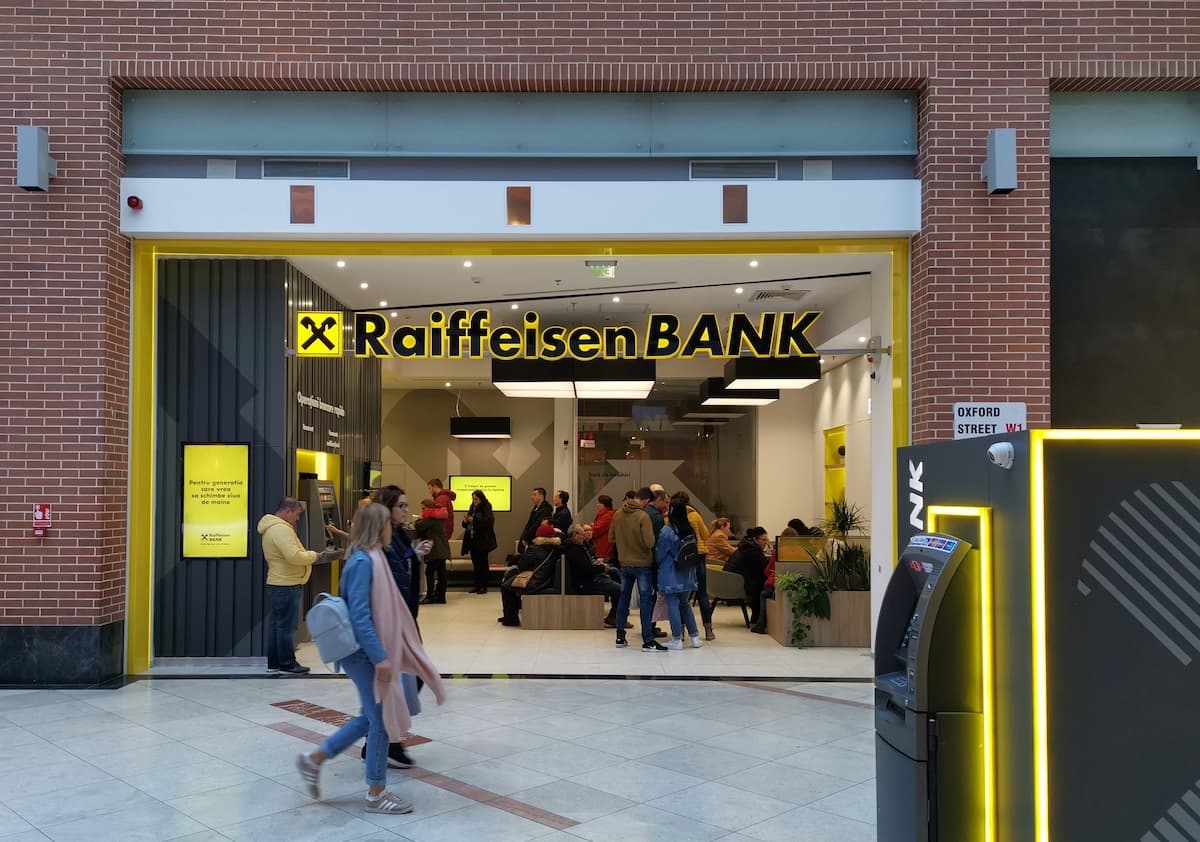
The National Bank of Romania (BNR), as an institution, has not challenged the ruling, but some of its representatives defended the banks. In May, the BNR governor, Mugur Isărescu, warned that any conclusion that implies the increase in ROBOR as an uncompetitive practice implicitly targets the BNR’s monetary policy decisions. This is perhaps why the competition body in its June 7 press release specifically stated that the ruling “does not regard the regulations or the policies in the banking sector.”
Technically, the banks allegedly coordinated their actions such as to file higher bid/ask quotations for the 3,6 and 9 month maturities within the period of the day used by the National Bank of Romania (BNR) for calculating the ROBOR indices. The banks have exchanged “confidential and strategic information, particularly regarding the prices, regarding ROBOR, during the fixing procedure,” the competition body said.
The actual deals at those higher quotations were virtually null – but the higher rates resulted in higher indices, hence higher loan interest paid by debtors, the competition body explains.
“We are in possession of evidence that should be analysed in its entirety. [...] Given the large amount of loans, variations of even a fraction of a percentage point can generate significant amounts of money [paid by debtors as interest],” the competition body’s release reads.
The decision was approved with a unanimity of votes. It is enforceable, and the tax collection agency ANAF will collect the fines. However, the banks can challenge the ruling to the Court of Appeal within 30 days.
Within 60 days, the banks should provide action plans aimed at addressing the anti-competition practices, which will be later approved by the competition body.
UniCredit, Banca Transilvania, CEC Bank, and BRD were among the banks that rejected the Competition Council's decision and announced plans to challenge it in court, arguing that the findings are unsupported by evidence and legally flawed.
In a statement sent to Romania Insider, UniCredit described the ruling as "unjustified" and "arbitrary," saying none of the technical and legal arguments it presented during the investigation were properly examined. Banca Transilvania also said it "vehemently rejects" the conclusions of the report, maintains its innocence, and warned that the sanctions could reduce future bank capitalization and potentially affect lending in the Romanian economy.
In its turn, CEC Bank called the decision "deeply unjustified" and based on "erroneous interpretations of market mechanisms," categorically rejecting allegations of ROBOR manipulation and insisting that its actions were fully compliant with regulations and supervised by the National Bank of Romania. BRD also expressed "strong disagreement" with the Competition Council's conclusions, arguing that it had strictly followed all rules governing the ROBOR benchmark and describing it as paradoxical that compliance with the regulatory framework had resulted in a sanction.
iulian@romania-insider.com
(Photo source: Inquam Photos/Octav Ganea)