Declassified C.I.A. documents show Ceausescu succession scenarios, Romania’s economic situation
A series of recently declassified documents from the archive of the Central Intelligence Agency C.I.A. bring an additional perspective into Romania’s political and economic situation during the communist regime. The documents are now…
RI Newsroom · Journalist
· Updated · 3 min read
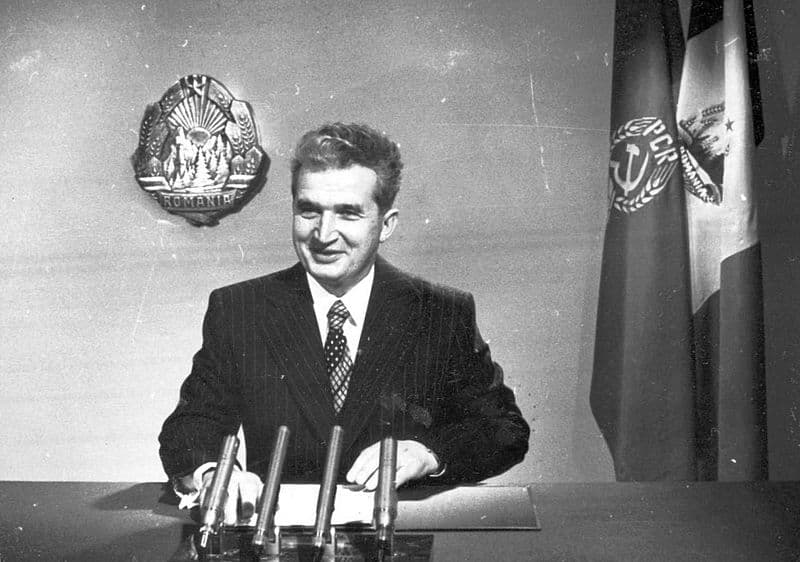
A series of recently declassified documents from the archive of the Central Intelligence Agency C.I.A. bring an additional perspective into Romania’s political and economic situation during the communist regime. The documents are now public following the Executive Order 13526, which requires the declassification of nonexempt historically valuable records 25 years or older. The documents show the C.I.A.'s analyses of Romania’s situation during the Cold War, its military capabilities and military production facilities. At the same time, various documents were prepared on possible Nicolae Ceausescu succession scenarios, covering causes of his replacement and potential successors. A C.I.A. document, titled "Unrest in Romania: Causes and implications," analyzed how Ceausescu’s regime was undermined by “dogmatic” internal policies, “economic stagnation and growing unrest” and identified key players who might have replaced him in a “forced succession” scenario. These included Emil Bobu, then Permanent Bureau Secretary for Agriculture Deputy Prime Minister, Elena Ceausescu, the dictator’s wife and the Permanent Bureau First Deputy Prime Minister, Iosif Blanc, a Permanent Bureau Secretary for Cadres, and Ion Coman, a Secretary for Military and Security Affairs. They were all part of Ceausescu’s “Inner Guard.” A second group, identified as “Power Brokers,” comprised politically powerful individuals who, although loyal to Ceausescu, would not have been removed in the event of a coup. These were Ilie Verdet, the Permanent Bureau Prime Minister, Constantin Dascalescu, a Permanent Bureau Secretary for Party Organization, Stefan Andrei, the Permanent Bureau Minister of Foreign Affairs, Cornel Burtica, the Permanent Bureau Deputy Prime Minister and Minister of Foreign Trade. A third group, called “Rivals in Eclipse” included formerly strong figures who had fallen in political decline but could have played “major roles in inspiring a move against Ceausescu.” These were Virgil Trofin, who criticized Ceausescu’s “personality cult and autocratic policies,” Paul Niculescu, a Chairman of the Central Union of Consumer Cooperatives, and Ion Iliescu, then a Chairman of the National Council for Water Resources. Iliescu, who went on to become Romania’s President after the removal of Ceausescu in 1989, was characterized in the document as being “bright, dynamic and unusually candid.” The documented also noted that “his youth, ability and continuing popularity with many members of the bureaucracy suggest he would be an important figure in a post-Ceausescu leadership.” The document "Unrest in Romania: Causes and implications" can be read here. He is mentioned again as a potential successor in a December 1985 document, titled "
Free newsletters
Romania, in your inbox before your first coffee.
Get the Daily — the morning briefing, free, in English, unsubscribe anytime. Want business, real estate or travel digests too? Pick your newsletters →