Romania’s general prosecutor asks audiovisual watchdog to “do its job”
Romania’s general prosecutor, Augustin Lazar, asked the local audiovisual watchdog CNA to do its job in accordance with the audiovisual law and even consider intervening with new “regulatory norms”, according to Hotnews.ro. The…
RI Newsroom · Journalist
· Updated · 4 min read
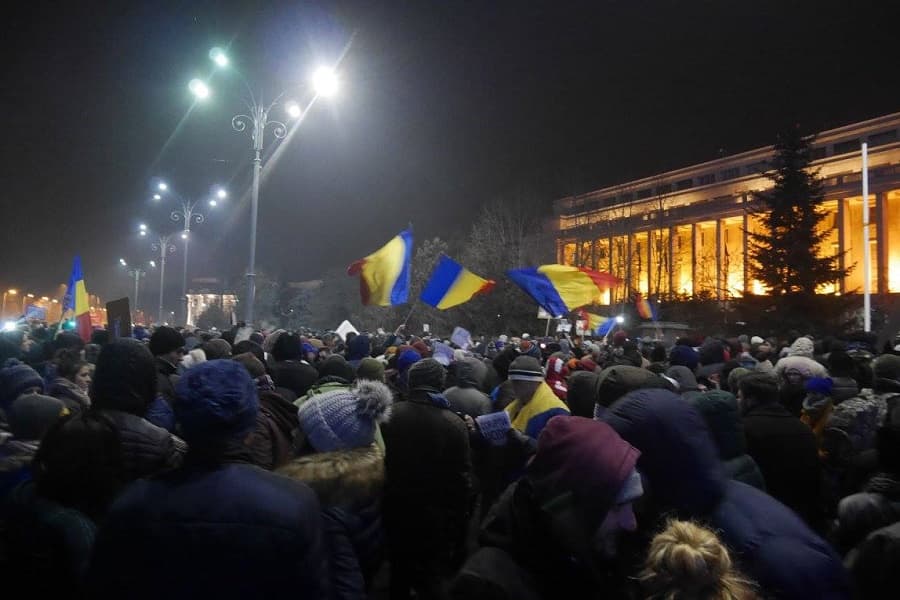
Romania’s general prosecutor, Augustin Lazar, asked the local audiovisual watchdog CNA to do its job in accordance with the audiovisual law and even consider intervening with new “regulatory norms”, according to Hotnews.ro. The prosecutor’s request was motivated by an “unprecedented escalation of unacceptable pressures” on the judiciary in the media, and comes in the context of a public debate over the way the past week’s protests have been reported by some television stations. “Tendentious and untrue information, meant to seriously undermine the judicial authority” are currently transmitted in “numerous televised shows” and “one of the damaging effects consists in the erosion of trust in the act of justice,” reads a letter the general prosecutor sent to the CNA, and quoted by Hotnews.ro. Prosecutor Lazar also pointed out that the same topic was covered in the most recent CVM report, which points to a lack of reaction of the CNA to intimations sent by Romania’s Superior Council of Magistracy CSM and to the fact that “mass-media and politicians’ attacks on magistrates and the judicial system remain a serious threat to the ireversibility of the fight against corruption.” This reality “tends to take on the proportions of a phenomenon,” the letter says. “The obvious inequality of resources between the media instruments the journalists possess and the reservation that derives from the professional statute of the judges and prosecutors renders evident the need of a reaction in order to correctly inform the public,” the same document shows. “The Public ministry unconditionally supports the freedom of the press and the diversity of opinions, including those critical in nature, accepted in a democratic society. We believe it is necessary that all actors adhere to ethical norms that result in correctly informing the public, and from the perspective of all those involved.” Some local TV stations presented the recent protests in a distorted way, calling them “a new miners’ riot” or “a coup start.” One TV station presented the information that people were paid to attend these protests, and that some even received money to bring their dogs, without bringing any evidence to support the information. The CNA itself became a target of protesters, who were unhappy with the fact that watchdog hadn’t taken any measures against the TV stations that didn’t accurately report the protests. At the same time, thousands of Romanians signed two online petitions against Romania TV and Antena 3, two of the TV stations accused of not presenting the protest in an objective manner. One of the petitions, which was signed by more than 27,000 people, asked for the removal of the two TV stations from the list of channels included in the TV subscription. CNA member Radu Calin Cristea characterized the CVM mention to the audiovisual body as a “Stalinist phrase” because it “would turn CNA into a center ordering TV stations that made mistakes, from the point of view of CSM, to correct the alleged mistakes,”
Free newsletters
Romania, in your inbox before your first coffee.
Get the Daily — the morning briefing, free, in English, unsubscribe anytime. Want business, real estate or travel digests too? Pick your newsletters →