Comment: What are the possible scenarios after the fall of the Government in Romania?
A transition government, possibly led by liberal leader Ludovic Orban (opening photo), with weak support in the Parliament, seems now the most likely scenario after the opposition in Romania’s Parliament managed to overthrow the Social…
Romania Insider · Journalist
· Updated · 3 min read
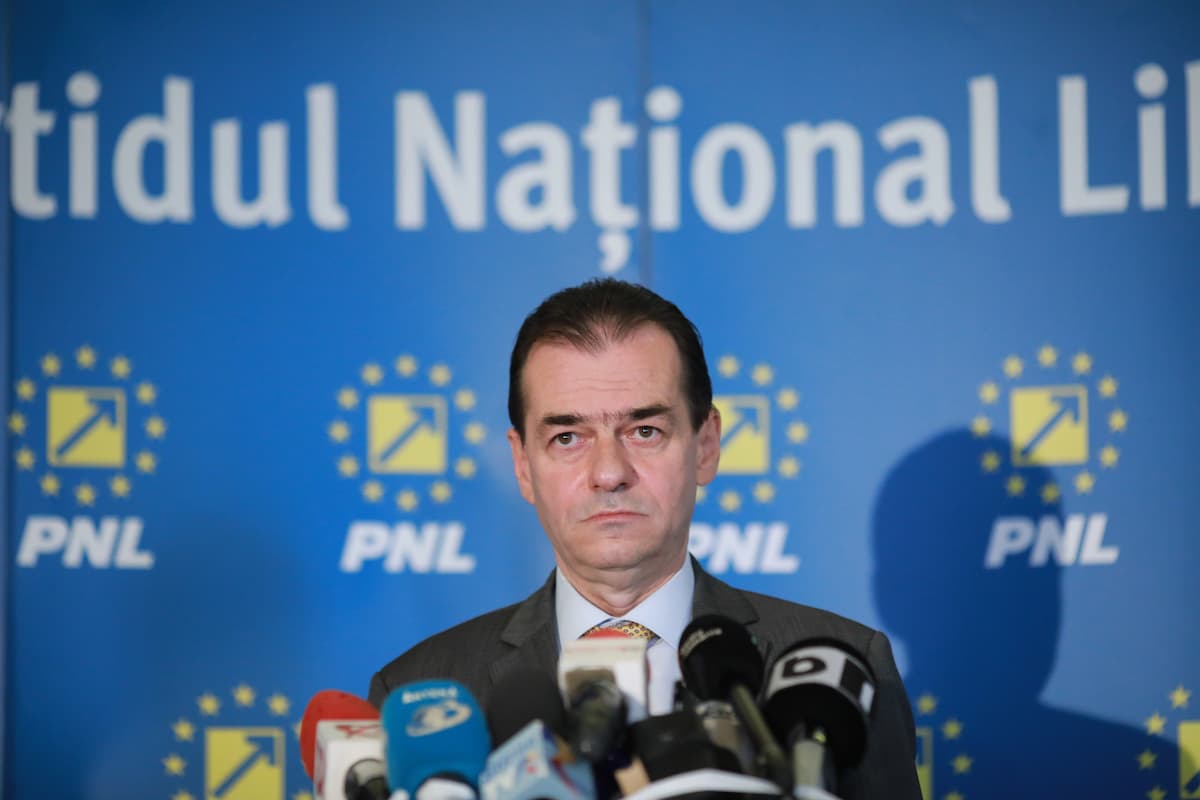
A transition government, possibly led by liberal leader Ludovic Orban (opening photo), with weak support in the Parliament, seems now the most likely scenario after the opposition in Romania’s Parliament managed to overthrow the Social Democrat cabinet of Viorica Dancila.
Although the opposition parties managed to put aside their interests and animosities on Thursday to unite against the PSD Government, their leaders’ statements after the motion show that their goals are different.
The National Liberal Party (PNL) and the Save Romania Union (USR), together with USR’s partner PLUS led by former PM Dacian Ciolos, support the idea of early elections, also voiced by president Klaus Iohannis as “the best option”.
Meanwhile, former PM Victor Ponta, the leader of PRO Romania party, who played a decisive role in removing the Dancila cabinet, is reaching out to his former colleagues in PSD inviting them to support a new socialist Government but led by an independent prime minister, and PSD’s former ruling coalition partner ALDE, led by former PM Calin Popescu Tariceanu, is willing to support a conservative Government that will not change important laws.
The Popular Movement Party (PMP) of former president Traian Basescu and the Democrat Hungarian Union (UDMR) haven’t expressed a clear option yet.
Early elections would indeed be a clean solution and a way to bring back political stability. Both PNL and USR-PLUS believe that the current political structure of the Parliament doesn’t reflect the will of the Romanian voters anymore, given the results of the elections for the European Parliament, where they clearly defeated the PSD. Early elections would probably help forge a new majority in the Parliament with PNL and USR-PLUS playing the leading roles.
However, PNL and USR have less than a third of the current number of MPs and none of the other parties will probably accept their proposal for early elections. First of all, because their MPs will not be willing to end their mandates before the legal term (December 2020) and risk not being elected. Secondly, because they have nothing to gain from organizing early elections.
Early elections require the president to dissolve the Parliament after the Parliament rejects two Government formulas within 60 days. This has never happened in Romania in the last 30 years.
Moreover, president Klaus Iohannis can’t afford to pursue an option that has low chances of success after he stated himself that there are urgent matters that need to be solved, such as the budget for next year, the nomination of another European commissioner to represent Romania and organizing the presidential elections.
Free newsletters
Romania, in your inbox before your first coffee.
Get the Daily — the morning briefing, free, in English, unsubscribe anytime. Want business, real estate or travel digests too? Pick your newsletters →