History special: 160 years since the Small Union, the first step towards a modern Romania
2018 was about celebrating 100 years since the Great Union of 1918 - the major event that marked the beginning of modern Romania. But another event that happened many years earlier, in 1859, made the Great Union possible, and that is the…
Irina Marica · Journalist
· Updated · 4 min read

2018 was about celebrating 100 years since the Great Union of 1918 - the major event that marked the beginning of modern Romania. But another event that happened many years earlier, in 1859, made the Great Union possible, and that is the “Small Union,” which the Romanians celebrate every year on January 24.
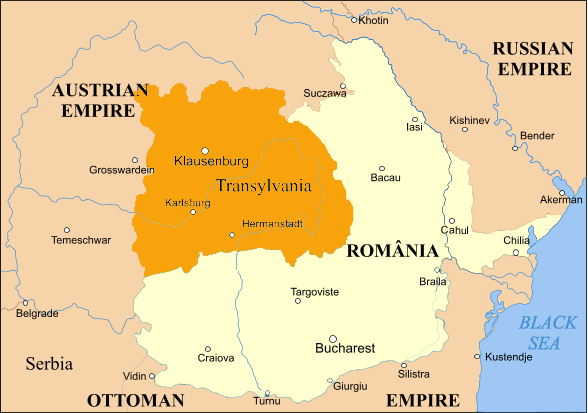
160 years ago, in 1859, the unification of Romanian principalities Moldova and Tara Romaneasca (Wallachia) under the same ruling prince marked a first step towards one of the Romanian nation’s most important political goals – the union of all provinces where Romanians were in majority. Remembered by history as the “Small Union,” the two principalities’ unification was not an easy thing to achieve, being the result a long and difficult historical process. A first step that led to the unification of the principalities of Moldova and Tara Romaneasca was taken in 1848 when the customs union between Moldova and Tara Romaneasca took place during the reigns of Mihail Sturdza and Gheorghe Bibescu. Mihail Sturdza was prince of Moldova from 1834 to 1849 while Gheorghe Bibescu was hospodar of Tara Romaneasca between 1843 and 1848. The unification idea became a main theme in the political debate, both in the two principalities and internationally, after the Crimean War (1853-1856), when the Russian Empire was defeated by an alliance of the Ottoman Empire, the Second French Empire, the British Empire and the Kingdom of Sardinia. The Treaty of Paris, signed at the end of the war, in March 1856, also included provisions referring to the principalities of Moldova and Tara Romaneasca. For example, a project of a referendum was to be set in place to monitor the will of the people on unification. In this sense, ad-hoc meetings were held, discussing the elections for the Ad-hoc Divans, which were to decide on the political and social organization of the Romanian territories. In Tara Romaneasca, most members of the Ad-hoc Divan said yes to the Union, but in Moldova things started to take a controversial turn after the electoral lists for representation in the Ad-hoc Divan were forged. The discovery sparked scandals both among Romanians and at European level. In the autumn of 1857, following new elections, the Ad-hoc Divans of both principalities said yeas to the Union. In 1858, the Paris Convention set several provisions referring to the Romanian principalities, including the partial unification of the principalities of Moldova and Tara Romaneasca, under the name "The United Principalities of Moldova and Tara Romaneasca." However, elections for the Ad-hoc Divan in 1859 profited from an ambiguity in the text of the final agreement, which, while specifying two thrones, did not prevent the same person from occupying both thrones simultaneously. As a result, on January 5, 1859, Alexandru Ioan Cuza was voted ruling prince (domnitor) of Moldova. Then, on January 24, Cuza was also voted ruler of Tara Romaneasca. He ruled between 1859 and 1866.
Free newsletters
Romania, in your inbox before your first coffee.
Get the Daily — the morning briefing, free, in English, unsubscribe anytime. Want business, real estate or travel digests too? Pick your newsletters →