EU, Romania step up Black Sea security response
The European Parliament proposed considering a naval operation, while Romania outlined plans to strengthen maritime surveillance and defenses against drones and sea mines.
Irina Marica · Journalist
· 3 min read
The European Parliament and Romania’s Supreme Council for National Defense (CSAT) called for stronger measures to address escalating security threats in the Black Sea following attacks on civilian vessels and repeated airspace violations. Both mentioned the need for closer cooperation with NATO allies, improved drone detection, and faster implementation of the EU’s planned regional maritime security hub.
The European Parliament announced that it adopted its resolution on Thursday, October 22, with 432 votes in favor, 52 against, and 88 abstentions. MEPs condemned the latest deadly strikes off the Romanian and Bulgarian coasts and held Russia responsible for escalating its war against Ukraine into the western Black Sea.
The attacks were described as part of a “clear pattern of Russian escalation” involving the systematic targeting of civilian shipping.
Moreover, the MEPs called on the EU and its member states to consider deploying a naval operation in the Black Sea.
“Following the latest deadly attacks, MEPs say the EU and its member states should consider deploying an EU naval operation in the Black Sea, stressing that freedom of navigation and maritime security are part of securing NATO’s eastern flank, the Black Sea region, and the Danube delta,” reads the press release.
The resolution also urged NATO to consider a Black Sea initiative based on discussions about a possible “Black Sea Sentry” and called for closer cooperation among Romania, Bulgaria, and Türkiye.
EU countries, working with NATO, should provide further assistance to Romania and Bulgaria for the early detection and tracking of hostile drones, MEPs said. They also proposed using unspent funds from the SAFE defense instrument to help the two countries address regional threats.
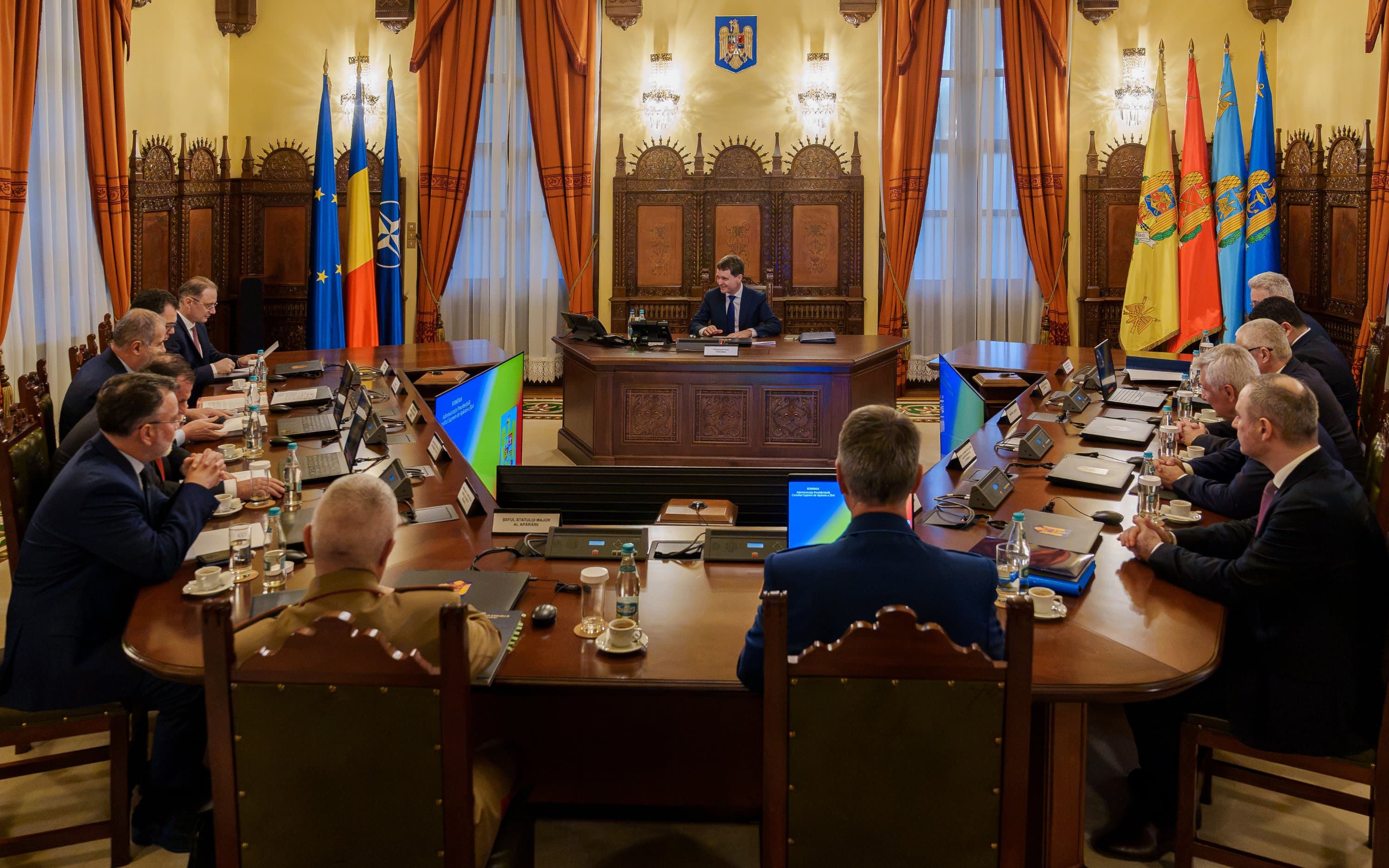
Separately, Romania’s CSAT met at Cotroceni Palace under president Nicușor Dan on Thursday to assess the same escalation and the measures already taken. The council described recent attacks and airspace violations as “direct consequences of the Russian Federation’s aggression beyond Ukraine’s borders.”
CSAT said the situation posed immediate risks to human life, access to Romanian ports, and energy infrastructure in the country’s exclusive economic zone.
Free newsletters
Romania, in your inbox before your first coffee.
Get the Daily — the morning briefing, free, in English, unsubscribe anytime. Want business, real estate or travel digests too? Pick your newsletters →