Romania travel: Highlights of Banat region
The Romanian part of the region of Banat can offer visitors plenty to see: footprints of a multicultural history, a designated European Capital of Culture, and impressive nature parks. We outline below some of the top attractions in this…
Simona Fodor · Journalist
· Updated · 4 min read
The Romanian part of the region of Banat can offer visitors plenty to see: footprints of a multicultural history, a designated European Capital of Culture, and impressive nature parks. We outline below some of the top attractions in this part of the country.
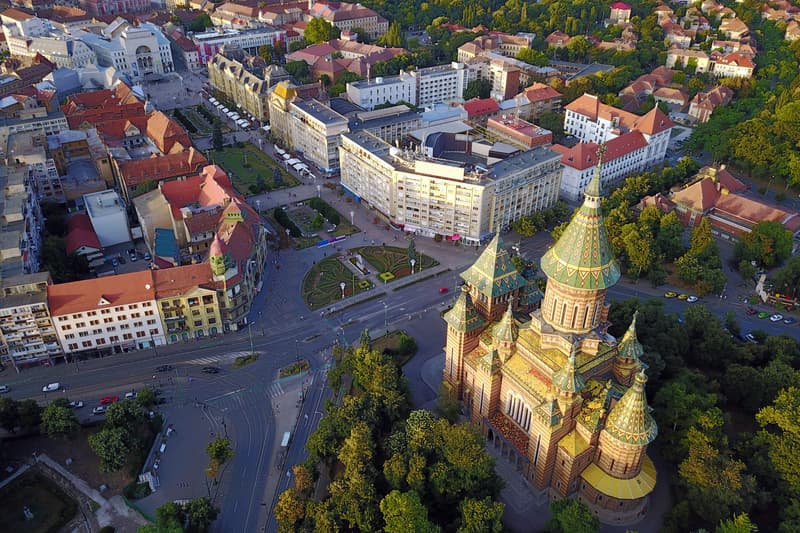
The informal capital of the region, Timișoara has been throughout its history a mix of cultures and ethnicities. The German-language newspaper Temeswarer Nachrichten was printed here in 1771, and the city, a designated European Capital of Culture in 2023, still has three state theaters of three different languages. Layers of Ottoman and Habsburg history await to be discovered in the city, starting with Unirii Square, standing out with its Baroque architecture. St. George's Cathedral, dating back to the 18th century, towers over the square, where the Baroque Palace, hosting the Timisoara Art Museum, is also found. The museum hosts Romanian and European art, and a collection of works of Romanian painter Corneliu Baba. Also in the market is an ensemble of buildings belonging to the Serbian Episcopate, another clue of the multiethnic makeup of the region.
___STEADY_PAYWALL___
Nearby is the Theresia Bastion, the only one still standing of the nine of the fortress built in the city between 1732 and 1761, and demolished in the early 20th century. Today it houses event venues and the National Museum of Banat.
Another impressive buildings in the city, testimony of its centuries-old history, is the Huniade Castle, erected in a first form starting with the 14th century and owing its current look to works undertaken during the 19th century. It is not open for visitors as it has been closed for planned refurbishment works for some time.
In the city's Liberty Square (Piața Libertății), lined up with historic buildings of military use, archaeologists discovered, at the end of 2013, the ruins of an Ottoman bathhouse believed to be 400 years old. In 2015, the local authorities decided to cover up them up to aid in their preservation and put up instead signposts alerting of its presence.
To brush up on the city and country's recent history, a must-see is the Revolution Memorial Museum, displaying documents and items related to the 1989 Revolution. Timișoara has been referred to as "the first free city" as the 1989 Revolution started here. More about Timișoara here.
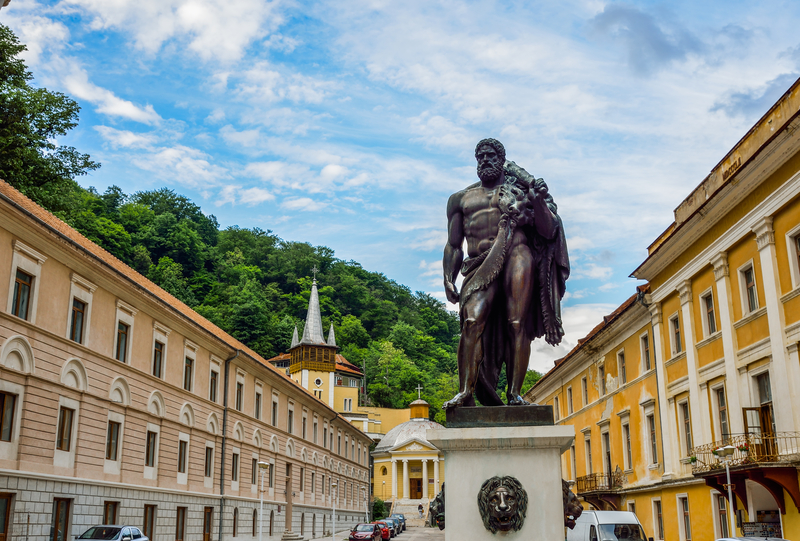
A spot in Banat that has been getting attention for its architectural heritage in need of refurbishment is Băile Herculane. Documented since the Roman period, it saw its heyday during the 19th century, when it was visited not only for its thermal springs but also for cultural and leisure options. The highlight of the city's historical part is the ensemble made up of the Neptune Baths, the Casino, and the Traian and Decebal Hotels. Starting with the 1970s, new facilities were built in the resort, fashioned according to the architectural demands of the time, and the historic buildings were abandoned. An initiative of a group of architecture students, Herculane Project, aims to save and revive the city's patrimony, making the resort a more attractive spot for visitors.
Free newsletters
Romania, in your inbox before your first coffee.
Get the Daily — the morning briefing, free, in English, unsubscribe anytime. Want business, real estate or travel digests too? Pick your newsletters →