Romania’s PM announces imminent public administration law, outlines reform and economic recovery agenda
Romanian prime minister Ilie Bolojan, in a press conference on February 4, announced that the government will send the local administration law to Parliament next week for endorsement under the simplified procedure, which does not involve…
iulian ernst · Journalist
· Updated · 3 min read

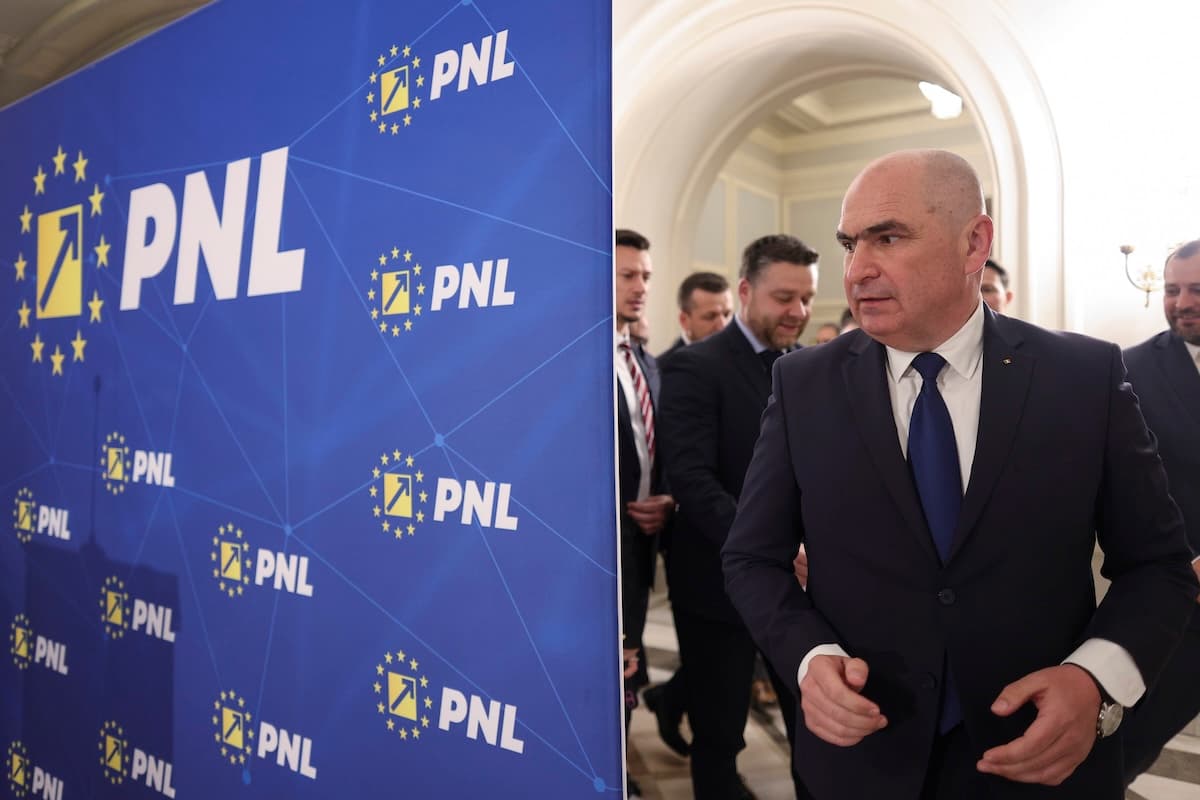
Romanian prime minister Ilie Bolojan, in a press conference on February 4, announced that the government will send the local administration law to Parliament next week for endorsement under the simplified procedure, which does not involve a vote on the law itself but allows the opposition to file a no-confidence motion against the executive. He also announced that no more austerity measures are envisaged at this moment.
The press conference was announced and organised on short notice, in the context of the Social Democratic Party (PSD) criticising the work of PM Ilie Bolojan and the austerity measures assigned solely to the prime minister. Several of the measures approved by the government are being challenged in court for being reversed, and, as a last-minute development, the Hungarian party (UDMR) requested lower property taxes, indirectly putting a question mark on its support for the key local administration law.
“We can not rule against people,” UDMR president Kelemen Hunor said, warning that the electoral support could plunge later in the year.
Prime minister Ilie Bolojan also outlined the next steps envisaged by the government for the coming weeks.
An economic recovery package of measures is to be unveiled on February 5 and later discussed with the social partners. It contains tax credit solutions for companies, support schemes for large investments, for areas where we have trade deficits, and guarantee schemes.
The ruling coalition discussed no solidarity or social support package, PM Bolojan said, answering a question from the journalists. The Social Democratic Party (PSD) has reportedly conditioned its support for the local administration law on such social measures, besides the economic recovery package.
“The positive effects of the economic recovery package will be seen in the coming years. In the first phase, the package will involve some costs [for the budget]. The [positive] effects should be seen in higher exports, more and better-paid jobs. If we produced our fertilizers in Romania, several billions [of euros] would remain in the country,” PM Bolojan explained.
Measures to strengthen fiscal predictability, cut bureaucracy, and accelerate the absorption of European funds and other investments in the energy sector will also be approved as part of the broader effort to encourage economic growth, according to PM Bolojan.
A set of three draft ordinances will be approved for reducing bureaucracy, specifically. One aims to simplify obtaining environmental permits by enforcing shorter deadlines. The second concerns simplifying the process of obtaining fire safety permits. The third is related to simplifying large investment permits: the threshold for screening such investments will be lifted from EUR 2 million to EUR 5 million.
Free newsletters
Romania, in your inbox before your first coffee.
Get the Daily — the morning briefing, free, in English, unsubscribe anytime. Want business, real estate or travel digests too? Pick your newsletters →