European Commission greenlights Romania’s EUR 29.2 bln recovery and resilience plan
The European Commission (EC) adopted a positive assessment of Romania's recovery and resilience plan, under which the country will receive EUR 14.2 billion in grants and EUR 14.9 billion in loans under the European Union's Recovery and…
Andrei Chirileasa · Journalist
· Updated · 3 min read
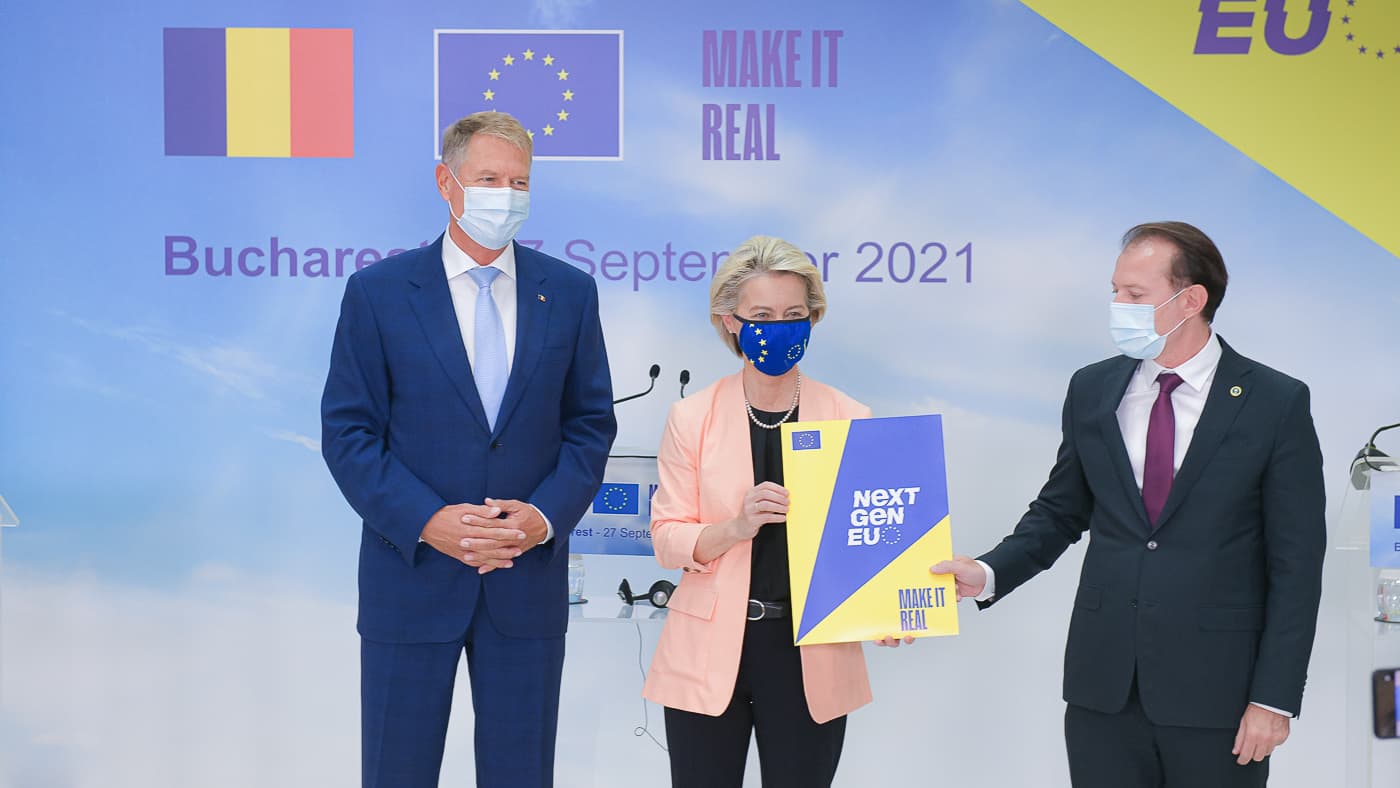
The European Commission (EC) adopted a positive assessment of Romania's recovery and resilience plan, under which the country will receive EUR 14.2 billion in grants and EUR 14.9 billion in loans under the European Union's Recovery and Resilience Facility (RRF). The official announcement came on Monday, September 27, when EC president Ursula von der Leyen made an official visit to Bucharest.
“Romania’s plan meets the very demanding criteria we have, jointly with the Council, established. It combines on one hand the investment in the green and the digital transition, and it addresses the reforms that are necessary to address Romania's structural challenges. For example, to put public finances on a sound footing, you invest in a pension reform and a digital tax administration,” von der Leyen said in a joint press conference with Romania’s president Klaus Iohannis and Liberal prime minister Florin Citu. President von der Leyen's full speech is available here.
“The plans approval represents a symbolic moment of great importance for the future of our country,” said Romania’s president Klaus Iohannis. “The National Recovery and Resilience Plan is a very important tool for Romania, which offers us, in addition to financing economic recovery actions, the resources to implement investments and structural reforms essential for the development of our country in the medium and long term,” he added (full speech available here).
The EC assessed Romania’s plan based on the 11 criteria set out in the RRF Regulation, according to an official statement. The analysis considered, in particular, whether the investments and reforms contained in Romania’s plan support the green and digital transitions, contribute to effectively addressing challenges identified in the European Semester, and strengthen its growth potential, job creation and economic and social resilience.
Romania’s plan devotes 41% of the plan's total allocation on measures that support the green transition and includes measures to phase out coal and lignite power production by 2032. Reforms promoting sustainable transport include the decarbonization of road transport, green taxation, incentives for zero-emission vehicles, and a modal shift to railways and water transport. The plan also has a strong focus on improving the energy efficiency of private and public buildings.
Free newsletters
Romania, in your inbox before your first coffee.
Get the Daily — the morning briefing, free, in English, unsubscribe anytime. Want business, real estate or travel digests too? Pick your newsletters →