AI-based cancer-fighting software solution from Cluj-Napoca trialed in 12 Romanian clinics
Mediq, an artificial intelligence-based software solution developed by Synaptiq and designed to increase the efficiency of cancer treatment, is currently being tested by radiation oncologists in 12 Romanian clinics. The new technology…
Irina Marica · Journalist
· Updated · 3 min read
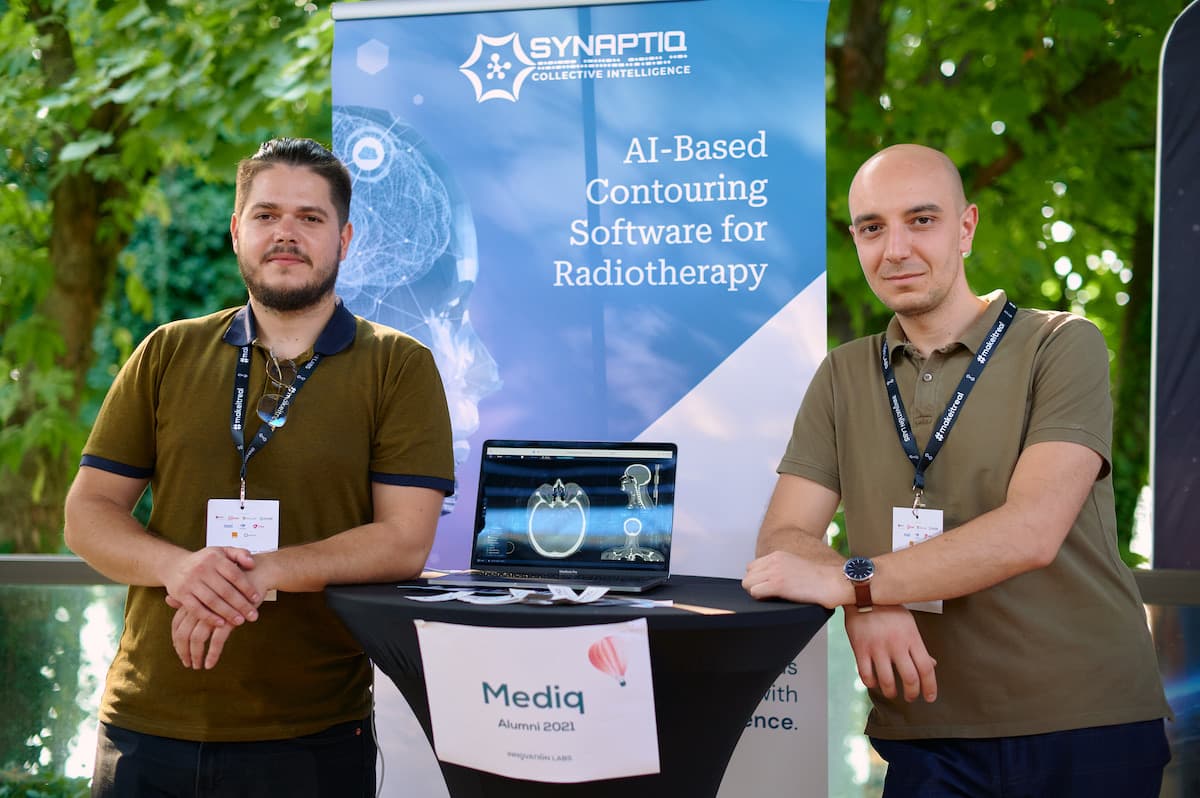
Mediq, an artificial intelligence-based software solution developed by Synaptiq and designed to increase the efficiency of cancer treatment, is currently being tested by radiation oncologists in 12 Romanian clinics. The new technology created by the team in Cluj-Napoca is designed to reduce the time doctors need to contour target volumes and organs at risk, from an average needed time of two hours to less than a minute.
Synaptiq has recently been awarded an additional EUR 103,000 on top of the initial funding of EUR 158,000 from the Norwegian Innovation fund.
“The Innovation Norway grant has played a crucial role in advancing the development and implementation of Mediq. Completed successfully in March 2024, […] the project included the development of the technological architecture of the Mediq software, now fully functional, and the successful integration of the interface with the clinics’ software and hardware,” reads the press release.
The software is currently operational in 12 clinics, with 71 doctors actively participating in its testing and refinement. Furthermore, Synaptiq said it aims to expand globally by actively participating in conferences to continuously improve its solutions.
Lucian Bicsi, CTO of the development team, talked about the progress made so far: "In a surprisingly short time, we were able to train our high-performance algorithms on more than 140 structures in all areas of the body, which means that the doctor’s work can now be done in less than a minute. On top of this, we have built a pleasant and easy-to-use interface where the doctor can view, edit, review, and consult other doctors on the affected structures. Throughout the process, patient data is secure and confidential.”
In turn, Remus Stoica, a radiation oncologist and a consultant to the Synaptiq team who tested the software, explained the solution’s impact: “The ability to use artificial intelligence in the clinic over the last year means a considerable reduction in time in the treatment planning phase. It usually takes me several hours to delineate and control a plan for a patient. So, this reduction in time translates into more time spent with the patient and the ability to care for them. Also, the accuracy of the software means that organs at risk are delineated better and better, and ultimately, this translates into less toxicity in the actual treatment for the patient.”
According to Dragoș Dușe, co-founder and CEO of Synaptiq, the company’s AI algorithms are competitive internationally, being in the top 3 best-performing algorithms on the market. “Synaptiq has managed, with a limited budget and low access to medical data, to create a solution that outperforms in accuracy the solutions of many renowned medical device manufacturers,” he said.
For the software to be widely distributed and help save as many lives as possible worldwide, certification and CE marking still need to be obtained, the company said.
Free newsletters
Romania, in your inbox before your first coffee.
Get the Daily — the morning briefing, free, in English, unsubscribe anytime. Want business, real estate or travel digests too? Pick your newsletters →