Romanian Social Democrats ready to negotiate with PM-designate if their 10 proposals are included
Social Democrat (PSD) president Sorin Grindeanu said on Monday that he is willing to discuss with prime minister-designate Siegfried Mureșan if the latter considers including in the governing programme the 10 proposals adopted by the Social Democrats in Sinaia on August 31.
iulian ernst · Journalist
· 2 min read
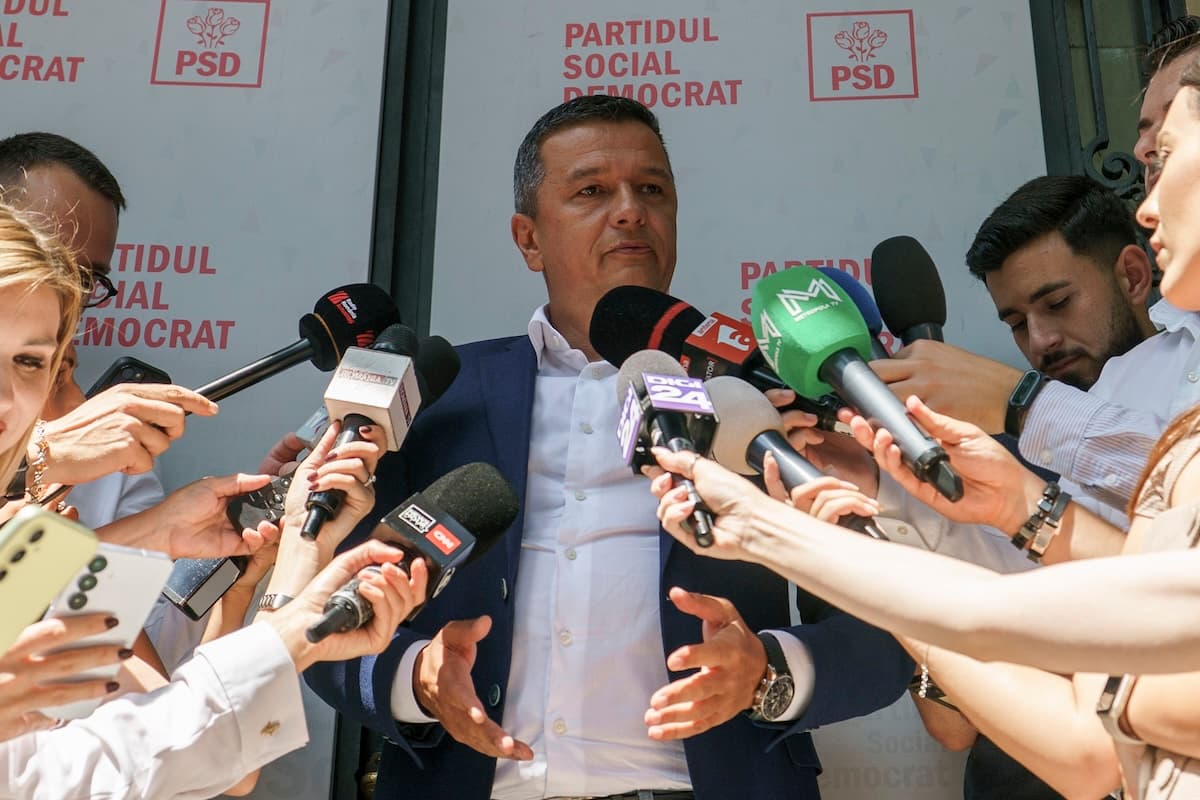
The PSD adopted in Sinaia a set of 10 national priorities that it wants political parties to endorse before forming a governing coalition that could put an end to the political crisis.
Unless a government such as the one planned by prime minister-designate Siegfried Mureșan incorporates these priorities, the PSD will maintain its decision not to vote for the future cabinet, Grindeanu said after Mureșan announced that he intends to continue the work of the government led by Ilie Bolojan.
Asked at a press conference whether negotiations on the governing programme and the parliamentary vote were still possible, Grindeanu referred to the internal consultation through which the PSD decided to withdraw from the Bolojan government.
Grindeanu suggested that Mureșan's commitment to continue Bolojan's policies would make it difficult for the PSD to change the position approved by its roughly 5,000 delegates. However, he left the door open to discussions with the prime minister-designate if the PSD's proposals were accepted.
“If he wants to hold discussions, let him tell us how he can include in the governing programme the 10 recommendations that we voted for, the Sinaia Decalogue. I have not heard anything from Mr. Mureșan, since he was nominated until now, that he will even take into account the PSD proposals,” Grindeanu said, as reported by Digi24.
In principle, the ten proposals put forward by the PSD in Sinaia are objectives that could be endorsed by a broad range of governments. The Social Democrats have argued for fiscal slippage or against reforms at times, but have also supported or implemented measures in these areas when in government. When withdrawing from the governing coalition at the end of April, the PSD cited then-prime minister Ilie Bolojan's refusal to consider its recommendations, while the no-confidence motion it subsequently signed together with the Alliance for the Union of Romanians (AUR) included economic centralisation measures that the PSD had not advocated in its Sinaia proposals.
Some of the proposals are relatively specific. The most ambitious calls for a transparent mechanism linking the minimum wage to productivity, the median wage and the cost of living. The party also proposes individual retraining accounts, following models used in some EU countries.
The document also makes constitutional, European and Euro-Atlantic orientation a condition for accession to the agreement, while potential disputes between signatories would be addressed through notification, evaluation and a remedial period.
Free newsletters
Romania, in your inbox before your first coffee.
Get the Daily — the morning briefing, free, in English, unsubscribe anytime. Want business, real estate or travel digests too? Pick your newsletters →