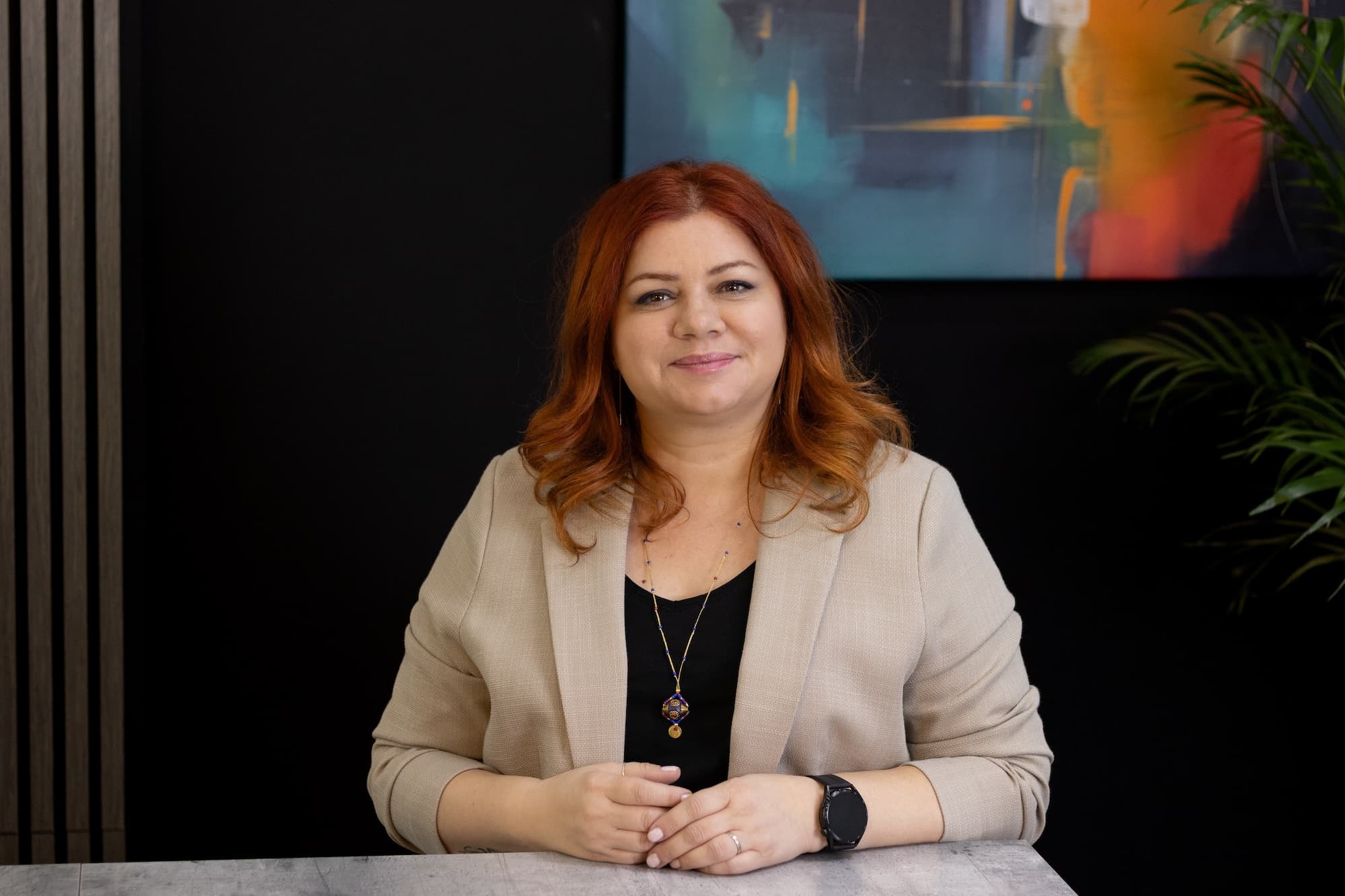
Romanian researcher receives reward in Spain for teaching AI to recognize signs of depression on social media
The AI identifies early signals associated with depression and other mental health disorders by analysing text, images, and videos posted on social media.
Radu Dumitrescu · Journalist
· 2 min read

Romanian researcher Ana-Maria Bucur has received the award for the best doctoral thesis in the field of Natural Language Processing (NLP), a distinction granted by the Spanish Society for Natural Language Processing (SEPLN).
Together with an international team, the researcher developed computational models that can analyse language and online behaviour to identify patterns associated with depression, self-harm, and pathological gambling, which may indicate the presence of mental health problems.
These tools were designed as digital screening solutions that provide specialists with additional information and contribute to the early identification of people who may need further assessment.
“I believe technology can play an important role in facilitating access to support, provided that it is used as a complementary tool, rather than as a replacement for professional assessment,” said Ana-Maria Bucur.
The scale of the issue is reflected in data from the World Health Organization (WHO), according to which approximately 322 million people worldwide were living with depression in 2024, representing around 5.2% of adults.
Separately, an analysis based on the Global Burden of Disease study, a major international research initiative covering 204 countries and territories, published in 2026 in the international medical journal The Lancet, estimates that approximately 1.17 billion people were living with a mental disorder in 2023.
Natural Language Processing (NLP) is a branch of AI that develops methods through which computers can analyse and process human language. In Ana-Maria Bucur’s research, these methods make it possible to transform texts published online into information that can be analysed computationally: word frequency, combinations of words, grammatical categories, topics and emotions expressed, or changes in these characteristics over time.
Bucur analysed the use of nouns, verbs, pronouns, and adjectives in posts by people with and without depression. In people with depression, the research showed that more frequent use of first-person pronouns may reflect a greater focus on the self; a higher frequency of past-tense verbs may be associated with a tendency to repeatedly revisit certain experiences, while less frequent use of future-tense verbs may be linked to a reduced ability to experience pleasure.
While people without depression more often mention moments of joy associated with activities such as shopping, sports, or computer games, people with depression talk more frequently about happy moments spent with family and friends.
In addition, while pessimistic posts by people with depression showed a pronounced negative linguistic profile, expressions of optimism, although much less frequent, appear to represent a combination of resilience and coping mechanisms.
Free newsletters
Romania, in your inbox before your first coffee.
Get the Daily — the morning briefing, free, in English, unsubscribe anytime. Want business, real estate or travel digests too? Pick your newsletters →