Travel planner: Three more cities to visit in Central Romania; Aiud, Blaj, Sebes
Last week we 'traveled' to the city of Alba Iulia, and now let's head to some smaller cities in its vicinity: Aiud, Blaj and Sebes. Aiud is the second largest city situated in Alba County, at 32 kilometers from the capital of the area. It…
Mariana Ganea · Journalist
· Updated · 5 min read
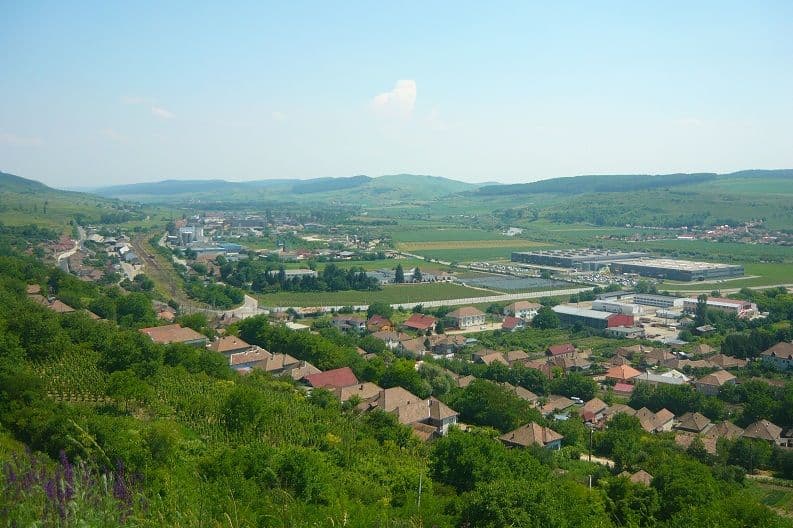
Last week we 'traveled' to the city of Alba Iulia, and now let's head to some smaller cities in its vicinity: Aiud, Blaj and Sebes. Aiud is the second largest city situated in Alba County, at 32 kilometers from the capital of the area. It is located on the Mures River valley. The name of the city derives from Saint Giles (Aegius) to whom the first church in the city was dedicated. This city has a very rich history, which starts with the document issued by King of Hungary Ladislaus IV (1272-1290) where the Aiud citadel is mentioned, but according to the local stories the first building stone watch tower in the area was erected in the period of the Mongol invasion in Europe, around 1241. Along centuries, in the Aiud citadel took place many and various historical events such as the1437 uprising, named the revolt of Bobalna), the conquest of Michael the Brave, the Habsburg attack (1704), the revolution (1848-1849). For any history lover/ tourist, the city of Aiud has a lot of places which deserves to be visited: the Aiud Citadel built between 13 -14th century, the City Hall built in 1890, the oldest monument of the city named “Students' Monument”, located in the city park, which was erected in 1904 in the memory of the students who fought in 1704 against the Habsburg invasion. Another must see: The "Calvarul Aiudului" Monument, which was built in remembrance of the elite of the resistance who suffered and died there during the communist period. The historical college Bethlen Gabor (prince of Transylvaia, 1613-1629), founded in 1622 in the city of Alba Iulia and moved to Aiud is another place to visit. Now, this educational institute is located in a 19th century historical building and it has an important and precious library. Also go and see the Orthodox Cathedral built after the great unification (1918), in 1927. The architecture of the cathedral was inspired from the Santa Sofia (Istanbul) in Byzantine style. Add to your list the Roman Catholic Church built in 1726 -1727 in baroque style and the Reformed Church built at the ending of 15th century in the late Gothic style. As well as rich culture, Aiud also has wonderful scenic tourist attractions, and it is a strong base for ecotourism in the area, where there are beautiful forests, hills and mountains and the so much sought after fresh air. Aiud is easily accessible from all parts of Romania due to its position in the centre of the country and its road network. It is also an important railway hub, being situated on the main line from Oradea to Bucharest via Cluj. The nearest airports are in Sibiu and Cluj. Blaj (in picture) is located at the 36 kilometers from the city of Alba Iulia, at the meeting point between the two Tarnava Rivers (Great Tarnava and Little Tranava) on the Transylvanian Plateau, a rich famous vineyard area, with a smooth continental temperate climate. The city is known as the main religious and cultural center of the Greek Catholics in Transylvania, beginning with 27 October 1627 when the Church United with Rome became a reality. The first documentary mention was in 1271 as Villa Herbordi after the name of Count Herbod. Initially the city was built as hamlet for twenty families of servants of the aristocrat’s court, but, in 1737, it was declared a town. The city of Blaj is known as the first place in Romania where a public school was created in 1754 and when the Latin alphabet was used instead of Cyrillic. In the age of Enlightenment in Blaj the “Transylvanian School” society was founded, which promoted the Roman cultural heritage of the Romanians. Thanks to this, the city of Blaj was named “The Little Rome”. At Blaj was published the first Romanian grammar written by Timotei Cipariu ( born at Blaj, 1805 – 1887) and “The Bible from Blaj”. Blaj has few important historical places as: Metropolitan Palace, The Holy Trinity Cathedral (built between 1741 and 1749 in baroque style), The Buna Vestire Monastery, The Greeks’ Church, The Liberty field (where in 3 -15 May 1848 the Great National assembly took place), Avram Iancu’s oak – Avram Iancu was a Romanian Transylvanian lawyer who had an important role in the revolt from 1848 in the Austrian Hungarian Empire. Near Blaj there is the very popular and famous Bethlen Castle - named Magna Curia Palace, redecorated in 1621 by Bethlen initiative in Renaissance style and modified and added baroque style in 18th century. Blaj is accessible by DN 14B (Bucharest – Cluj – Oradea), DJ 142 (from Targu Mures), by train from Bucharest, Cluj, Targu Mures, Budapest, Vienna. The nearest airports are Sibiu and Cluj.