Travel Planner: Sinaia revisited – Peles Castle
For many, the mountain resort of Sinaia is synonymous with Peles Castle, one of the best known tourist sights in the area. The castle is so popular that it may sometimes be overlooked. Guest writer Mariana Ganea looks into the castle's…
Mariana Ganea · Journalist
· Updated · 3 min read
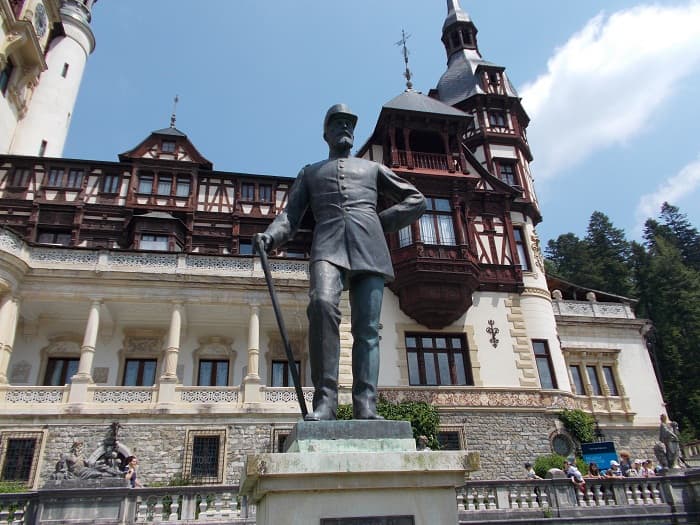
For many, the mountain resort of Sinaia is synonymous with Peles Castle, one of the best known tourist sights in the area. The castle is so popular that it may sometimes be overlooked. Guest writer Mariana Ganea looks into the castle's past and present.

Peles Castle is a Neo-Renaissance castle built in Sinaia, Prahova County, in the 19th century. Neo-Renaissance is a rather broad architectural term, used to lump together a wide range of 19th century buildings that drew at least some inspiration from the Italian renaissance. The term probably doesn't adequately describe the unique, fairy tale like Peles Castle. The castle is part of the love affair King Carol I of Romania (1839 – 1914), had with the area and its breathtaking scenery, after he visited the area in 1866 ( the first year of his reign). German architect Johannes Schultz designed the palatial alpine villa and combined various features of European architectural styles. Work was led by Czech architect Carol Benesch and, another Czech architect Karel Liam, designed the towers. Several auxiliary buildings were built with the castle: the guards’ chambers, the Economat Building, the Foisor hunting lodge, the royal stables and a power plant. Queen Elisabeth (King Carol I’s wife) wrote about the construction work in her journal, it clearly shows the international nature of the project and the different jobs done by each nationality: the masons were Italians, the laborers were Romani, the Albanians and the Greeks worked in stone, the carpenters were Germans and Hungarians, Turks fired the bricks, the engineers were Polish, the sculptors were Czech, the Frenchmen made the drawings, the English measured and surveyed and the Romanians built terraces. The castle was built between 1873 and 1883 ( with a pause 1877-1878 during the Independence War) and the inauguration ball took place on 7 October 1883. The King Ferdinand (Carol I’s nephew and the heir) lived in Pelisor Castle and his son the King Carol II was born there. After King Michael I’s abdication in 1947, the Communist regime seized the property and in 1953 it was declared museum. Nicolae Ceausecu closed the entire estate in 1975. After 1989, the whole estate was re-established as a heritage site and the castle and its ground were reopened to the public. The Foisor Villa serves as a presidential residence and in 2006 the Romanian government announced the restitution of the Peles castle to King Michael I and, at the moment, the castle is on hire from the Royal family to the Romanian state.
From architectural perspective, the Peles castle is a wacky blend of styles: Neo-Renaissance, Gothic Revival (very similar to Schloss Neuschwanstein from Bavaria). In the interior courtyard Saxon influences can be seen and the interior decoration is mostly Baroque.
Free newsletters
Romania, in your inbox before your first coffee.
Get the Daily — the morning briefing, free, in English, unsubscribe anytime. Want business, real estate or travel digests too? Pick your newsletters →