Traditional Romanian cheese from Teaca village receives EU protection
Made from raw cow’s milk and matured inside a pig’s bladder, the traditional cheese owes its distinctive character to skills passed down through generations in the northern Romanian village.
Irina Marica · Journalist
· 2 min read
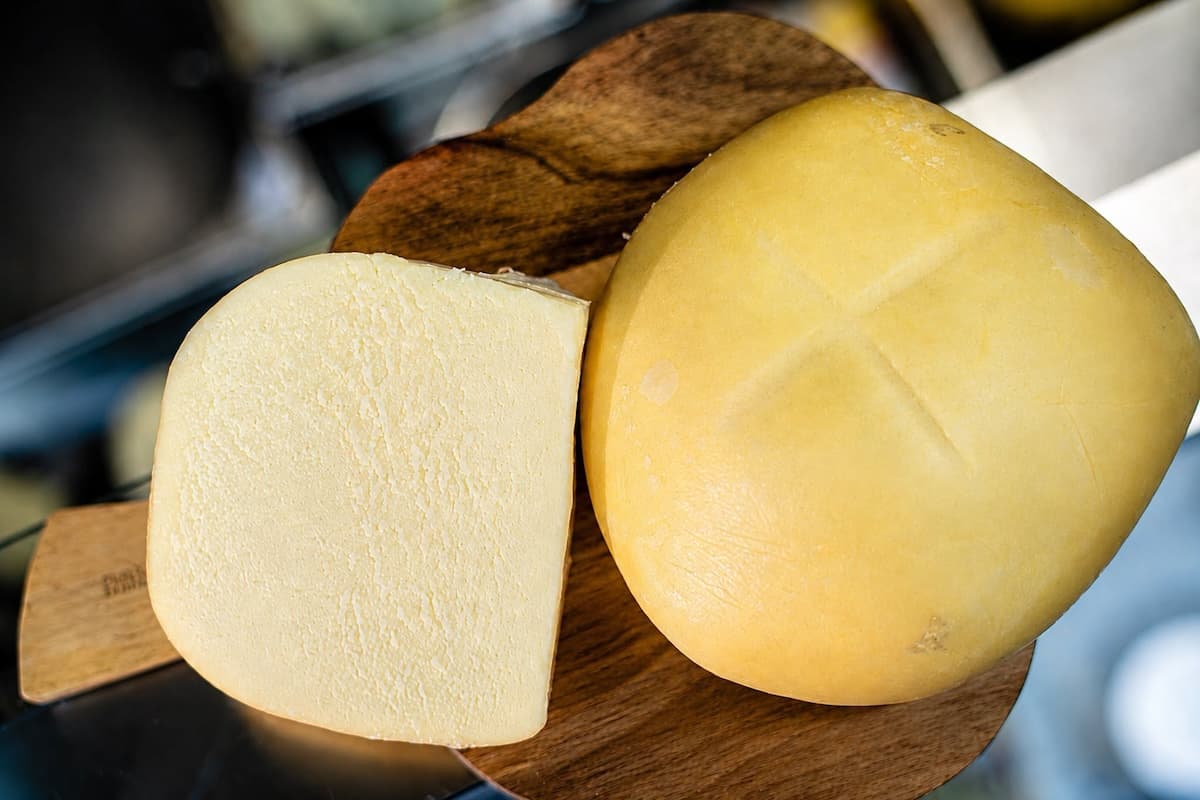
The European Commission has approved the registration of Romania’s Brânză frământată de Teaca as a Protected Geographical Indication (PGI) on Wednesday, September 9. This became the 18th Romanian product to receive recognition and protection under a European quality scheme, the Romanian Agriculture Ministry said.
The cheese is produced in the village of Teaca, in Bistrița-Năsăud county, from raw, unpasteurized cow’s milk. Its production involves curdling, fermenting, maturing, salting, and kneading the cheese before placing it in a natural pig’s bladder, which is then sewn closed.
All stages of production must take place within the defined geographical area.
“The cheese’s characteristics cannot be accurately replicated outside this cultural and geographical context, as they rely on the local producers’ ability to interpret and control each stage of the process through sight and touch,” the European Commission said.
“This expertise has been passed down from generation to generation and is a core part of the community’s identity.”
The pig’s bladder gives each piece an irregular oval or round shape and a weight of between approximately 0.4 and 2 kilograms. The cheese has a soft, dense, and creamy consistency, with colors ranging from milky white to golden yellow.
Its taste is described as slightly salty, sweet, and mildly acidic, while its aroma is milky, buttery, tangy, and slightly pungent.
According to the Agriculture Ministry, the product’s reputation is closely linked to the local know-how preserved in Teaca over several generations.
“The skill of the people who prepare this product plays an important role in preserving the particularities of its production,” the ministry said.
Brânză frământată de Teaca joins 17 previously recognized Romanian products, including Magiun de prune de Topoloveni, Salam de Sibiu, Telemea de Sibiu, Cârnați de Pleșcoi, Plăcintă dobrogeană, and Babic de Buzău.
Romania currently has another 11 applications under review by the European Commission, including two for Protected Geographical Indication status and nine for Traditional Speciality Guaranteed recognition.
Free newsletters
Romania, in your inbox before your first coffee.
Get the Daily — the morning briefing, free, in English, unsubscribe anytime. Want business, real estate or travel digests too? Pick your newsletters →