Romanian-born scientist Sergiu Pașca leads breakthrough in growing human brain tissue in mice
An international team of scientists coordinated by Romanian-born researcher Sergiu P. Pașca alongside neurobiologist Karl Deisseroth and first author Konstantin Kaganovsky announced an unprecedented breakthrough in regenerative medicine and the study of the brain in a recently published paper.
Radu Dumitrescu · Journalist
· 3 min read
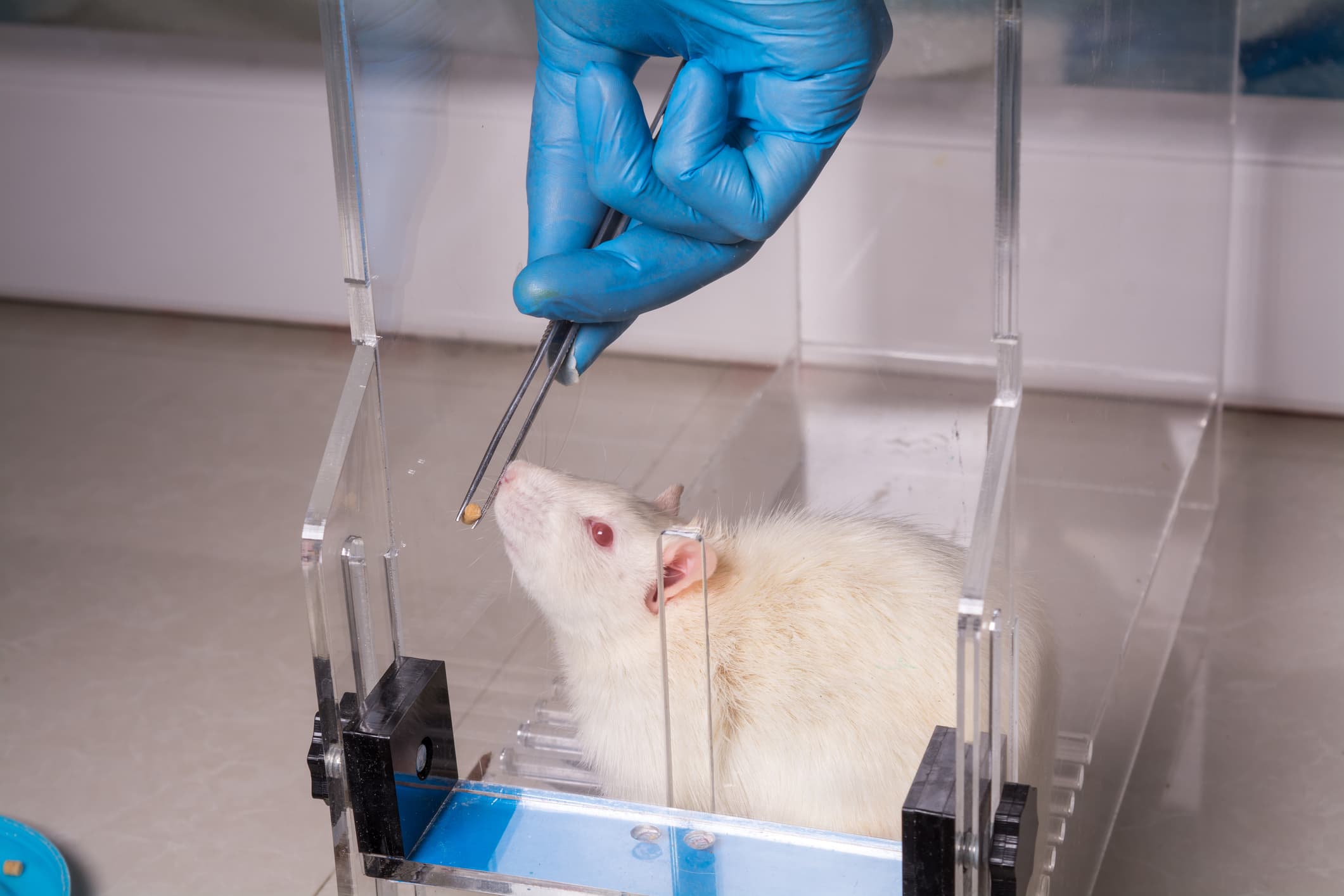
In short, scientists managed to genetically remove almost the entire cerebral cortex of rodents and reconstruct this vital area by grafting tissue derived from human stem cells. The procedure, called xenocortication, demonstrated that human cells can occupy almost the entire cranial cavity of the animal, integrating anatomically and functionally into its neural circuits.
Until now, the biggest obstacle in deciphering neuropsychiatric disorders and the mechanisms of brain development has been the lack of living tissue of human origin. Previous attempts to transplant small fragments of human tissue into the brains of mice or rats quickly encountered major structural limitations: the host animal tissue, which develops at an accelerated rate, suffocated the human graft and blocked its expansion.
To solve this dilemma, the research team led by Romanian-born Pașca created a host animal without a neocortex and hippocampus. For the pups to survive this profound anomaly, the researchers devised a care program, relying on highly active surrogate mothers and a high-calorie diet.
In the space left open, the doctors implanted four human cortical tissues each. The human tissue adapted with a success rate of more than 86% and began a spectacular growth phase.
Between the second and third months after the intervention, the volume of the graft increased almost fivefold, according to the article published in Nature.
By the end of the third quarter of life, human cells had come to form almost 92% of the animal’s entire cortical tissue, with an impressive density of approximately 32,000 neurons per cubic millimeter. This led to the appearance of extremely rare neurons, impossible to reproduce in the laboratory.
These include layer-five projection neurons and Von Economo cells, large, elongated neurons naturally present exclusively in mammals with highly complex brains, such as humans or cetaceans, and completely absent in rodents.
The discovery also represents a turning point for the medicine of the future, Dr. Mihail Pautov pointed out on his Facebook page. The xenocortication platform offers scientists the unique opportunity to observe the birth of human neural circuits in real time, study diseases such as autism or schizophrenia directly at the behavioral level, and test new drugs on living, functional human tissue, long before clinical trials begin in patients.
Free newsletters
Romania, in your inbox before your first coffee.
Get the Daily — the morning briefing, free, in English, unsubscribe anytime. Want business, real estate or travel digests too? Pick your newsletters →