Romania travel: Five reasons to visit Drobeta Turnu Severin
The modern Drobeta Turnu Severin was established only in the 19th century but the city’s history goes back to the time of Roman emperor Trajan. Fans of history and nature might want to add it to their travel list for its ancient and…
RI Newsroom · Journalist
· Updated · 3 min read

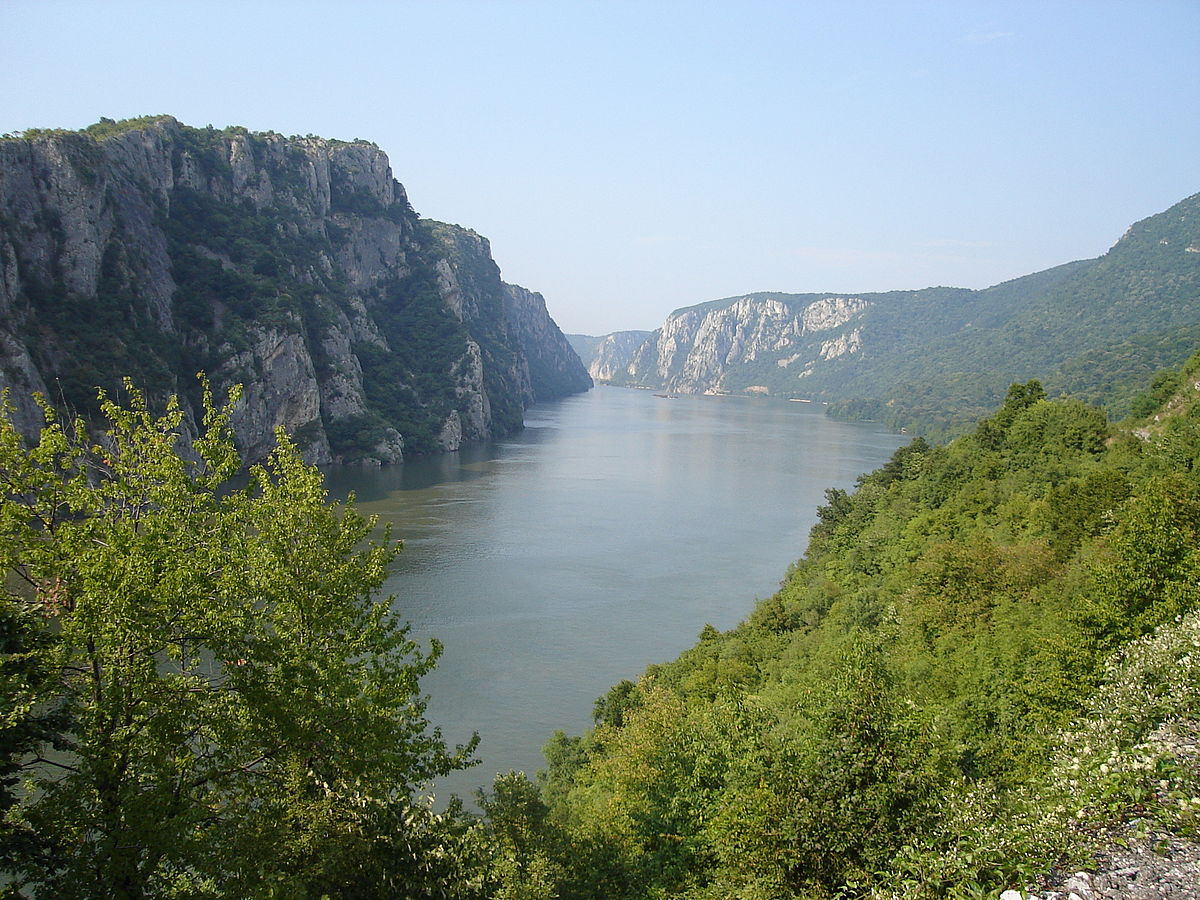
The modern Drobeta Turnu Severin was established only in the 19th century but the city’s history goes back to the time of Roman emperor Trajan. Fans of history and nature might want to add it to their travel list for its ancient and medieval landmarks and proximity to the beautiful Iron Gates nature park.
See the city from the Water Tower
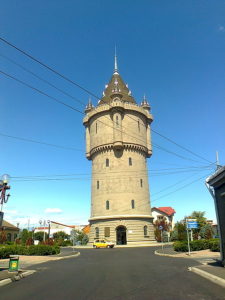
A symbol of Drobeta, the Water Tower was built at the beginning of the 20
th
century as part of the city’s water filtration and supply system. It is built out of reinforced concrete after the plans of Romanian engineer Elie Radu, who worked on many road and railroad projects in the country and on Bucharest’s water supply network. At 27 meters in height and 10 meters in diameter, it has been the city’s tallest building for some time. This is why it served as an observation point for firemen and for the military, during the First World War. The building was recently refurbished with the help of EU funds and turned into an ‘Arts’ Castle,’ hosting various exhibitions, a museum covering the history of Drobeta’s water supply process, and a place to admire the city views. The ruins of Trajan’s Bridge The now disappeared Trajan’s Bridge is considered one of the achievements of Roman engineering. It was a segmental arch bridge, the first one to be erected over the lower Danube. It was constructed around 105 AD by architect Apollodorus of Damascus, at the request of Emperor Trajan, as a route for the Roman troops on their way to invade Dacia.
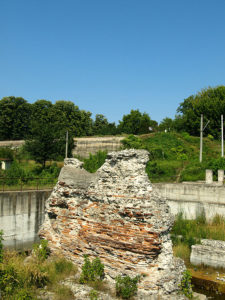
The two ends of the bridge, which measured 1 km in length, stood near today’s Drobeta-Turnu Severin in Romania and Kostol, near Kladovo in Serbia. The exact date when the bridge went out of use is not known. Records show that Emperor Hadrian, Trajan’s successor, ordered its demolition to prevent attacks of the barbarians. By the 6
th
century Byzantine writer Procopius noted that the bridge was in ruins. The 20 pillars of the bridge made it all the way to the 19
th
century but in 1906 the pillars that obstructed the navigation were eliminated, and more followed. Drobeta also hosts the remains of a Roman castrum, a small fortification where military units were housed and which served to defend the bridge.
Free newsletters
Romania, in your inbox before your first coffee.
Get the Daily — the morning briefing, free, in English, unsubscribe anytime. Want business, real estate or travel digests too? Pick your newsletters →