Essential bitcoin performance indicators (press release)
The world of finance has developed quite a bit since the inception of the stock market. As a result, institutional investors are always on the lookout for tools and techniques that’ll give them a good indication of price movements and…
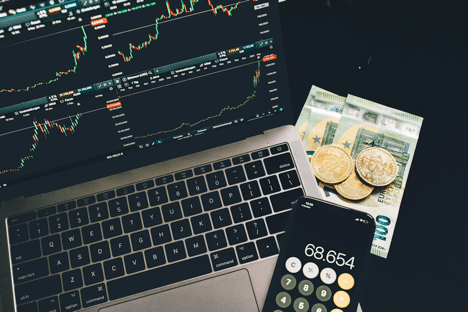
The world of finance has developed quite a bit since the inception of the stock market. As a result, institutional investors are always on the lookout for tools and techniques that’ll give them a good indication of price movements and market standing. The same holds true for Bitcoin. Like stocks and bonds, it too is a financial asset.
Institutional investors have a plethora of resources at their disposal to form the basis of Bitcoin technical analysis. They use what is known as performance indicators to evaluate price data and determine price movement. It gives them a distinct advantage of knowing when to sell or buy the hot cryptocurrency.
Let’s take a look into their industry and see what kind of performance indicators they make use of so that you don’t get left behind or miss out on the action.
What are Performance Indicators?
Simply put, performance indicators are mathematical algorithms that use data from previous price movements to output new price predictions. There are many different kinds, and each has different use cases depending on the trend an asset class exhibits. Keep in mind that they are not 100% accurate and rely on probabilistic models that have a degree of uncertainty included in them.
Moving Averages
This indicator is perhaps the most widely used out there used to identify purchase and selling trade strategies. As its name implies, it takes an average of the value of an asset to smoothen out the price curve. As you must know, Bitcoin’s volatile nature means that its price jumps up and down rapidly compared to other asset classes in the same time period. Smoothing out the curve shows a more distinguishable price pattern, in turn, cleaning data for better predictions. Visit crypto trader software to start investing in bitcoins without any hassle.
There are a few types of moving averages. The one you choose depends on the kind of trader you are. Additionally, the data you plug in depends on the duration of your trades.
Relative Strength Index (RSI)
When an asset becomes overvalued, you can be sure that a subsequent selling period will follow. The opposite is true when it is undervalued. Won’t it be great if a performance indicator predicted just that? That’s exactly what the RSI index is for. It uses a mathematical formula to determine the true value of an asset. Having this information is essential for trading Bitcoin as it allows you to judge market standing before it goes in a direction to remedy itself.
Free newsletters
Romania, in your inbox before your first coffee.
Get the Daily — the morning briefing, free, in English, unsubscribe anytime. Want business, real estate or travel digests too? Pick your newsletters →