Making of Romania: the 18th and 19th centuries – unification, first foreign king
Romanians have always dreamed of being independent and staying united, but they were rarely left in peace for long enough to develop a sense of their own identity. This short overview of the history of Romania will give you an idea about…
Romania Insider · Journalist
· Updated · 4 min read

Romanians have always dreamed of being independent and staying united, but they were rarely left in peace for long enough to develop a sense of their own identity. This short overview of the history of Romania will give you an idea about the events that took place in the 18th and 19th centuries and which shaped the idea of a national identity in the Romanians' consciousness. By Alexandra Fodor The 18th century witnessed the decline of the Ottoman Empire and the rise of the Russian and Austrian ones. The Ottoman Empire, seeking to defend its old position, introduced in Moldavia (1711) and in the Romanian Country (1716) “the phanariot rule” (until 1821). The name comes from Phanar, a quarter of Constantinople, from which the Turks used to appoint Greek rulers in the two principalities. These rulers were seen as more loyal than local Romanian ones. During this time the ottoman political control and the economic exploitation has increased and corruption has spread. Fiscal exploitation, the Ottoman Empire's intervention in the Principalities’ internal affairs and its monopoly over their foreign policy, the deterioration of the two countries’ armies, and the decline in the political autonomy of the Romanian provinces were the main characteristics of the Phanariot regime.
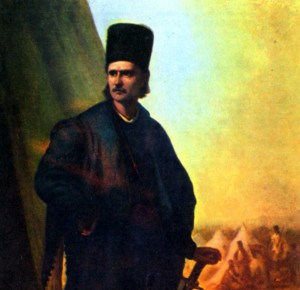
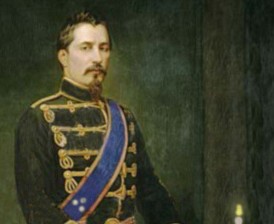
1821 was the year of a revolutionary national and social movement in Moldavia and the Romanian Country (Tara Romaneasca) against the Ottoman Empire’s domination in the two principalities. The 1821 revolution led by the Romanian boyar Tudor Vladimirescu marked the end of the Ottoman domination. Following the Revolution, the Sultan stopped appointing Phanariot Greeks as rulers in Moldavia and the Romanian Country. The main aim of the 1848 Romanian revolution was to unite the Romanian Principalities. The 1848 revolution also targeted the abolition of the boyars’ privileges, civic and political rights, freedom of speech and of the press, and the creation of a national army. The Paris Treaty (1856) stated the autonomy of the Romanian Principalities, which paved the way to setting up of the modern Romanian state. In 1857, the “Ad-hoc Assemblies” voted to create a union of the two Principalities and in 1859 Alexandru Ioan Cuza was elected Prince in both Moldavia and the Romanian Country.
Free newsletters
Romania, in your inbox before your first coffee.
Get the Daily — the morning briefing, free, in English, unsubscribe anytime. Want business, real estate or travel digests too? Pick your newsletters →