Girls just wanna have fundamental human rights
A Polish woman watches from her Bucharest apartment the fight for control over women’s rights and bodies in Poland, and decides to get involved.
Diana Mesesan · Journalist
· Updated · 7 min read
A Polish woman watches from her Bucharest apartment the fight for control over women’s rights and bodies in Poland, and decides to get involved.
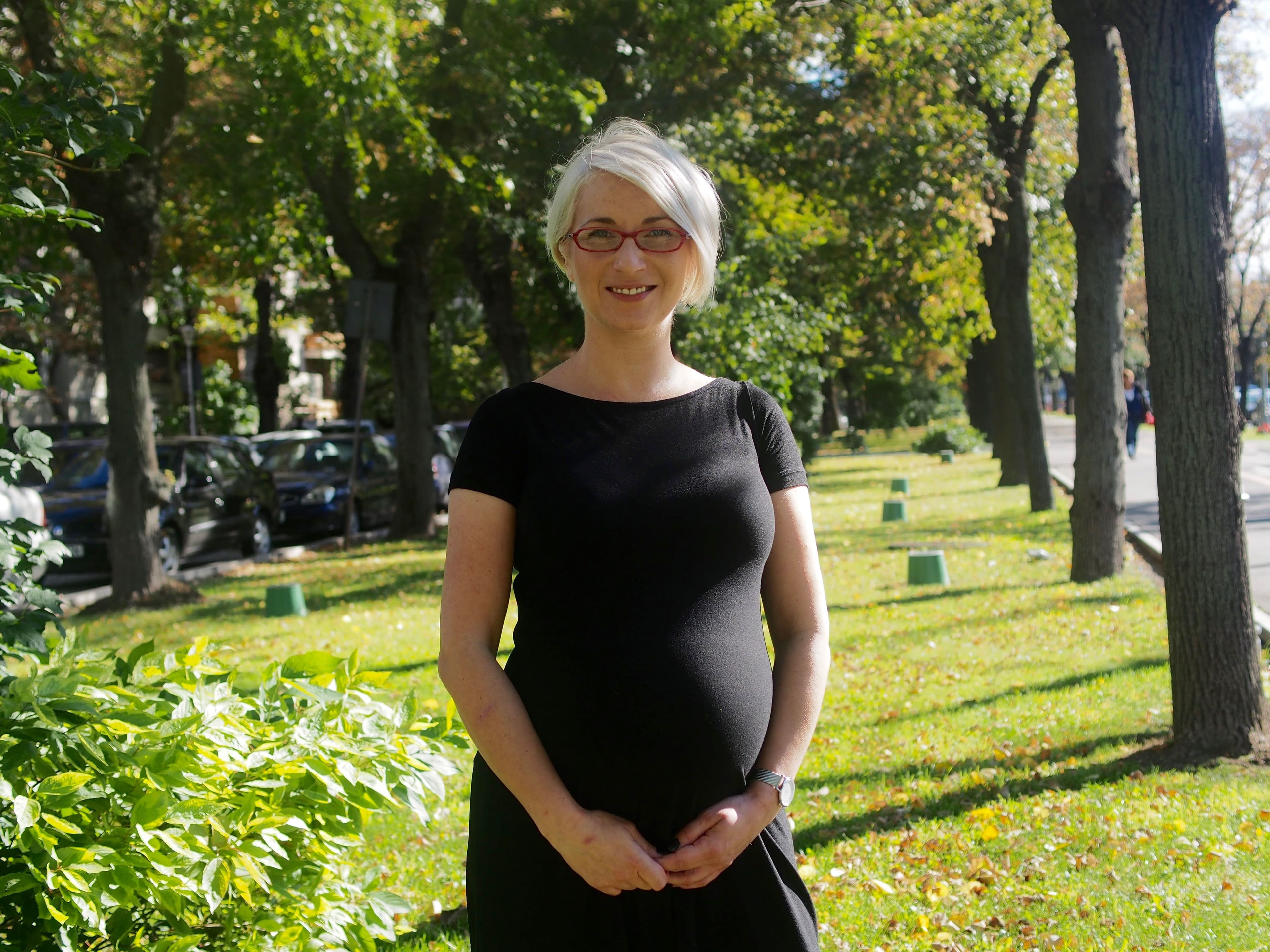
On a chilly Monday evening at the beginning of October, about 80 women and men wearing black clothes gathered in Bucharest to protest about a law that would completely ban abortions in Poland. Most of them were Romanians. Poland is almost 1,500 km away from Romania, but the issue of abortion is still an open wound in Romania. The decree 770, issued in Romania in 1966, led to the deaths of 9,500 women between 1966 and 1989, and left a collective trauma. Some Polish women took part in the protest too. One of them was Karolina Memon, a woman in her 30s with silvery blond, short hair, moving around energetic. Karolina had moved to Bucharest with her husband for his work, and was pregnant in the seventh month. She had come up with the idea to organise the protest, and was expecting to gather up to ten Polish women. But then the event simply exploded, and more than 1,000 people announced on Facebook that they would attend it. One day before the protest, Karolina wrote a Facebook post saying that she didn't get a protest permit, simply because she wasn’t expecting so many people. On Monday afternoon, people met in Piata Romana, in downtown Bucharest, and started walking to the Universitatii Square.