Moody’s welcomes new government in Romania, recalls budget is key
In an ad hoc comment on October 19, just before Parliament’s vote on the new minority government led by prime minister Luca Niculescu, Moody’s Ratings said the new executive could facilitate the timely preparation of the 2027 budget, supporting fiscal consolidation.
iulian ernst · Journalist
· 2 min read
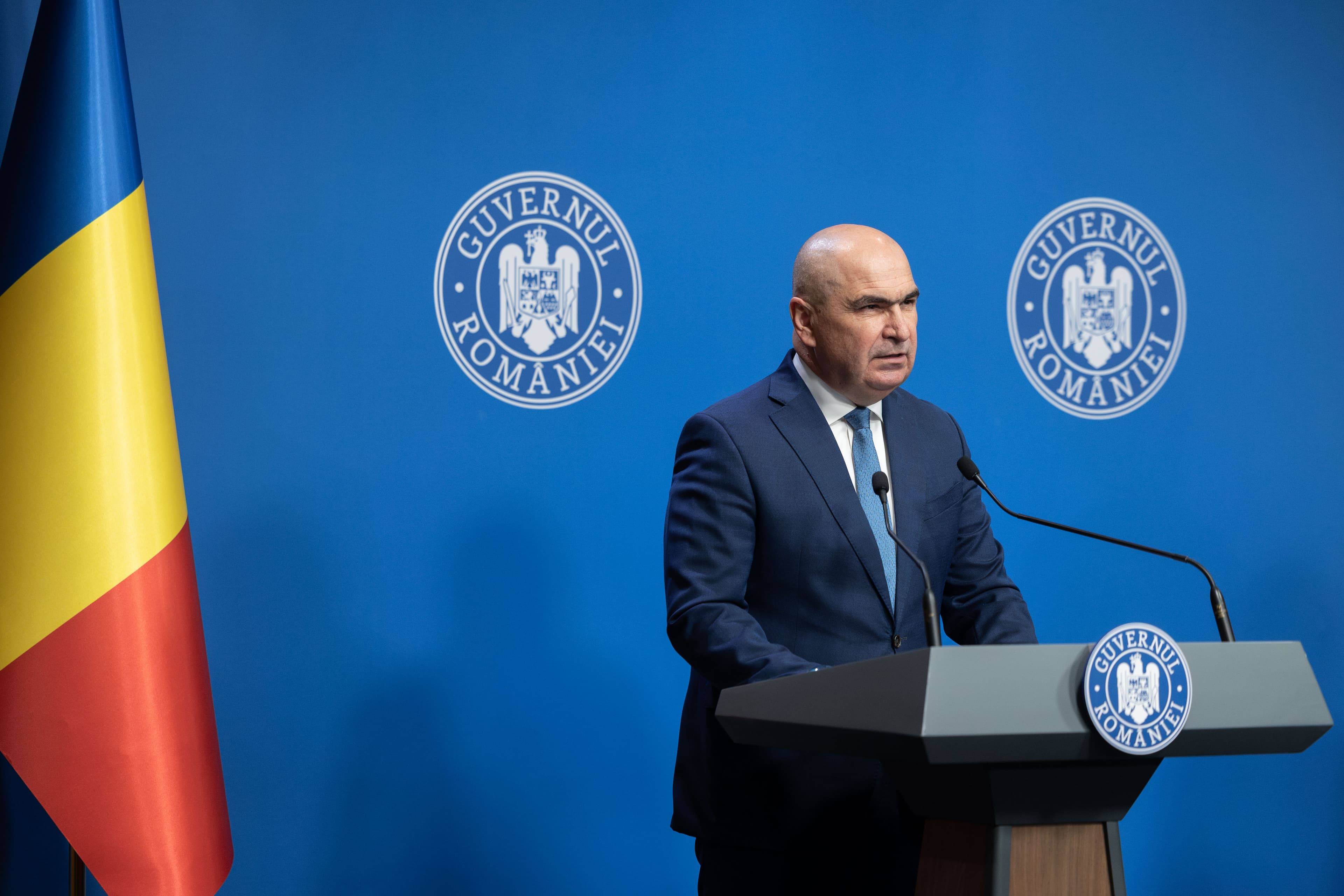
On October 20, Romania's Parliament approved the minority government controlled by the Social Democrats (PSD) but headed by independent prime minister Luca Niculescu.
The update offers a positive note after Moody’s warned on October 1, following the third failed attempt to form a government in Romania, of a significant risk of snap elections and the absence of a 2027 budget by year-end. However, some of the concerns raised by Moody’s on October 1 remain valid: much of the improvement in the budget deficit reflected temporary restrictions on public-sector wages and social transfers, and further measures are needed to continue reducing Romania’s deficit.
The agency highlighted that fiscal adjustment remains difficult and that Romania will have to manage several pressures in the coming period, including rising interest and personnel expenses and additional defence needs.
Moody’s also stressed the need to continue structural reforms that contribute to stabilising public debt and improving its sustainability.
Romania’s Finance Ministry, which will remain under the supervision of Alexandru Nazare, said the Moody’s update was a call “for responsibility and continuity”.
“The 2027 budget will be a major test of credibility: it must be built on realistic revenues, clear priorities and expenditure that the state can effectively support. Given that financing needs remain high, budgetary discipline is not optional, but a mandatory condition for protecting the country’s rating, maintaining creditors’ confidence and preserving Romania’s capacity to finance its development,” finance minister Alexandru Nazare said.
Moody’s maintained the budget deficit trajectory set out in its August 7 sovereign update and anticipated continued fiscal adjustment. The agency estimated that the ESA deficit will decline from 7.9% of GDP in 2025 to 5.8% in 2026 and 5.5% in 2027.
The government has pledged to bring the cash deficit down to 5.3% of GDP. The ESA deficit would probably be 0.1–0.2 percentage points higher. At the same time, the primary deficit is expected to decline gradually to 2.7% of GDP in 2026 and 2.3% in 2027.
In ESA terms, Moody’s deficit trajectory is more demanding than the figures cited by S&P. Moody’s projects a deficit of 5.8% of GDP in 2026 and 5.5% in 2027, while S&P’s baseline scenario envisages deficits of 6.25% and 5.8%, respectively. S&P, however, has used this baseline as a benchmark for potential rating actions, with better-than-expected fiscal performance potentially supporting an upgrade and weaker performance weighing in the opposite direction.
Free newsletters
Romania, in your inbox before your first coffee.
Get the Daily — the morning briefing, free, in English, unsubscribe anytime. Want business, real estate or travel digests too? Pick your newsletters →