The story of an Irish expat in Romania...100 years ago
I recently bought a book called “Twenty years in Roumania,” written by an Irish-born woman Maude Rea Parkinson who lived and worked as a language teacher in Bucharest between 1889 and 1914. She was an expat in Romania a century ago, so…
Diana Mesesan · Journalist
· Updated · 4 min read
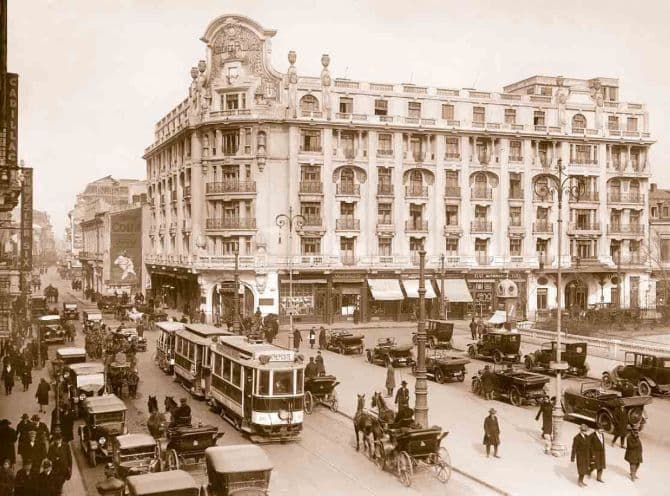
I recently bought a book called “Twenty years in Roumania,” written by an Irish-born woman Maude Rea Parkinson who lived and worked as a language teacher in Bucharest between 1889 and 1914. She was an expat in Romania a century ago, so her experiences must have been very different from the expats living here now, I thought. But after reading the book, I discovered that I was wrong. Most things I’ve learned from interviews with expats, can also be found in Maude’s book. So this is the story of an expat who lived here 100 years ago, but whose observations are still contemporary. “Why, you must be quite mad to think of going so far away to a country of which nobody knows anything at all,” friends and family told her before coming to Romania. Fear of Romania, checked. Of course, Maude disregarded them, and armed with letters of introduction and curiosity for a country that had something of the glamour of the Orient, she proceeded to Bucharest and soon established herself as a teacher of languages in 1889. “For the next twenty two years of my life I lived in Romania; but for the war I should probably be there now.” Maude admits that it was a rash undertaking for a girl to adventure so far afield into the unknown, but she already had some experience living abroad. “And for the rest, I was an Irish girl, and timidity is not a fault which I have ever heard charged against the people of my country.” Upon arriving in Bucharest, in February, she becomes disenchanted with a city covered in snow, with few streets to have any system of drainage, for extensive floods frequently render the road way. But then she meets one of Bucharest’s 200,000 inhabitants, Madame, the school’s principal, that embraces her effusively and kisses her on both cheeks. Romanian warmth: checked. She soon comes to understand that life ain’t that bad in the capital, especially as a foreigner. “Life in Bucharest is very agreeable, especially for foreigners, and especially for the English, who are looked up to and admired by the Romanians. It is curious that with the better-class Romanians English has become more fashionable than their own language.” Expat fascination: checked Maude discovers the beauty of nature in Romania. “The scenery in the Carpathians is very beautiful and at many points even imposing. Rough mountain ponies are used in summer for the ascent of peaks,” she writes. “Romania, by the way, is rich in minerals, but it is regrettable that so few are exploited. It is to be hoped that with time the entire mineral wealth of Romania may be exploited, and thus contribute to the prosperity of the country.” Nature’s awe: checked. Poor exploitation of rich mineral reserves and the country, unprosperous: checked. She starts noticing the political life, including the elections. “When the elections day dawns, then the fun begins. Inside the pulling station there is, besides the recording official, an agent for each side, Conservative and Liberal, who narrowly scrutinises each voter as he appears, and sees to it that he records his vote properly. Trickery is very often practised, so it behoves each one to be on the alert. By some means or other, names of long dead are inserted in the register.”