“Sustainability is the future, not a trend”: business leaders talk green future, new challenges at Sustainability Meets Profitability
Industry leaders as well as startup founders and experts from NGOs argued that being green can be profitable at Sustainability Meets Profitability: How sustainability can benefit the bottom line for businesses in Romania, an event…
Radu Dumitrescu · Journalist
· Updated · 4 min read
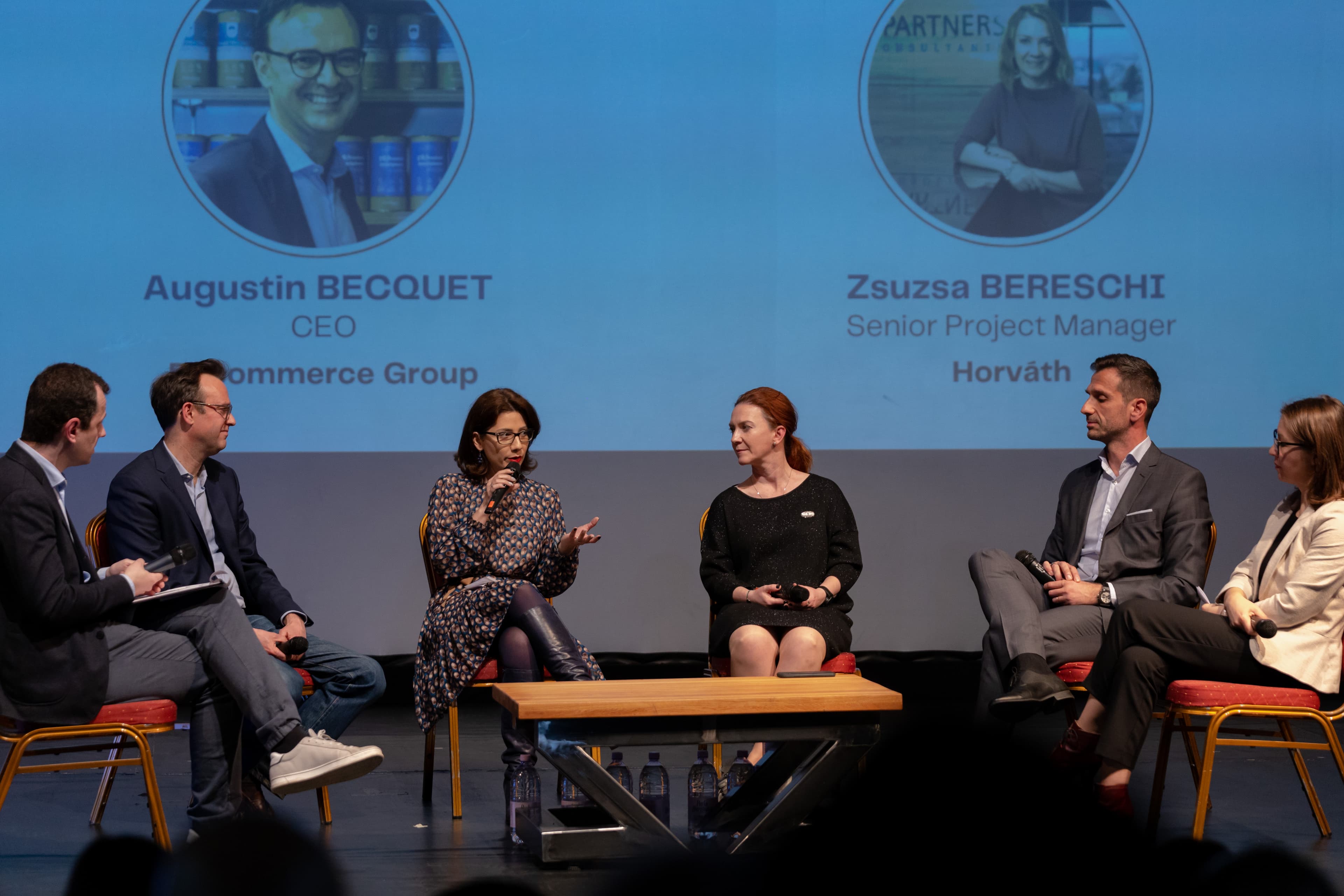
Industry leaders as well as startup founders and experts from NGOs argued that being green can be profitable at Sustainability Meets Profitability: How sustainability can benefit the bottom line for businesses in Romania, an event organized by La French Tech Romania and Romania Insider.
The Luceafarul Hall (the former Cinema Pro) in downtown Bucharest welcomed roughly 500 guests from small startups and large corporations, all involved in implementing sustainability in their business models.
Present for the event, French ambassador to Romania Laurence Auer was among the first speakers. She argued that European companies are paramount for the future green development of the EU and that investment and vision are needed if Europe is to compete with Japan, China, or the US in the field of electric batteries and cars.
As part of the first panel, Oana Grosanu, executive director at the Embassy of Sustainability, an NGO working with companies in Romania, said that there is a fundamental connection between healthy companies and a healthy planet. “Without profitability, we cannot talk about a sustainable business model,” she argued, adding that ESG (Environmental, Social, and Governance) factors should be embedded in every facet of a company for that same goal. Grosanu also noted that for many companies, sustainability used to mean minimizing reputation risks, but that this is no longer the case, as a shift in mentality has taken place among all stakeholders, from clients to investors.
“You cannot do sustainability on your own, it’s a collective effort,” Grosanu added, underlining a program of the NGO, SustainAbility School, which aims to educate entrepreneurs and executives on topics relevant to the ESG agenda. The sessions in the program are online and spread know-how regarding sustainability from specialists.
Also part of the same panel, Corina Chicu, marketing director for Europe Central and South at Michelin, said that sustainability is not a trend, but the future. “To be present tomorrow, companies need to be sustainable,” she added, noting Michelin’s contribution to developing environmentally-friendly tires fitted for heavier electric vehicles.
Sustainability is here to stay, argued Zsuzsa Bereschi, senior project manager with Horváth, explaining that it is coming from a real need to have sufficient resources in the long term. In addition to regulations and frameworks developed by the UN or EU, there is also consumer pressure towards this, as well as pressure from the financial markets to invest in sustainable projects.
Augustin Becquet, the CEO of Recommerce Group, pointed to the recent EU ‘right to repair’ proposal, which tackles obstacles that discourage consumers to repair due to inconvenience, lack of transparency or difficult access to repair services. Recommerce, which is active in the circular economy sector with its model that entails selling refurbished smartphones, needs more generic spare parts to be able to repair more items, he explained.
Free newsletters
Romania, in your inbox before your first coffee.
Get the Daily — the morning briefing, free, in English, unsubscribe anytime. Want business, real estate or travel digests too? Pick your newsletters →