Mashed potatoes with hot dog & love: How an American woman helps kids in Bucharest's poorest neighborhood
It’s mid-October, and the library room of Ruth School, located in Bucharest’s poorest neighborhood Ferentari, is much more crowded than usual. First and second graders are supposed to listen to adults reading them stories, for the Read…
Diana Mesesan · Journalist
· Updated · 6 min read
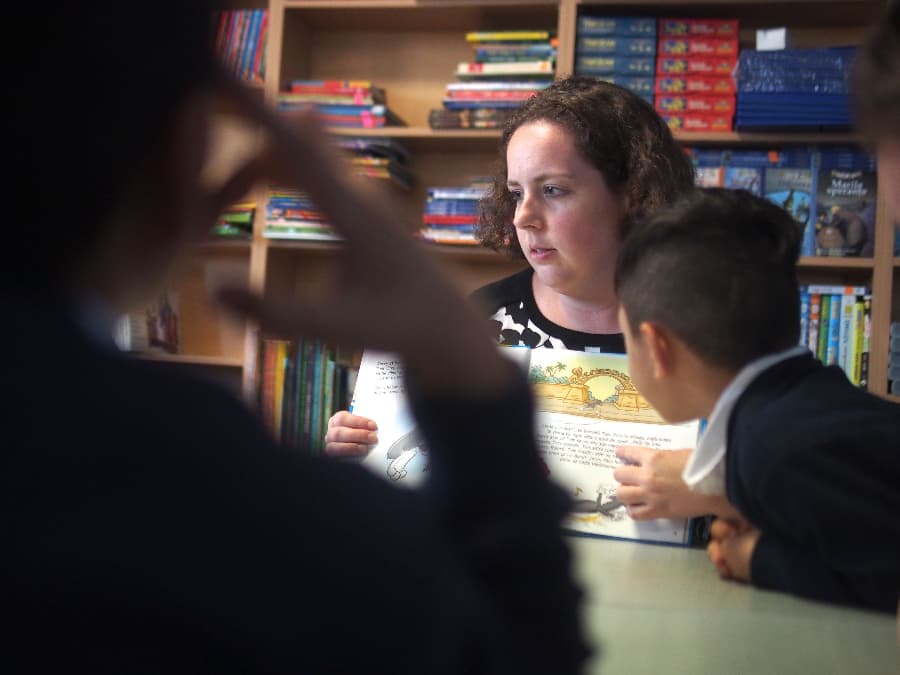
It’s mid-October, and the library room of Ruth School, located in Bucharest’s poorest neighborhood Ferentari, is much more crowded than usual. First and second graders are supposed to listen to adults reading them stories, for the Read Across the Globe event, but kids are moving on their chairs, peeking at their peers, at the photo cameras. Brittany Garton, a young American woman with curly hair and witty eyes, has no problem, however, in getting kids’ attention, while she reads in Romanian the story of Lightning McQueen, the faster-than-fast and quicker-than-quick racecar. But she’s not only reading. She’s constantly interacting with the kids. She’s making funny voices, but her tone is also a bit severe, like, “Kids, I love you, but watch out.” They know each other pretty well. Brittany is the American who lives at the Ruth school, whom the kids always hug, but also the one who constantly asks them about their homework, or about coming to school. “Why do you think this car wins?” she asks. “Because he is the fastest one,” kids answer. “Who says he’s the fastest one? Himself or the others?” “He says it!” “Well, if I say I’m ‘smecher’, am I really ‘smecher’, or it’s just something I believe about myself?” ‘Smecher’, which means cool in Romanian, is a powerful world in the poverty-ridden Ferentari neighborhood. It refers to somebody who knows how to get out of trouble and who can’t be tricked. Brittany feels at home in this part of the capital, which is avoided by most people living in Bucharest, due to its bad reputation for drugs and crime. She has been living here for four years, working as a project manager at Ruth School, a private institution for poor kids in the area, funded by Brits and Americans. But she started coming to Romania when she was 13, on a church program, together with her parents. She can’t even remember how her life looked like before Romania, because this country has always been part of her life.