Romanian marketeer-turned-war correspondent keeps thousands informed on Ukraine war
When digital marketing expert Radu Hossu started writing and posting about Russia’s invasion of Ukraine, he didn’t expect that much would come of it. Night after night, he would update whoever would be reading on the situation at the…
Radu Dumitrescu · Journalist
· Updated · 9 min read
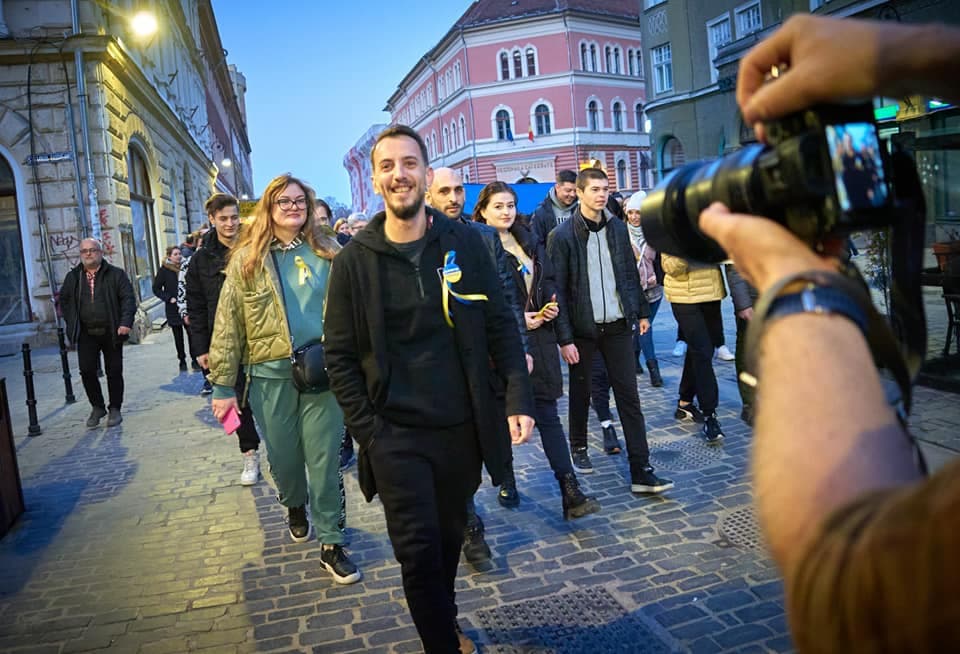
When digital marketing expert Radu Hossu started writing and posting about Russia’s invasion of Ukraine, he didn’t expect that much would come of it. Night after night, he would update whoever would be reading on the situation at the frontlines. Each of his posts now gathers thousands of likes and hundreds of shares from Romanians looking to stay informed on the war.
If traditional news outlets gloss over certain events or limit their reporting to casualties or the names of cities and towns under attack, Radu delves deeper. His posts include precious details – how the battle lines move, what towns might be under attack next, information on Russian deployments and morale, how strong defenses proved to be at a certain location, where missiles were shot from, and what the trends on the ground seem to be. Region by region, sometimes city by city, he lays out clashes and other events in a structured, concise, and easy-to-understand way.
“On February 24, the battle line was about 1,800 km long, stretching from north of Kyiv, going east, all the way to Mykolaiv,” Radu says. “Now, the battle in Donbas has a line of contact that is about 200 km long.”
However, Hossu doesn’t claim to be an impartial observer of the war or an expert. Each of his updates ends with a hearty “Slava Ukraini!” and his posts almost always include an encouragement to fellow Romanians to support Ukraine. Nevertheless, he aims to present the facts. He uses time-tested Telegram and Twitter sources to compile his summary of the latest developments in the ongoing war.
When he clocks out at his job in marketing, Radu begins to work on the draft of the day, combining official reports and statements with accounts posted on social media by people on the ground. Professionally versed in communication, he quickly found his way around informational highways on social media. The war in Ukraine brought the world its most recent look at what modern-day propaganda might look like, and much of that happens on Twitter, Facebook, or TikTok. Hossu thinks that Ukraine and Russia have both used up-and-coming social media platform TikTok during the war.
“Russia is using all the social network platforms to shape a new parallel reality, to create doubt regarding what is really happening in the war,” he says. “TikTok is an entertainment platform where people are more easily manipulated with the help of short visual stories and it is harder to combat fake news there like on, let’s say, Facebook.”
Social media is also where videos showing drone strikes or tank battles are posted, allowing the viewer to see a close-up of other human beings suffering a violent death. “Of course, it affects you,” Hossu says, “but then you come back and think how this happened. We need to look closely at those pictures and realize that those people can be any of us if we do not protect the system of values and our Western world order.”
Free newsletters
Romania, in your inbox before your first coffee.
Get the Daily — the morning briefing, free, in English, unsubscribe anytime. Want business, real estate or travel digests too? Pick your newsletters →