Romania looking for redemption at the 2022 Eurovision Song Contest
Eurovision, the long-running, yearly, continent-wide song contest, takes place this week, with the grand final scheduled for May 14. After failing to qualify for the finals during the past two editions, Romania, represented by WRS…
Romania Insider · Journalist
· Updated · 4 min read

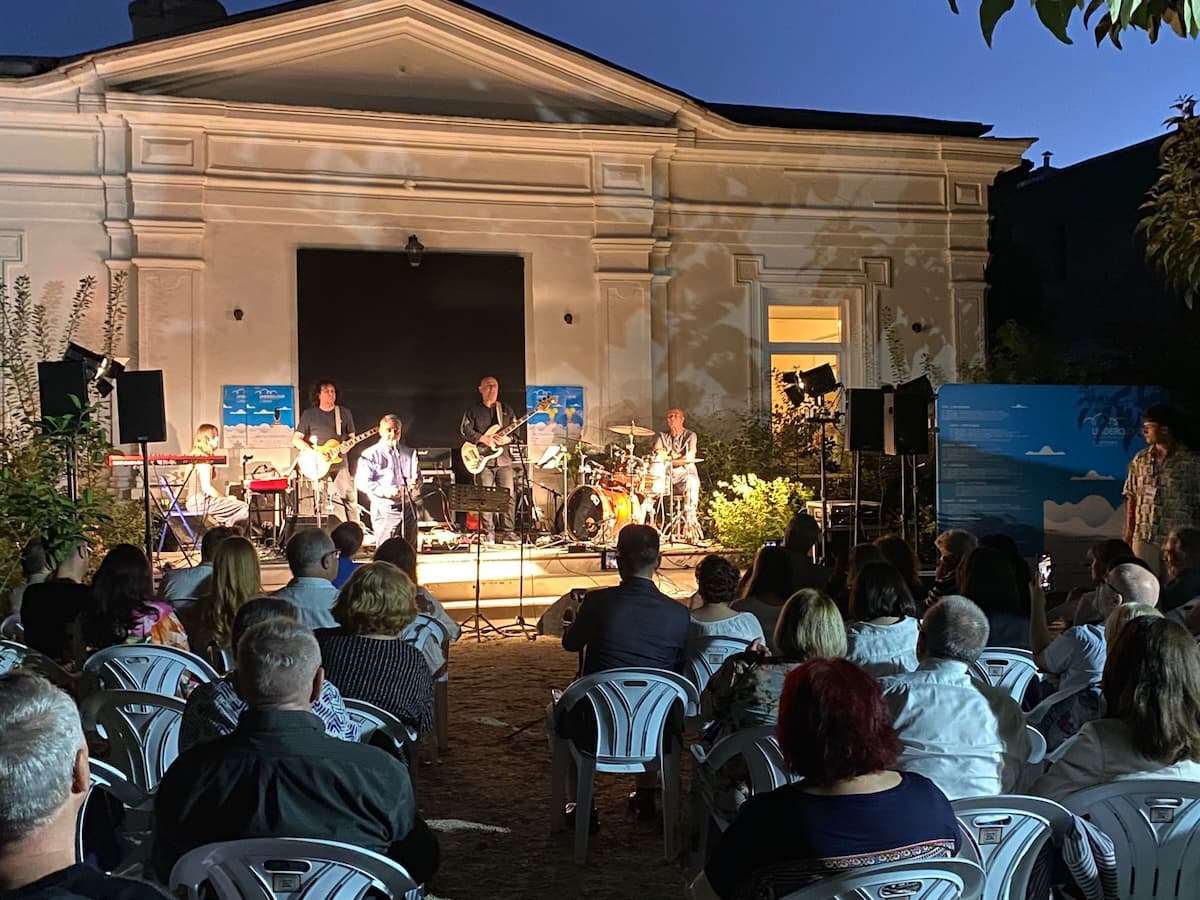
Eurovision, the long-running, yearly, continent-wide song contest, takes place this week, with the grand final scheduled for May 14. After failing to qualify for the finals during the past two editions, Romania, represented by WRS performing his song “Llámame,” is looking for redemption.
This year’s venue is Palasport Olimpico in Torino, Italy, last year’s winner. 41 countries will be reunited there under the slogan “the sound of beauty.”
The Eurovision Song Contest has a long history - so long, in fact, that in 2015 the Guinness Book of World Records recognized it as the Longest Running Anual TV Music Competition. It started in 1956, with just 7 participating countries. Back then, each contestant had to perform two songs. In 1974, ABBA won the contest with the song “Waterloo,” making the first win for Sweden. By the mid-1990s, 25 countries were taking part in the contest. The number kept growing, finally reaching 43 participating countries in 2008. At that point, semi-finals had to be introduced.
Some countries have been more successful than others when it comes to Eurovision. Ireland won seven times, making it the most successful, followed by Sweden with six, then Luxembourg, France, the Netherlands, and the UK, each with five wins.
Romania originally joined the Eurovision Song Contest in 1993, but Dida Drăgan’s “Nu pleca” failed to qualify for the finals. One year later, Romania finally had its debut in the contest through Dan Bittman and his song “Dincolo de Nori,” but placed at a considerable distance from the podium.
Since then, Romania finished in the top 5 on three occasions. In 2005, Luminita Anghel and Sistem represented Romania in Kyiv. Their song, “Let Me Try,” came in first place during the semi-final and third in the grand final, losing to Greece’s Helena Paparizou. One year later, in Athens, Mihai Trăistariu’s “Tornero” won Romania 4th place in the grand final. In 2010, Romania would repeat the 2005 performance, when Paula Seling and Ovi’s “Playing with Fire” was awarded third place in the grand final in Oslo.
From then on, Romania hovered around the middle of the ranking. In 2016, the European Broadcasting Union (EBU) barred Romania from participating in the Eurovision due to long-standing debts incurred by the public Romanian television broadcaster, TVR. The move was unprecedented at that time, TVR being the first broadcaster excluded from the EBU. A year later, however, TVR re-applied for membership and was accepted.
The EBU recently excluded Belarus
Free newsletters
Romania, in your inbox before your first coffee.
Get the Daily — the morning briefing, free, in English, unsubscribe anytime. Want business, real estate or travel digests too? Pick your newsletters →