Ten things to know about Romania’s national poet
Celebrated every January 15, Romania’s National Culture Day coincides with the birth of Mihai Eminescu - the national poet whose work influenced generations of local writers. More than a literary icon, Eminescu remains a central figure in…
RI Newsroom · Journalist
· Updated · 4 min read
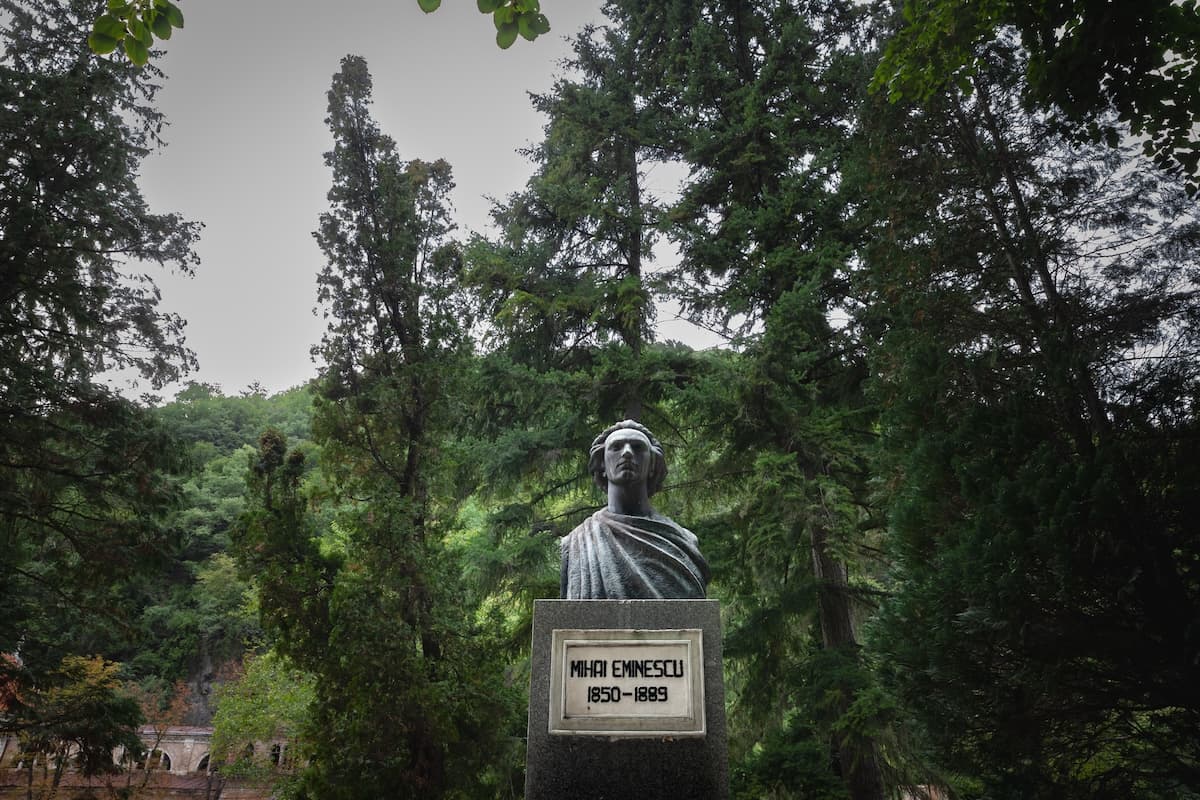
Celebrated every January 15, Romania’s National Culture Day coincides with the birth of Mihai Eminescu - the national poet whose work influenced generations of local writers. More than a literary icon, Eminescu remains a central figure in Romania’s cultural identity. Below are a few things to know about him and his impact. (this article was updated on January 15, 2026)
The birth date of Mihai Eminescu is celebrated on January 15. The date has been, since 2010, Romania’s National Culture Day. Beginning 2013, the Republic of Moldova celebrates its National Culture Day also on January 15.
However, before historians decided on the date, several versions were circulated. As a teenager, Eminescu listed December 20, 1849 as his own birth date in the records of Junimea, a Iasi-based literary society. The archives of the Cernăuţi secondary school, which Eminescu attended, list December 14, 1849 as his birth date. Romanian literary critic Titu Maiorescu, the founder of Junimea, has put forth the January 15, 1850 date, using the historical research of N. D. Giurescu, which included a file with baptism dates of a church in Botoşani, Eminescu’s birthplace. Eminescu’s older sister, Aglae Drogli, also confirmed the date.
Since Eminescu is considered an canonical Romanian author, whose influence spanned over generations of local poets, his work has been widely translated. Some of the first translations of Eminescu’s poems belong to Romania’s Queen Elizabeth, the wife of King Carol I. Queen Elizabeth, who wrote her own literary work under the pen-name of Carmen Sylva, translated some of Eminescu’s poems in German in the 1881 anthology Rumanische Dichtungen, put together in collaboration with Mite Kremnitz.
He published his first poem when he was 16 years old. The poem De-as avea (If I had) appeared on February 25, 1866 in the magazine Familia (The Family). Iosif Vulcan, the director of the magazine, received the poem enthusiastically, and also changed the poet’s signature from Eminovici to Eminescu.
Mihai Eminescu was educated both in Romania and abroad. Between 1860 and 1861 he studied at the Ober Gymnasyum in Cernăuţi, in today’s Ukraine. In 1869 he enrolled at the Philosophy Faculty at the University of Vienna, as an ‘extraordinary’ audit student, meaning he did not have a required set of subjects to study and did not have to sit any examinations. He remained in Vienna until 1872 but did not specialize in any subject.
Between 1872 and 1874 he was a student in Berlin. The Junimea society granted him a monthly financial help to pursue his PhD in Berlin, a plan he never completed and argued was not prepared for. He enrolled at the Humboldt University of Berlin as a regular student. He studied History, Law, Philosophy and Politics.
Free newsletters
Romania, in your inbox before your first coffee.
Get the Daily — the morning briefing, free, in English, unsubscribe anytime. Want business, real estate or travel digests too? Pick your newsletters →