The Brazilian who brings capoeira to Bucharest
The seven-year old José António wasn’t happy with the nickname he got when he started learning capoeira on the streets of Vila Boa, in the north-eastern state of Goiás, Brazil. He was nicknamed Minhoca, ‘little earthworm’, because he was…
Diana Mesesan · Journalist
· Updated · 6 min read
The seven-year old José António wasn’t happy with the nickname he got when he started learning capoeira on the streets of Vila Boa, in the north-eastern state of Goiás, Brazil. He was nicknamed Minhoca, ‘little earthworm’, because he was skinny, small and flexible. The other boys had nicknames like Tiger, Snake, Phoenix. His teacher explained to Minhoca that it’s for him to get stronger. A name means nothing if you don’t work to make it meaningful.
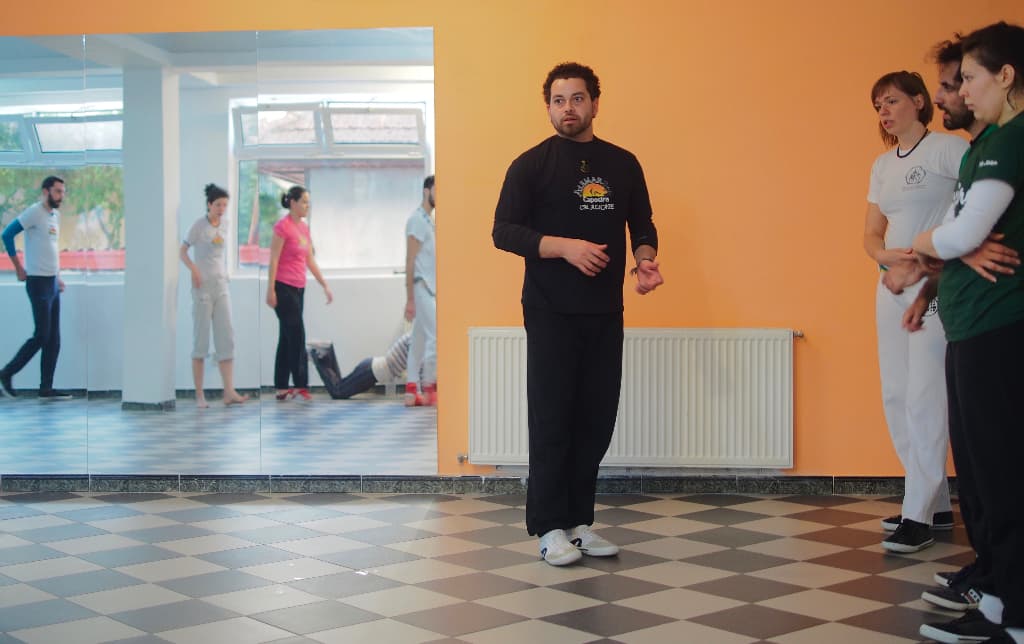
Almost 25 five years later, the ‘little earthworm’ is the only one of that group still practicing capoeira. He is now teaching others the Brazilian martial art of capoeira, in a rented house in Bucharest. “You better decide fast how many Shawarmas you want to order, because it’s very crowded tonight, and you’ll have to wait an eternity,” the woman tells the group of ten people who have just arrived at the Kebab restaurant in the Iancului area, in Bucharest. She is witty and without many pleasantries. Minhoca and his students have finished their training and have come to grab some food after all the effort they had put in the capoeira class. It’s a Friday evening, beginning of May, but it’s still cold outside. Adina, one of the girls who also attended the capoeira class, can’t join the group in the restaurant because she is carrying two little puppies that she found in the street and she’s not allowed to take animals inside. At the end of the Capoeira class I’ve been witnessing from the sideline, watching with awe how people exercise on the checkerboard floor, their bodies strained, but in harmony with the music, I ask Minhoca Alemar if he has time for an interview. He said yes, sure; but he didn’t mention that the whole group would join. So, in about 15 minutes, I was among Minhoca and his students in the kebab restaurant, doing my first group interview. It seemed weird at first, but after a while, it felt natural. Not only are they as close as a family, but also Minhoca’s life in Romania was closely related to theirs.