The sweet life: A Belgian piano teacher’s chocolate factory in a Romanian village
At the foot of the Parang Mountains, in a Romanian village called Buzesti, there is a wooden house with a large balcony. Marie Carels lives here. Go right across the street, and there is the chocolate factory where Marie makes Belgian…
Diana Mesesan · Journalist
· Updated · 6 min read
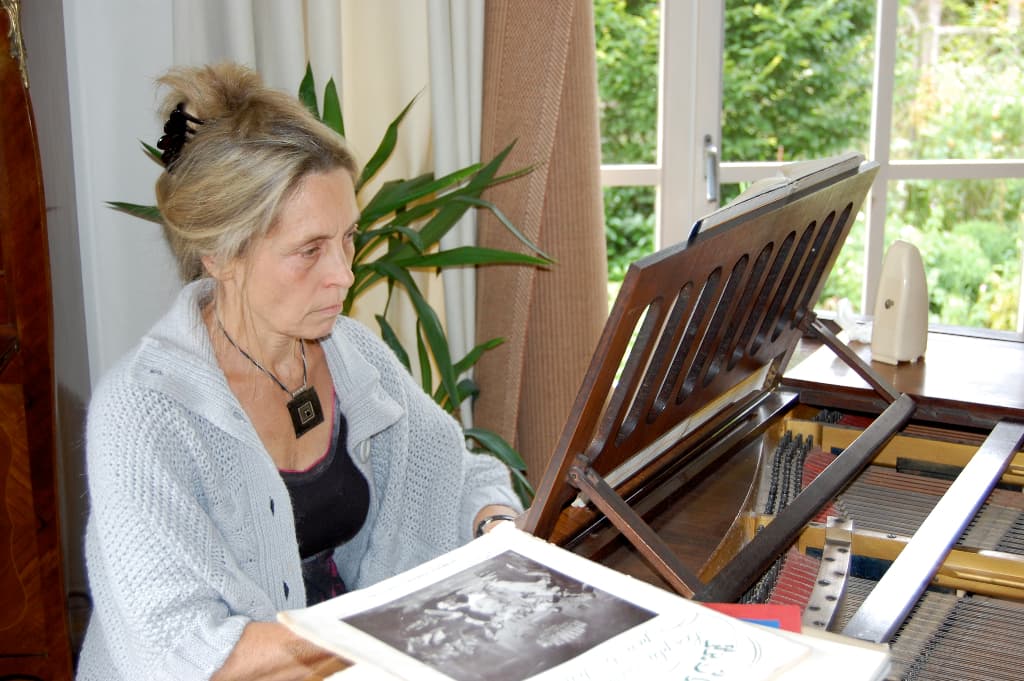
At the foot of the Parang Mountains, in a Romanian village called Buzesti, there is a wooden house with a large balcony. Marie Carels lives here. Go right across the street, and there is the chocolate factory where Marie makes Belgian pralines.
Marie Carels’ career as a chocolate artisan began after she had turned 50. She enrolled at a chocolate academy in her rainy hometown, Brussels, for two years and then took on a one-year job in a famous chocolate factory. It’s not that she got bored with the piano lessons she had been teaching in Brussels for decades. The retirement wasn’t the reason either. She had another ten years to go. Marie Carels did all this because she wanted move to Romania. Her story starts with Harap Alb, the Romanian fairy tale of a prince traveling into a faraway land whose throne he had inherited. Marie received the stories of Ion Creanga, a 19th century Romanian writer who had gathered and reworked Romanian fairy tales, including that of Harap Alb, from her husband’s colleague Radu Balescu. He was teaching statistical physics of charged particles at The Université libre de Bruxelles (ULB), and was a bit nostalgic about his homeland Romania. He translated Creanga’s stories to French for his niece and gave Marie the book to write a music piece based on the fairy tales. Marie particularly liked the story of Harap Alb, because it talked about journeys and encounters. Harap Alb embarks on a journey where he meets several obstacles which he manages to overcome with the helps of magical, funny characters called "Holy Sunday", “Eat All” or “Drink All”. “Journeys and encounters are the antidotes of war,” Marie says. “Once you get to know other lands, other cultures, you start to understand others and you become more tolerant. You don’t kill what you love.” Sitting at the table in her work studio, full with books and piano scores, in the village of Gratty, near Brussels, the woman wrote a piece for piano, violin, cello, percussion and a children’s choir based on the story of Harap Alb. Then it had to be performed, and where if not in Harap Alb’s land, Romania?