Art outdoors: Places to see in Romania
Sometimes a visit to the museum or a gallery is not required to get a dose of art. From sculpture parks to constantly updated work, we outline some of the outdoor options below.
Simona Fodor · Journalist
· Updated · 3 min read

Sometimes a visit to the museum or a gallery is not required to get a dose of art. From sculpture parks to constantly updated work, we outline some of the outdoor options below.
Târgu Jiu is probably the best-known place in Romania to see the works of Constantin Brâncuși. The Calea Eroilor (Heroes' Path) ensemble, inaugurated in 1938, includes the iconic Endless Column, the Gate of the Kiss, the Table of Silence, and the Alley of the Chairs. The celebrated Romanian-born sculptor was asked in 1934 to design a monument to honor the memory of the Romanians who died near the Jiu river during World War I. Aretia Tătărăscu, president of the National Women's League of Gorj and the wife of the prime minister Gheorghe Tătărescu, led the effort to ask the sculptor to create the ensemble.
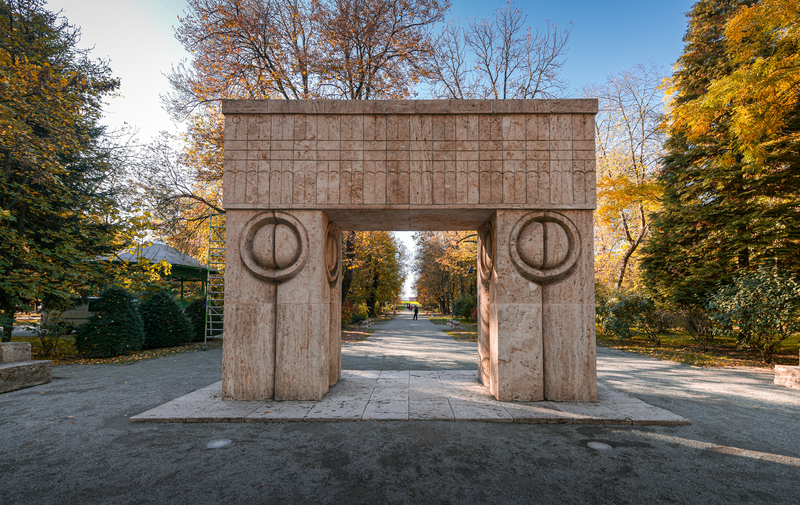
The site was not very well maintained before 1989. In 1996 the Endless Column was placed on the World Monuments Watch List of 100 Most Endangered Sites to point to the poor conservation state of the ensemble. Restorations of the Endless Column and the stone sculptures on site were carried out between 2000 and 2004.
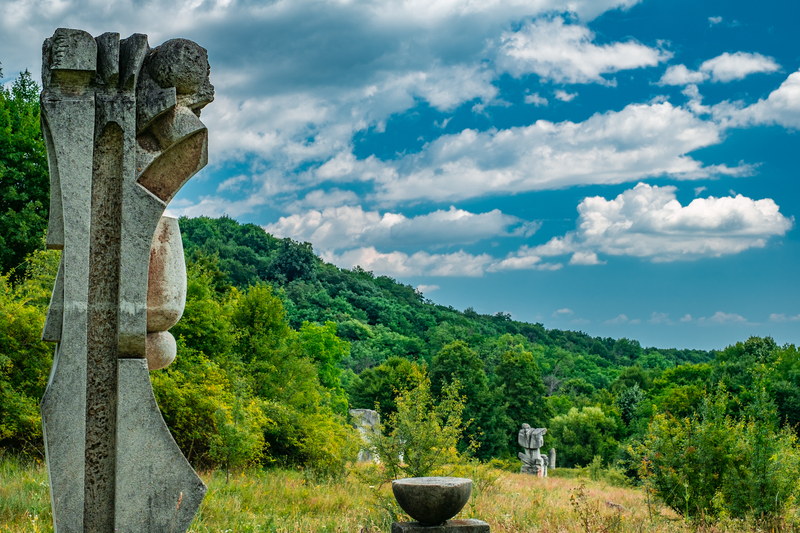
In the 1970s and 1980s, a series of sculpture camps were held in various locations in the country. The camps were meant mostly for recent sculpture graduates, but artists of other generations also attended. Most local sculptors who created reference works in the 1970s and 80s attended one of these events, which resulted in several 'sculpture parks.'
The first camp was organized in Măgura, in Buzău county, where more than 250 works were created after the 16 editions held there. Others were held in Căsoaia, in Arad county, Galaţi, Medgidia, Arcuş, Lăzarea, Hobiţa, Brăila, Poiana Mărului, or Tescani.
In Căsoaia, where more than 70 works were created some 40 years ago, the overgrown vegetation was cleared in 2019, and the local authorities announced at the time plans to promote the site more. The National Museum of Contemporary Art (MNAC) in Bucharest keeps an archive of various materials concerning the phenomenon of the sculpture camps here.
Free newsletters
Romania, in your inbox before your first coffee.
Get the Daily — the morning briefing, free, in English, unsubscribe anytime. Want business, real estate or travel digests too? Pick your newsletters →