Romania travel: Seven landmarks to see in Dobrogea
Dobrogea is a must-see for history buffs, who can find here a wealth of ancient sites but also more recent man-made monuments. From Greek settlements to medieval fortresses and testimonies of the maritime activity in the region, here are…
RI Newsroom · Journalist
· Updated · 4 min read

Dobrogea is a must-see for history buffs, who can find here a wealth of ancient sites but also more recent man-made monuments. From Greek settlements to medieval fortresses and testimonies of the maritime activity in the region, here are some landmarks that tell the story of Dobrogea.
Constanța Casino
Possibly the most talked-about landmark of the region, the Constanța Casino ( i n opening photo) is an architectural jewel sitting on the waterfront of the Black Sea. It first opened to the public in 1910, after the city had two other casino structures, starting 1880. It was designed by architect Daniel Renard in the Art Nouveau style, with many decorative elements inspired by the sea. After being repurposed during the communist regime and then neglected for years, the building eventually fell into disrepair. The repair works have started only recently, after years of postponed bids for works and campaigning from heritage supporters. Although it cannot be visited yet on the inside, as refurbishment works are ongoing, those who are in the area can \catch a glimpse of it, and revel in its looks, referencing a more glamorous time.
The Grand Mosque of Constanța
Dobrogea, which was under the Ottoman rule for several centuries, has been a melting pot of various cultures, with a now minority population of Turks, Tatars, Greeks, Armenians, and Aromanians or Macedo-Romanians. Among the landmarks testifying to the diversity of the region, is the Grand Mosque of Constanța, a spiritual home for the Muslim community here. Its construction started in 1910, on the orders of King Carol I. Its minaret is 47 meters tall and its interior stair has 140 steps. Among the patrimony items hosted by the mosque is a Persian rug weighing almost 500 kg. It was donated by sultan Abdul Hamid II to the mosque on the island of Ada Kaleh, and in 1965 it was brought to the Constanța Mosque, imam Ali Selcin told Libertatea. Because of its impressive size, it can only be admired partially rolled out.
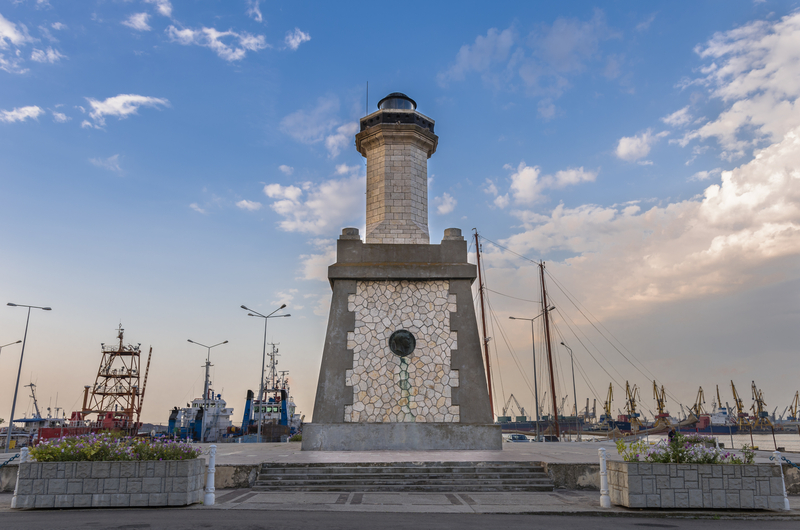
The Genoese Lighthouse in Constanța
A testimony of the naval activity in the area, the Genoese Lighthouse in Constanța lit up this February for the first time in more than 100 years. It is unknown if the name references its Genoese builders, or it is an attribute given later. However, its current look dates back to 1858 – 1860, when French engineer of Armenian origin Artin Aslan rebuilt a previous construction. The 12-meter tall lighthouse was in use until 1913 when the more modern Carol I lighthouse took over the role of guiding the ships towards the port of Constanța.
Free newsletters
Romania, in your inbox before your first coffee.
Get the Daily — the morning briefing, free, in English, unsubscribe anytime. Want business, real estate or travel digests too? Pick your newsletters →