Urban regeneration is changing the face of Romanian cities
Romanian cities and their dwellers have started to benefit from urban regeneration, a trend that involves investments in redeveloping areas of cities that are either former industrial sites or just underutilized spaces, to prevent their…
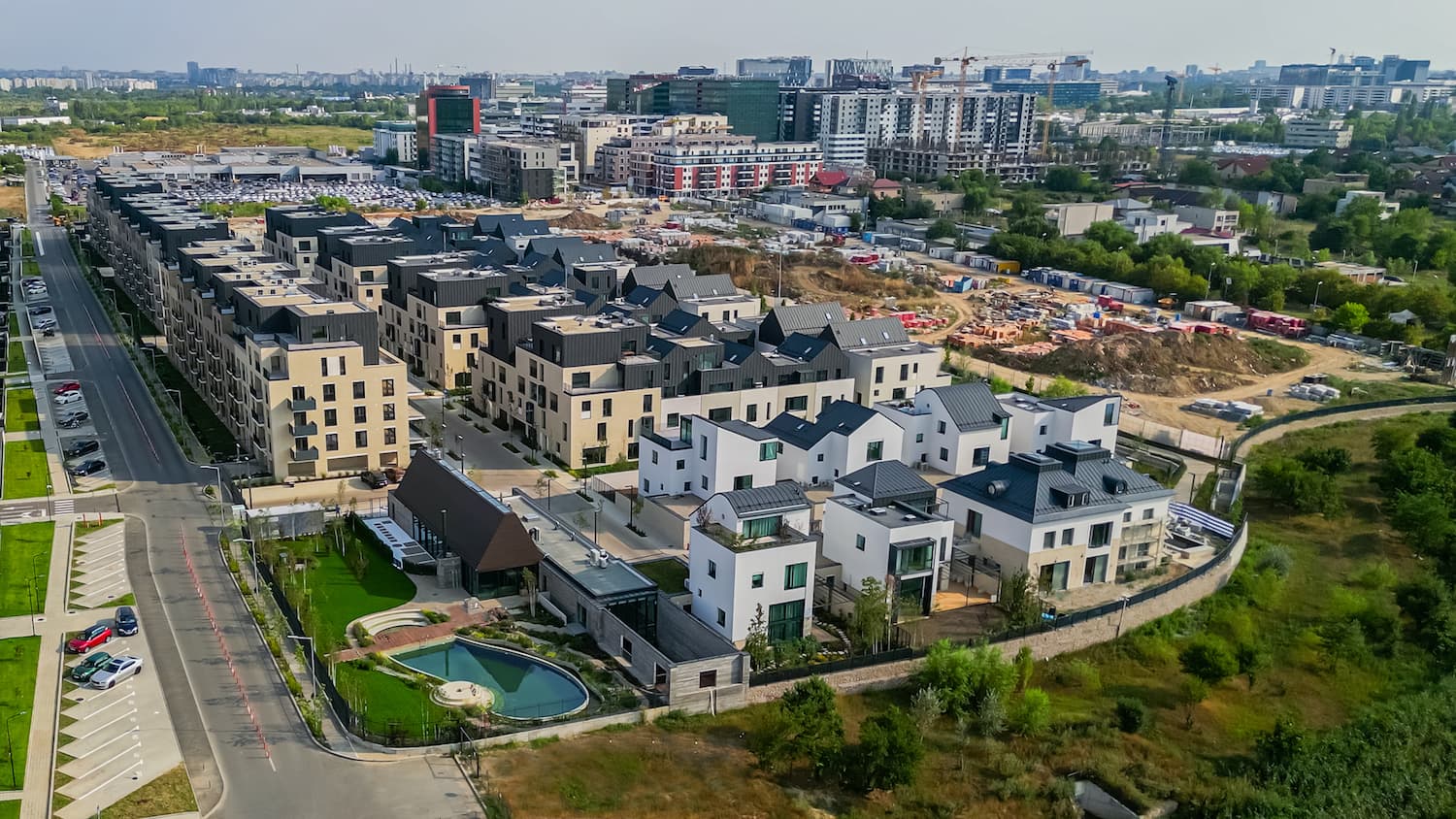
Romanian cities and their dwellers have started to benefit from urban regeneration, a trend that involves investments in redeveloping areas of cities that are either former industrial sites or just underutilized spaces, to prevent their decay.
Very often, real estate developers contribute to urban regeneration by developing residential, office or mixed-use properties at the outskirts of cities.
This is backed by demand from home buyers who prefer to give up living in unsafe apartment blocks with facilities that are obsolete, unmodernised and that offer low urban comfort levels, in favour of dwellings located outside the large cities.
Such urban areas that have been given a new life are the North–West -and the North–East of Bucharest. In the North-East, in the Pipera area, a former industrial location of the capital city, residential and office buildings now mix together after massive private investments in the past 20 years.
The Chitila area, in North–West, is also a former industrial part of the city, known decades ago for its factories and the railway station in the area. Both of these areas are now renewed, with plenty of amenities, new functions, and re-developed green spaces.
Prime Kapital Development is building residential projects in both of these areas in the capital city, contributing to their regeneration. Buyers have already moved to both compounds. Avalon Estate in the Pipera area welcomed its first dwellers and its central park is now completed. Marmura Residence in Bucureștii Noi is already brimming with life, and only a few apartments are still available.
The developer is contributing to the regeneration of other cities as well, such as Ploiești, a 1-hour drive from capital Bucharest, and Iași in Northern Romania. The developer's site works on Pleiades Residence in Southern Ploiești is progressing and the first phase of the compound is due to be ready this year.
Meanwhile, the Silk District mixed-use neighbourhood in Iași, a large project developed on 100,000 sqm situated on Calea Chisinaului, already sold over 500 apartments. This region of the city was known in the 1960s for its textile factory, and it is now re-developed as a mix of offices, retail and residential.
Free newsletters
Romania, in your inbox before your first coffee.
Get the Daily — the morning briefing, free, in English, unsubscribe anytime. Want business, real estate or travel digests too? Pick your newsletters →