OAR Bucharest: Romania’s architectural design market grows tenfold in 25 years
Architects are now preparing for a future shaped by artificial intelligence, decarbonisation, and increasingly severe climate and seismic risks.
Irina Marica · Journalist
· 2 min read
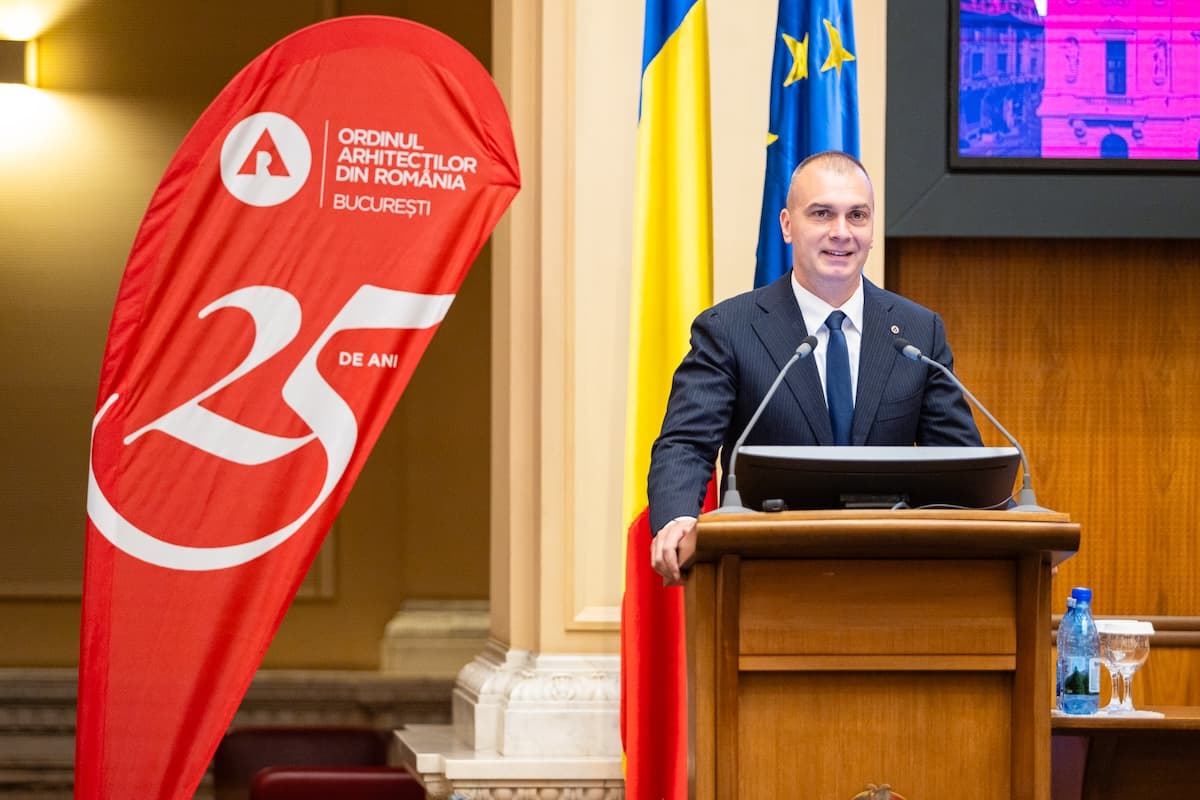
Romania’s architectural design market has expanded from less than EUR 30 million in 2001 to more than EUR 300 million in 2026, according to estimates from the Bucharest branch of the Romanian Order of Architects (OAR). The capital city accounts for approximately half of the national market.
The figures were released on Thursday, October 8, as OAR Bucharest marked 25 years since the professional organisation was established.
The Bucharest branch has grown from 1,290 members in 2001 to 4,788 active architects today, representing approximately one-third of the country’s architects. Women now form the majority, with 2,601 female and 2,187 male members, compared with 480 women and 810 men at the organisation’s launch.
An estimated 3,500 to 4,000 architecture firms operate across Romania, according to the same report. While architecture businesses rarely exceeded EUR 1 million in annual turnover in 2001, the largest firms now generate EUR 3-6 million, while the top ten have combined revenues of EUR 20-30 million.
Average design fees have also increased from EUR 3-10 per sqm to EUR 15-45 per sqm. OAR Bucharest attributed part of the rise to more detailed projects and larger multidisciplinary teams that now include BIM managers, nearly zero-energy building auditors, and specialists in traffic, landscape, acoustics, and environmental certification.
“Artificial intelligence, BIM, decarbonisation, climate change, and the industrialisation of construction are not topics for conferences in 2030,” said OAR Bucharest president Sergiu Petrea. “They are already affecting our profession today.”
The organisation is working with foresight specialist Bülent Duagi on scenarios examining how architecture could evolve by 2051. The exercise considers different levels of AI involvement in design and regulatory compliance, alongside climate and seismic pressures ranging from gradual change to overlapping shocks such as extreme heat, floods, and a major earthquake.
“The question is no longer whether the profession will change, because it is changing already,” Sergiu Petrea said. “The question is whether we will shape that change or merely watch it happen.”
Initial consultations with members identified three priorities: making architectural practice more sustainable, clarifying the architect’s value as AI automates tasks, and strengthening trust and cooperation within the profession.
OAR branches in Bucharest, Iași, Timiș, and Transylvania are also signing the BITT strategic partnership. The agreement is intended to simplify professional processes, support joint initiatives, and create a shared database of tools, resources, and best practices.
Free newsletters
Romania, in your inbox before your first coffee.
Get the Daily — the morning briefing, free, in English, unsubscribe anytime. Want business, real estate or travel digests too? Pick your newsletters →