DRS in Romania: from implementation to a European benchmark for the circular economy
Romania, which for years ranked last in the EU for packaging waste recycling, now stands at the forefront of Europe’s circular economy, proving that a country with initially fragile infrastructure can implement, in record time, one of the…
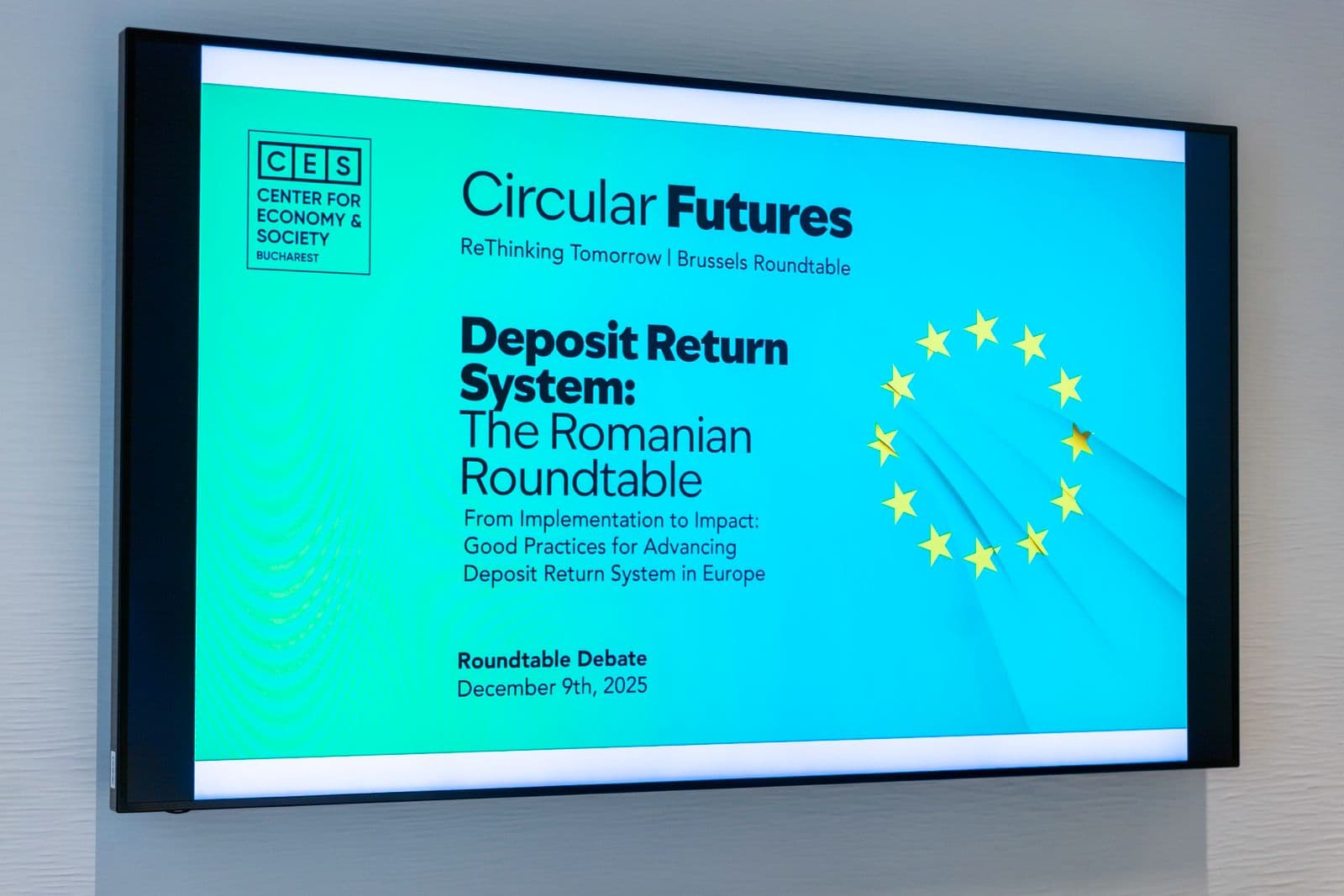
Romania, which for years ranked last in the EU for packaging waste recycling, now stands at the forefront of Europe’s circular economy, proving that a country with initially fragile infrastructure can implement, in record time, one of the most effective collection and recycling systems in Europe. This rapid transformation is taking place in a European landscape where many deposit-return systems have been operating for decades—such as Sweden, with a DRS running for more than forty years, or Norway, Denmark and Germany, which introduced theirs between 1999 and 2003—according to public data analyzed by the BUCHAREST CENTER FOR ECONOMY & SOCIETY (CES Bucharest).
18 countries in Europe have implemented a Deposit–Return System to date, the most recent including Romania, Austria, Slovakia, Hungary and Ireland. Two years after its launch, Romania’s Deposit–Return System - DRS - operated by RetuRO, is no longer just a national environmental initiative but a strategic infrastructure that has become a European benchmark.
Romania’s DRS: the largest fully integrated system in the world
In terms of volumes handled and market size, Romania’s DRS is the third largest in the European Union, after Germany and Poland, in a country of nearly 19 million inhabitants with a significantly rural demographic structure, according to recent RetuRO data analyzed by CES Bucharest. Moreover, the Romanian model is currently considered the largest fully integrated deposit-return system in the world, because it operates under a single central administration, with a standardized national operational framework, and covers three material types simultaneously—PET, metal, and glass. The system was implemented through an initial €4 million loan from beverage producers, followed by an €86 million green loan contracted by RetuRO, guaranteed through corporate guarantees from producers. Additional investments of €70 million are planned by 2029.
A driver of the circular economy
The rapid increase in return rates is one of the clearest indicators of the system’s maturation. In 2024, 3.36 billion containers were collected out of a total of 6.1 billion placed on the market. The first ten months of 2025 show a major leap: 4.5 billion returned containers out of 5.3 billion placed on the market. This represents an approximate 62% increase in the volume collected. In 2024, Romania—together with the other 14 EU countries that have implemented a DRS—managed to collect 88% of packaging waste (PET, glass and aluminium).* Romanians return containers at collection points for different reasons: young people combine the refund incentive with environmental care; families with children see it as an educational and moral tool; and seniors feel useful and engaged in their community. The system also creates economic opportunities for vulnerable groups, generating stable income and basic financial security.
Free newsletters
Romania, in your inbox before your first coffee.
Get the Daily — the morning briefing, free, in English, unsubscribe anytime. Want business, real estate or travel digests too? Pick your newsletters →