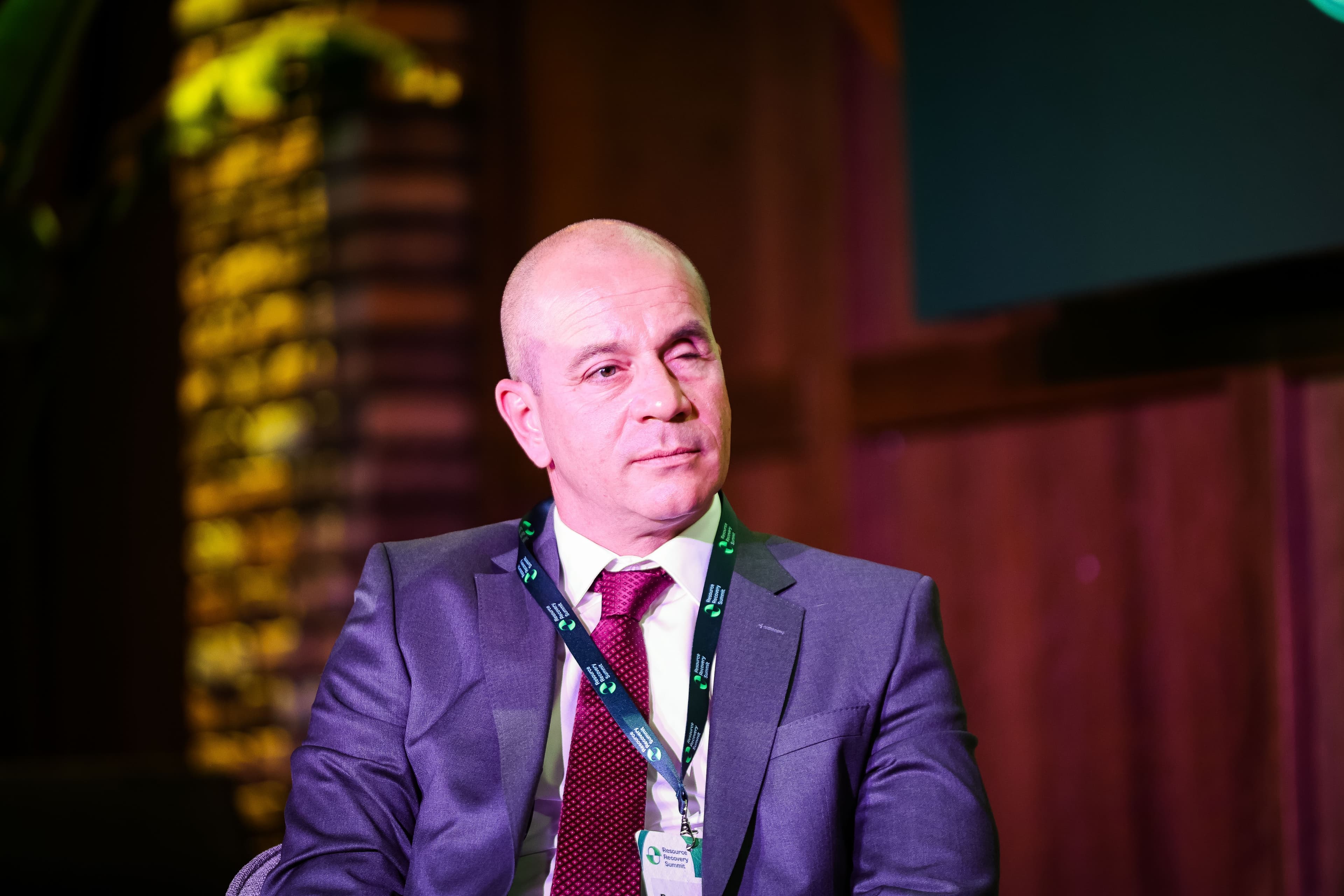
Bogdan Purcherea, Envipco: “Romania’s DRS is already performing like a far more mature system”
In Europe’s race to build more efficient circular economy systems, Romania has become one of the markets drawing the closest attention.
In Europe’s race to build more efficient circular economy systems, Romania has become one of the markets drawing the closest attention.
What began as an ambitious national rollout has quickly turned into a case study watched by policymakers, producers, retailers and technology providers across the region. AtResource Recovery Summit 2026 in Bucharest, Romania’s Deposit Return System stood at the center of a wider conversation about what makes these systems work, and what other countries can realistically learn from them. For Envipco, a strategic partner of the Summit and an active player in multiple global markets, Romania’s experience matters not just because of the speed of implementation, but because it shows how performance can be achieved in a market that is far from simple. Romania Insider spoke with Bogdan Purcherea, Managing Director of Envipco Romania and Business Development Director Europe, about what Romania has already achieved, what proved harder than expected, and why the next generation of DRS systems will need to be built around local realities, not templates. What has Romania achieved so far, and why does it matter now in a wider European context? What stands out most is the speed at which the system came together. Government, producers, retailers and solution providers moved relatively quickly from legislation to implementation, found workable solutions and delivered results faster than many expected. Two years in, Romania’s DRS is already performing at a level usually associated with systems that have been running for much longer. That is a meaningful result in itself, but it also matters because other countries are now actively looking at Romania as a reference point. That is part of what made the conversation at Resource Recovery Summit so relevant. Romania was not discussed as a country still trying to prove that DRS can work. It was discussed as a market already generating lessons that others can use. Circular economy is often discussed in broad terms. In practical terms, what does a system like DRS actually deliver? The collection rate is the most visible measure, and in Romania the system has already exceeded the 80% target set by law for 2025. At this scale, in a market as diverse as Romania’s, that is a real operational achievement. But the real value goes beyond volume. A DRS produces cleaner, better sorted material than general recycling streams, which makes it much more useful for producers trying to secure reliable recycled content, including rPET. For recyclers, predictability and material quality matter as much as quantity. There is also a very practical environmental gain: once a container is returned through DRS, it stays in the value chain instead of ending up as waste. That is where circular economy stops being an abstract concept and becomes an operational one.
Free newsletters
Romania, in your inbox before your first coffee.
Get the Daily — the morning briefing, free, in English, unsubscribe anytime. Want business, real estate or travel digests too? Pick your newsletters →