Romanian Parliament again passes controversial integrity law invalidating mandate of Timisoara mayor
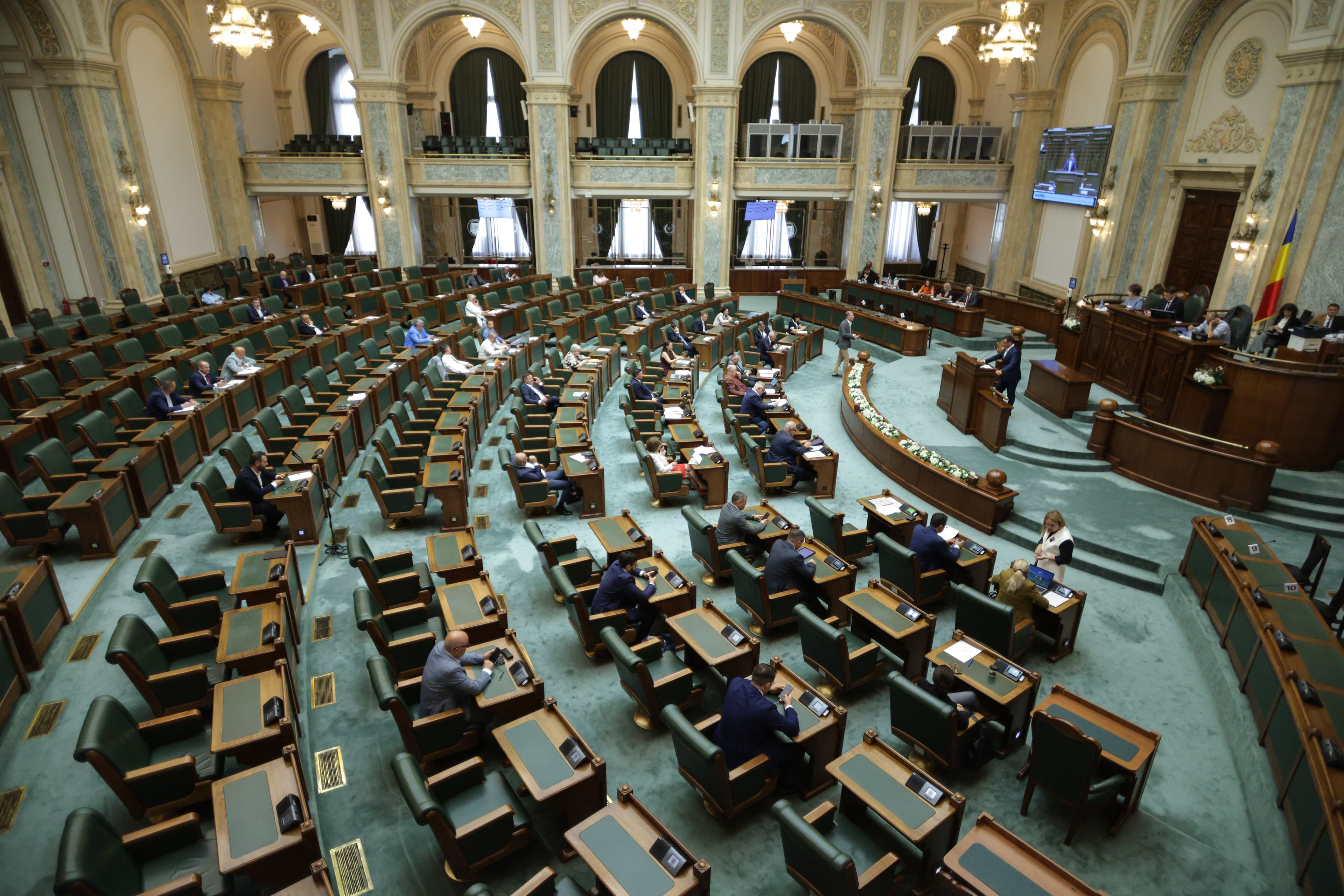
The Romanian Senate, acting as the decision-making chamber in the case, passed the controversial law governing the National Integrity Agency, or ANI, on Wednesday, August 26, after it was amended to take into account decisions of the Constitutional Court. The bill passed the upper house of Parliament with 106 votes “for” and 19 “against," according to Digi24.
Earlier this month, in a 5-3 vote, the Romanian Constitutional Court approved the so-called “Fritz Amendment,” introduced by the Social Democratic Party (PSD) into the law governing ANI. The same law is a PNRR milestone with EUR 770 million attached to it.

A new vote in Parliament was necessary after CCR judges ruled that parts of the initial bill were unconstitutional. The problematic provisions concerned the asset declarations of public officials, which would have made them partially public.
The most controversial amendment of the bill, however, was approved by CCR. It stipulates that elected officials in office lose their mandate within 30 days if they receive a final decision of incompatibility or conflict of interest, even if this decision predates the new law. This means that the law would apply retroactively.
The "Fritz amendment"
In June, Romania's High Court of Cassation and Justice upheld a Timișoara Court of Appeal ruling that found Timișoara mayor and leader of Save Romania Union (USR), Dominic Fritz, in an administrative conflict of interest. As such, under the amendment, Fritz is expected to lose his position within 30 days of the legislation entering into force. The USR leader announced that he will challenge the decision at the European Court of Human Rights, and argued that the measure applies to a past action, although the Romanian Constitution states that laws should apply only to the future.
During debates in the Senate before the final vote, PSD representatives stood by the amendment. “Fritz was convicted by the courts in Romania. Fritz must go home. You cannot sacrifice Romania’s interests just to sacrifice Fritz,” said Social Democratic Senate leader Daniel Zamfir after the final vote in the Senate.
“This is how the establishment of communism began in Romania: through laws that eliminated political opponents. You deserve the phrase – the red plague,” responded USR Senate leader Sorin Șipoș.
The Liberals (PNL), allies of USR, also voted in favor of adopting this bill, although they initially opposed the amendment targeting Dominic Fritz.
"The vote on the ANI law was a difficult one for PNL, because a provision that changes the rules in the middle of the game is deeply immoral and unfair, regardless of the legal tricks used to explain it,” said PNL leader and interim prime minister Ilie Bolojan in a post on Facebook. He argued that Romania direly needs the EUR 770 million in PNRR funds connected to passing the law.
“The lack of these European funds would have implications for the country’s budget, with investments being financed to a significant extent from this money. In addition, the risk of Romania being severely downgraded in terms of its sovereign rating would increase significantly, with serious consequences for the standard of living of all Romanians,” he concluded. Nevertheless, Bolojan said the law could be changed in the future.
Earlier this week, the political groups to which PNL and USR belong at the European level, namely the European People’s Party (EPP) and Renew Europe, asked European Commission President Ursula von der Leyen not to allocate the PNRR funds connected to the integrity law to Romania due to the retroactive application of the law.
Less transparency in officials’ assets
The incompatibility section is not the only change in the new law. Under the new version, even less information will be published about the assets of public officials than provided for in the initial bill. A “public financial interests sheet” will be generated, which will not provide details about assets owned by a public official, while their value will be included in ranges.
For example, in the case of cars, the year of manufacture or model will no longer be declared, while in the case of homes and land, addresses, areas or values will no longer be published.
(Photo source: Inquam Photos|Alexandru Nechez)