Romanian cities race to become the European Capital of Culture
In 2007, the central Romanian city of Sibiu was an European Capital of Culture together with Luxembourg and Greater Region (Belgium, Germany, Luxembourg, and France) and I think it was a real success. This year there are several Romanian…
Mariana Ganea · Journalist
· Updated · 5 min read
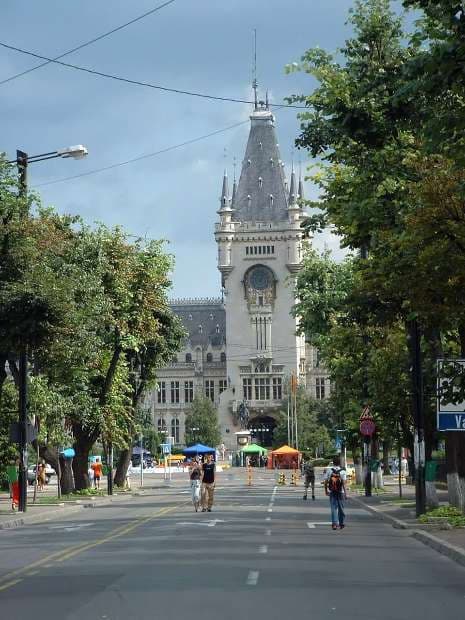
In 2007, the central Romanian city of Sibiu was an European Capital of Culture together with Luxembourg and Greater Region (Belgium, Germany, Luxembourg, and France) and I think it was a real success. This year there are several Romanian cities competing to become the European Capital of Culture in 2021: Arad, Cluj-Napoca, Craiova, Iasi and Timisoara. Let's have a look at what these cities have to offer the world, and then at what the whole European Capital of Culture is all about. Arad Arad is the capital city of Arad County, located in the historical region of Crişana in the Western part of Romania. It is an important industrial center and transportation hub on the Mureș River, being the most important trans-European road and rail transportation junction point in western Romania, included in the 4th Pan-European Corridor linking Western Europe to South-Eastern European and Middle Eastern countries. Arad is the 12th largest city in Romania and the third largest city in the Western part of the country, close to Timișoara and Oradea. Arad is also the seat of a Romanian Orthodox archbishop and hosts two universities, a Romanian Orthodox theological seminary and a training school for teachers and one of the first music conservatories in Europe (1833). Arad has a theater, a philharmonic and several museums. Cluj-Napoca Cluj-Napoca is the capital city of Cluj County in the northwestern part of Romania, located in the Someşul Mic River valley, in the historical region of Transylvania. It is considered the unofficial capital to the region. Cluj-Napoca is the second largest city in Romania after the capital Bucharest. Geographically, it is located at roughly the same distance from Bucharest (324 kilometers), Budapest (351 km) and Belgrade (322 km). Cluj-Napoca was the official capital of the Grand Principality of Transylvania, between 1790 and 1848 and between 1861 and 1867. The city spreads out from St. Michael's Church in Unirii Square, built in the 14th century and named after the Archangel Michael, the patron saint of the city. It is one of the most important academic, cultural, industrial and business centers in Romania. Cluj-Napoca has the country's largest university, called Babeş-Bolyai University, with a famous botanical garden. The city hosts many cultural institutions such as operas, theaters, foreigner culture institutes, a philharmonic, museums. It also hosts the headquarters of the largest Romanian-owned commercial bank, Banca Transilvania. Craiova Craiova is the capital city of Dolj County, located in the southwestern part of Romania in the historical region of Oltenia, near the east bank of the river Jiu. The city is Romania's 6th largest, and a longstanding political center. Craiova is the most important commercial city west of Bucharest and the most important city of the Oltenia region. It is known for hosting Ford's car plant. Craiova has a well-known university and a very famous theater, a philharmonic, as well as museums.