Romania presidential elections 2019: Who are the winners and the losers after the first round? - comment
Romania’s incumbent president Klaus Iohannis is the clear winner after the first round of the presidential elections on Sunday, November 10. He received 3.47 million votes (37.8% of the total number of valid votes), one million more than…
Andrei Chirileasa · Journalist
· Updated · 4 min read
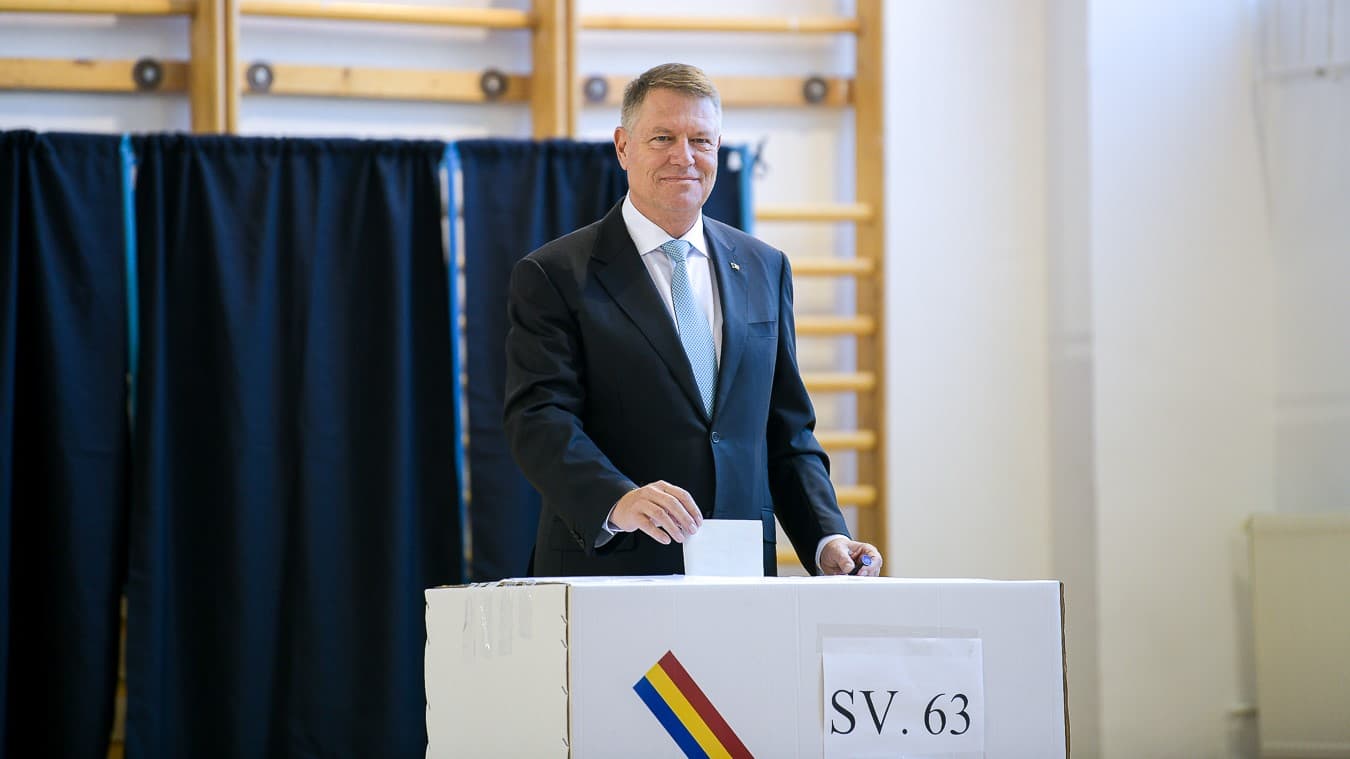
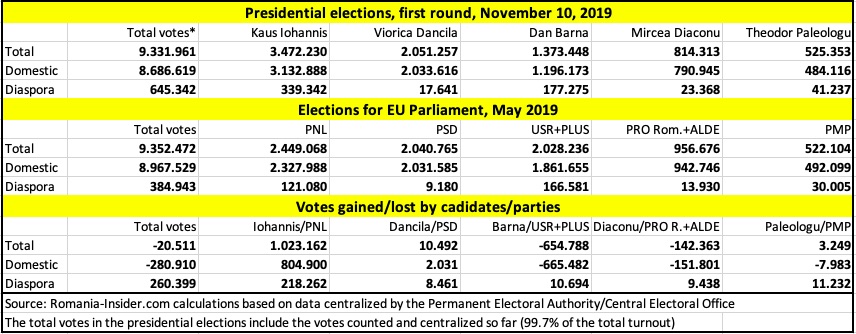
Romania’s incumbent president Klaus Iohannis is the clear winner after the first round of the presidential elections on Sunday, November 10. He received 3.47 million votes (37.8% of the total number of valid votes), one million more than his party – the National Liberal Party (PNL) got in the elections for the European Parliament in May. Thus, Iohannis not only capitalized on his party’s score but also managed to draw voters from other parties as well as new voters.
Iohannis was a clear winner in the Diaspora, where he received some 340,000 votes, some 218,000 votes more than PNL got in the European elections. In fact, most of the 260,000 new voters in the Diaspora (compared to the European elections) voted for Iohannis.
In the country, most of the extra votes for Iohannis came from the Save Romania Union (USR)+PLUS Alliance. The president received 800,000 more votes in Romania than PNL got in the May elections. Meanwhile, the USR+PLUS candidate Dan Barna received 665,000 fewer votes in the country than the alliance got in May.
Dan Barna, the USR leader, is the clear loser after the first round of the presidential elections. He managed to raise just 1.37 million votes while the USR+PLUS Alliance got over 2 million votes in the European elections (a score very close to that of the Social Democratic Party – PSD). Barna managed to keep the alliance’s votes abroad but failed to make the best out of the record turnout in the Diaspora. In the country, most of the votes he lost went to Iohannis.
Former prime minister Viorica Dancila, the leader of the Social Democratic Party (PSD), can also be considered a winner after the first round, simply because she managed to conserve her party’s votes and make it to the second round. Dancila received 2.05 million votes while PSD got 2.04 million in May. This shows that PSD still has a stable voter base that it can count on even under the worst of circumstances, given that the party was removed from power before the presidential elections and Viorica Dancila was considered a weak candidate.
Actor Mircea Diaconu got over 790,000 votes (8.9% of the total), which is a good score for an independent. He thus managed to surpass his score at the European elections in 2014, when he got 380,000 votes (6.81% of the total), also as an independent. In the presidential elections, Diaconu was backed by two smaller parties – PRO Romania and ALDE, which had a combined score of around 10% in the elections for the European Parliament in May this year.
Why did Iohannis win?
Free newsletters
Romania, in your inbox before your first coffee.
Get the Daily — the morning briefing, free, in English, unsubscribe anytime. Want business, real estate or travel digests too? Pick your newsletters →