Buzau Geopark targets UNESCO membership and transforming region into top ecotourism spot in Romania
”A landscape that could only be dreamed up by the Brothers Grimm.” That's how a British journalist with The Guardian described the Buzau region after a week bicycle touring through the Buzau Mountains. Of the few visitors to the area, most…
Romania Insider · Journalist
· Updated · 4 min read

”A landscape that could only be dreamed up by the Brothers Grimm.” That's how a British journalist with The Guardian described the Buzau region after a week bicycle touring through the Buzau Mountains. Of the few visitors to the area, most share the same impression and are surprised by the spectacular sights hidden just 130 km from Bucharest. But Buzau is largely unknown to the wider public due to an absence of infrastructure and a lack of tourism promotion. An ambitious project aims to change this in the next five years: The Geopark 'Tinutul Buzaului' strives for UNESCO Geopark membership in order to promote the region at a European and worldwide level.
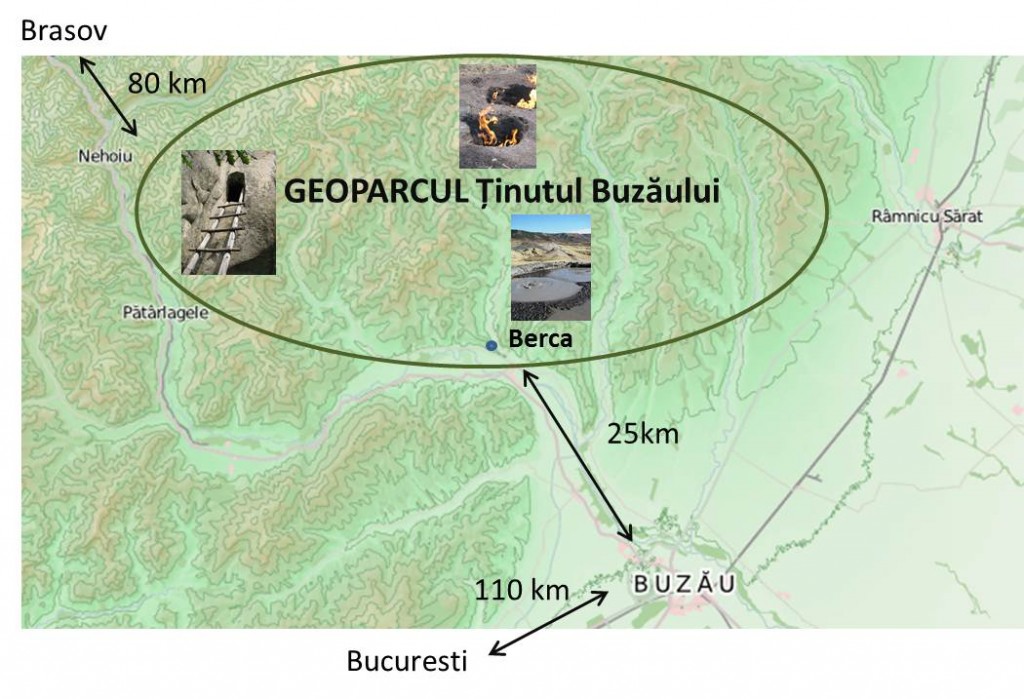
by Thorsten Kirschner Perhaps nowhere else in Romania can such a diversity of geological treasures be found: unique phenomena in Europe, such as the Mud Volcanoes at Berca or the Living Fires at Lopatari, the Salt Mountains near Manzalesti, the oil springs at Pacuri, or the amber mines at Colti, Romania’s only amber extraction site. The idea of creating a Geopark in Buzau county was born several years ago, initiated by the Geomedia Centre of the University of Bucharest. A Geopark comprises a certain number of geological sites of particular importance along with archaeological, ecological, historical or cultural sites. The European Geoparks Network was created with the support of the EU and in cooperation with UNESCO in 2000, to preserve the geological heritage and to support sustainable regional development in geopark areas. Since then, 48 Geoparks accross Europe have joined the network. The future Geopark Tinutul Buzaului, or Land of Buzau, covers a area of more than 100,000 hectares, 18 municipalities and around 50,000 inhabitants. It will be located in the Northwest of Buzau exactly at the crossroads of three historical regions of Romania Transylvania, Moldova and Wallachia (see map below). The Southern entrance point will be 130 km from Bucharest and the Northern entrance point 80 km from Brasov, which will make the park attractive for foreign tourists visiting both Bucharest and Transylvania, or passing from Transylvania to the Danube Delta direct via Buzau valley. Center of the future Geopark will be the village of Berca. Besides the geological phenomena, the Geopark offers a wide biodiversity and several world-class cultural sites. The triangle created by the Vrancea, Buzau and Covasna counties is one of the wildest regions in both Romania and Europe. An area of more than 3,000 km
²
without public roads or settlements and with butterflies, bears and wolves as denizens. From a cultural point of view, the cave churches and settlements of Buzau are no less than the cradle of Christianity on Romanian territory – an archaeological and cultural treasure amidst a breathtaking landscape. Hiking, biking, adventure, nature & cultural tourism will be the main activities in the future Geopark. The project managers have the ambitious long-term target to transform Buzau into one of Romania's top destinations for ecotourism. A sustainable tourism development strategy should avoid the mistakes made in Prahova valley or Brasov: No concrete bunker guest-houses with screaming colors, no barbecue and french fries mass-tourism. Instead; rural wood cabins, fresh local food from the farmers and hunters and an experience of the natural world that has all but disappeared in Western Europe.
Free newsletters
Romania, in your inbox before your first coffee.
Get the Daily — the morning briefing, free, in English, unsubscribe anytime. Want business, real estate or travel digests too? Pick your newsletters →