Bucharest Centennial: Palace of the Parliament, the mega construction of the last century
Romania-Insider.com has started a series of articles about Bucharest landmarks of architecture or history, which have witnessed the last century of what is now the Romanian capital, and noteworthy people who have helped build the Romanian…
Romania Insider · Journalist
· Updated · 4 min read
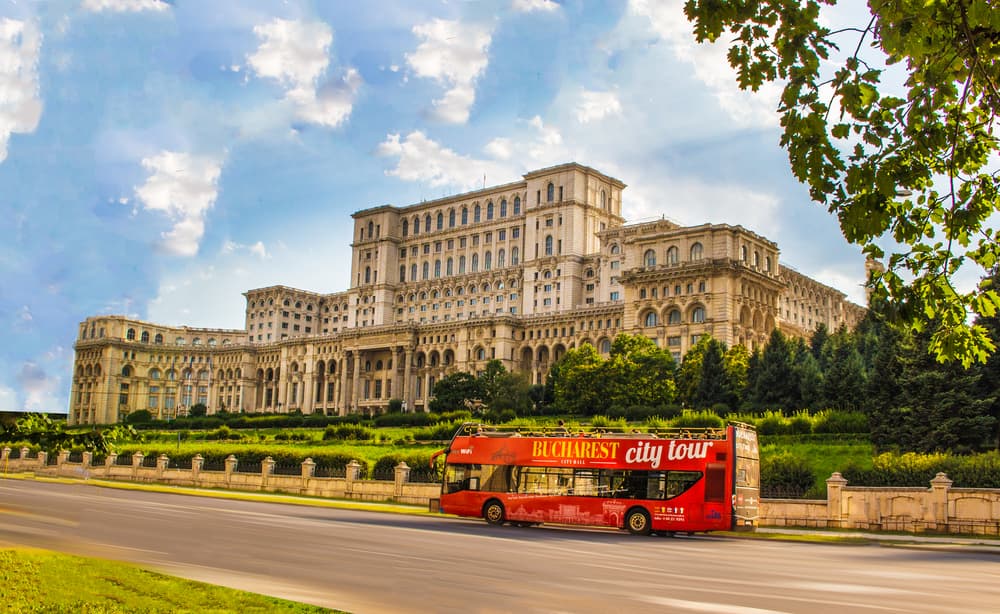
Romania-Insider.com has started a series of articles about Bucharest landmarks of architecture or history, which have witnessed the last century of what is now the Romanian capital, and noteworthy people who have helped build the Romanian capital as it is today. This project is supported by the Bucharest City Hall through the Public Monuments and Touristic Heritage Administration (AMPT), within the cultural program Bucharest-Centennial.
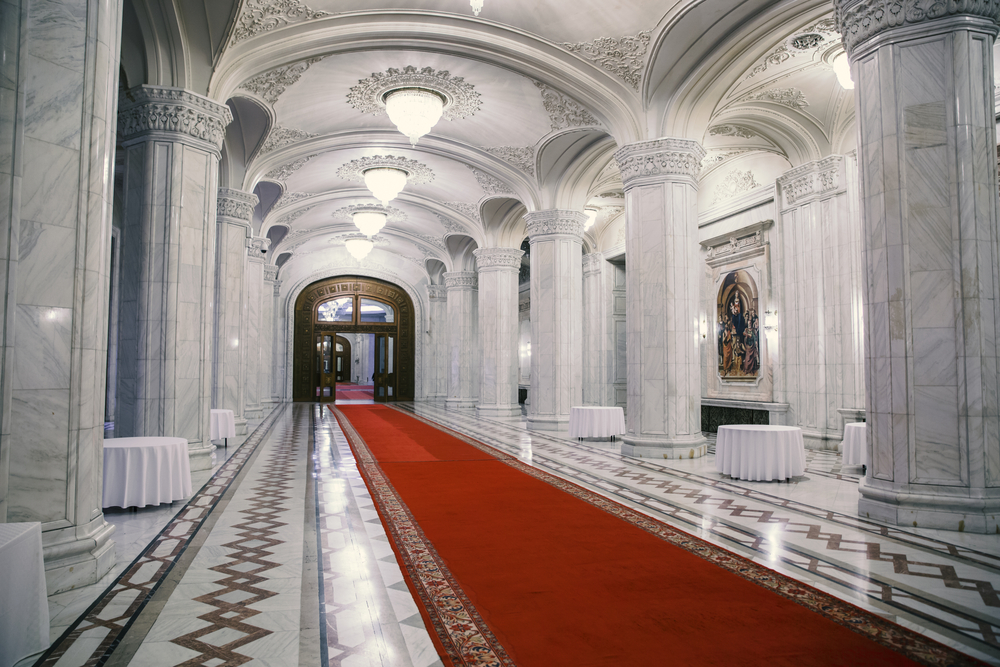
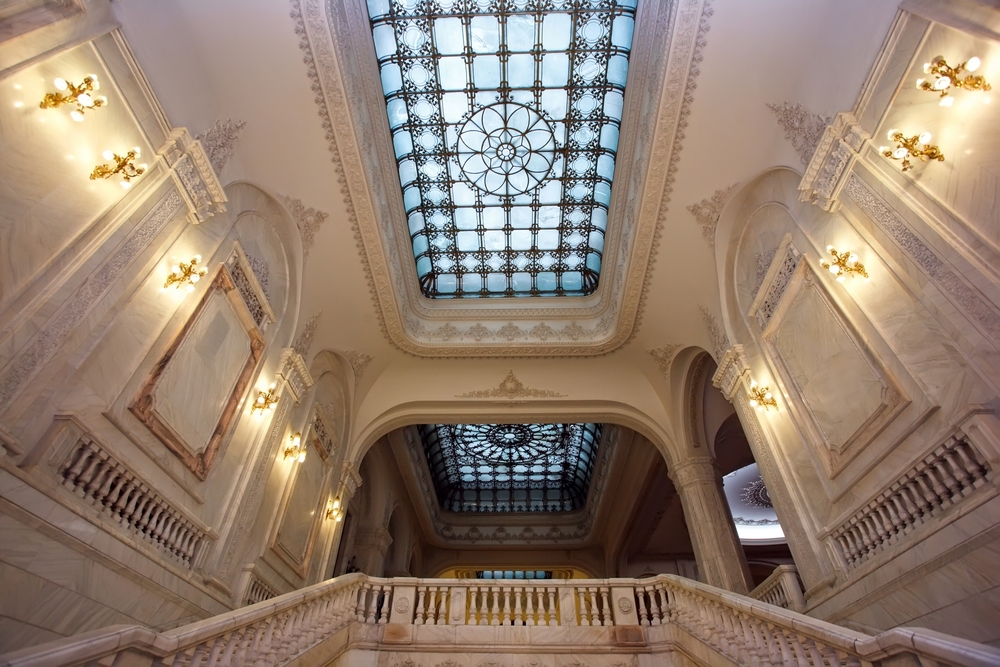
Check the full series of articles dedicated to the Centennial on Romania-Insider.com here. Known as one of the most ambitious projects of communist dictator Nicolae Ceaușescu, the Parliament Palace building (pictured) is nowadays one of Bucharest's main tourist attractions, as well as a world record-breaking destination full of history. Located in the heart of the city, the building, considered the heaviest in the world, is also the largest project implemented in the Romanian capital in the last 100 years. Construction work for the building also known as the People’s Palace began in 1984 and involved the effort of over 100,000 people. During peak periods, nearly 20,000 people worked daily at the giant building, in three shifts, 24/7. In addition, until 1990, 12,000 soldiers also participated in the construction. The mega construction became a reality thanks to Nicolae Ceaușescu, but started from an older idea of King Carol II, whose project provided for the construction of the Senate in this place. The project did not happen, however, as World War II stopped it. The Romanian dictator came up with the idea after the big earthquake in March 1977, which had devastating effects in Romania, with massive destructions including for Bucharest buildings. Anca Petrescu, a young architect then aged 28, won the contest organized by Ceaușescu and became the chief-architect of the building. Besides the huge workforce, the construction of the Parliament Palace also required extensive demolitions, which changed the face of the capital and the lives of its inhabitants forever. Some 20 churches were destroyed, 10,000 homes were demolished, and 57,000 families were moved from their homes. The neighborhood of Uranus, a picturesque houses neighborhood, was almost entirely demolished to make room for the new building, for the Libertății boulevard (formerly Victoria Socialismului) and the apartment buildings on its sides.
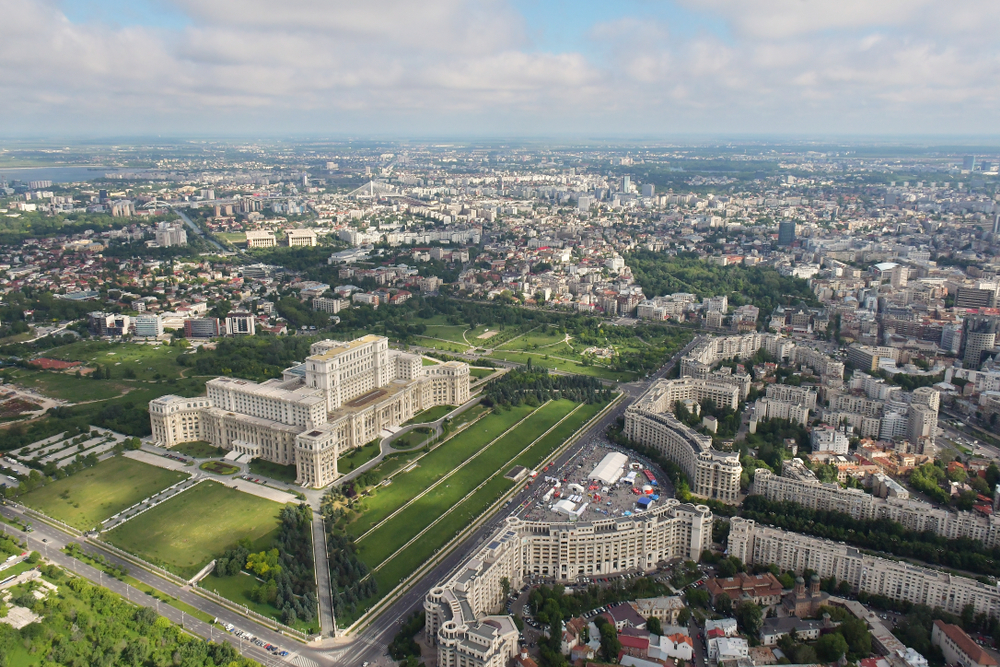
The Republicii Stadium, a legendary stadium of Bucharest, was also demolished and buried to make way for Ceaușescu’s mega project. King Ferdinand, a distinguished personality of the Romanian history, the man behind the Great Union, wanted the stadium for the National Office of Physical Education, and the athletics and football teams played matches and broke records there. The stadium was even bombed during the war and later rebuilt. In 1984, however, it was demolished and covered with earth to make room for today’s Palace of the Parliament. The exterior of the stadium’s western stand and part of the tribune are still visible today, and what was left of the stadium is now used as a car garage.
Free newsletters
Romania, in your inbox before your first coffee.
Get the Daily — the morning briefing, free, in English, unsubscribe anytime. Want business, real estate or travel digests too? Pick your newsletters →