Romanian film review – What keeps us together: European Film Festival 2018
If it’s May, it’s European Film Festival time. The annual fest, having kicked off Monday May 7 and ending on June 3, is celebrating its 22nd edition this year, and it looks like a fabulous one, with a record-breaking number of 60 films…
Ioana Moldovan · Journalist
· Updated · 3 min read
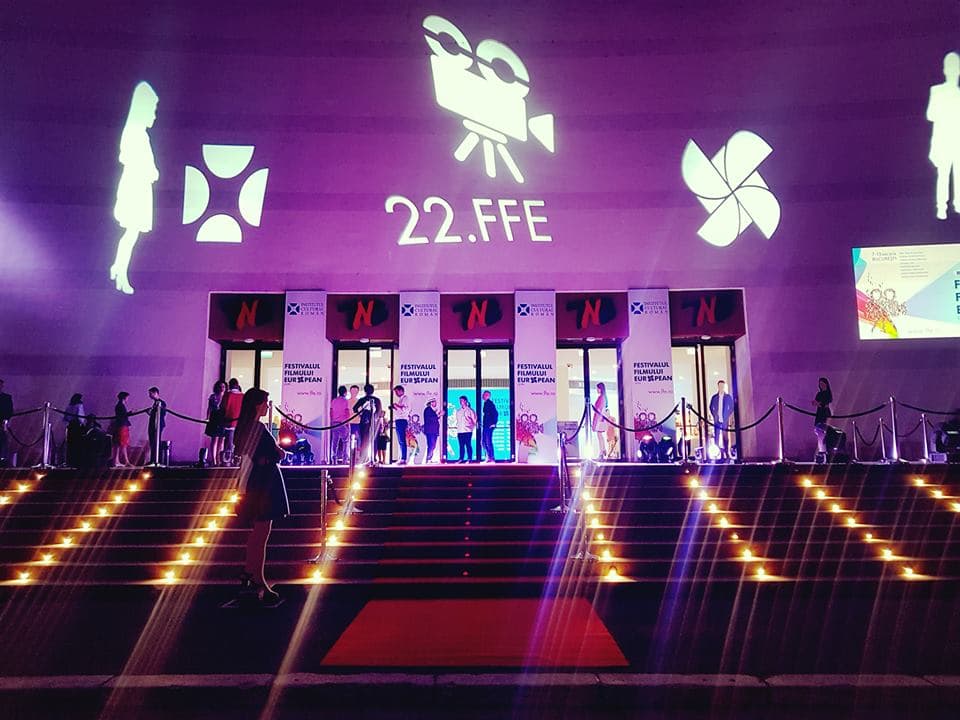
If it’s May, it’s European Film Festival time. The annual fest, having kicked off Monday May 7 and ending on June 3, is celebrating its 22nd edition this year, and it looks like a fabulous one, with a record-breaking number of 60 films shown and no less than 8 cities in Romania hosting the event.
Organised by the Romanian Cultural Institute and backed by EUNIC, the European Union National Institutes for Culture, the festival showcases the year’s most lauded European productions, traditionally checking the pulse of the continent, its common joys, torments, questions, polarizations, and movements.
Its focus this year is manifold, from films directed by and focusing on women, to the anniversary of 100 years of the end of the First World War, and (most exciting for yours truly), the celebration of the European Year of Cultural Heritage with the screening of classic films restored. But let’s take them one by one.
It’s good to see the festival focusing on women directors and female subjects (with the subject’s topicality though, it would be surprising if it didn’t), and its selection is a very interesting one, with such strong films as Fatih Akin’s tense In the Fade, or Jagodą Szelc’s striking debut Tower. A Bright Day. The other sections include even more female-driven, or directed, films, and some of them even more assured, like Valeska Grisebach perfectly calibrated Western, abouta group of German workers sent to a Bulgarian village, a very perceptive, rapturous movie that juggles genre elements with breathtaking mastery; or Amanda Kernell’s infuriating Sámi Blood, about the oppression of the Sámi population in 1930s Sweden. The reason why these two titles were not explicitly included in this section are probably also related to distribution and screening politics, but either way, it’s great to see so many films by and about women.
The section celebrating 100 years of the end of the Great War includes such films as Lewis Milestone’s classic
Free newsletters
Romania, in your inbox before your first coffee.
Get the Daily — the morning briefing, free, in English, unsubscribe anytime. Want business, real estate or travel digests too? Pick your newsletters →