(P) A crisis is a terrible thing to waste
This month marks a year since the Covid-19 pandemic caused the fastest and largest shift in human behaviour change at scale. Such an unprecedented upheaval completely challenged the dynamics of the collective, and it pushed most of us to…
This month marks a year since the Covid-19 pandemic caused the fastest and largest shift in human behaviour change at scale. Such an unprecedented upheaval completely challenged the dynamics of the collective, and it pushed most of us to reflect on concepts such as purpose, mission, values, both from a personal and professional perspective.
The dictum “a crisis is a terrible thing to waste” creates momentum for analysing organizational practices and tests the hypothesis about leadership, adequacy of existing governance structures, and also requires deployment of new ad hoc initiatives.
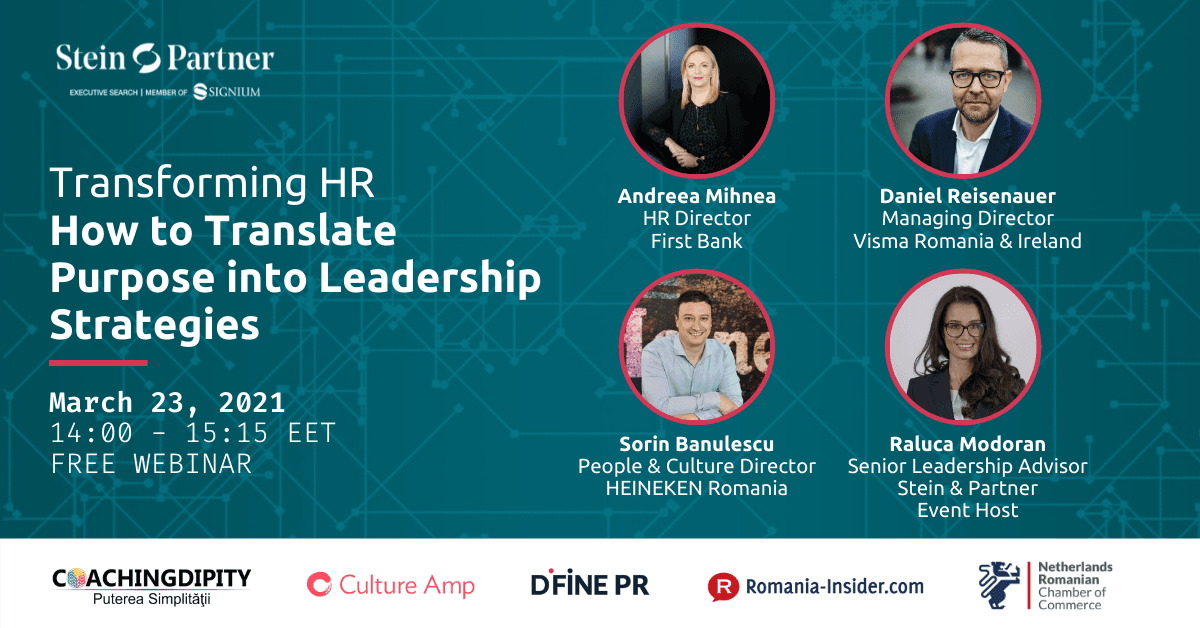
In the light of our upcoming Webinar on March 23rd - Transforming HR: How to translate Purpose into People Strategies, we, at Signium – Stein & Partner, considered an opportune moment to sit down with our speakers Andreea Mihnea - Chief People Officer at First Bank Romania, Daniel Reisenauer – Managing Director at Visma Software Romania & Ireland and Sorin Banulescu – People & Culture Director at Heineken and harvest some reflections from them, in an attempt to pave the way for a meaningful event interaction.
What was the most valuable take away for you as Leader from the past 12 months?
Andreea Mihnea: Last year asked for a complete reprioritization of the people agenda. It did not mean that we stopped doing what we planned for our people. The pandemic was a wake-up call for the “why” we do what we do and if the business as usual still made sense for people. When employees begun having to compensate on the life areas that they were taking for granted such as childcare, education, availability of services and even personal care, some of the things they used to vocally demand from their employer became “nice to haves” or even obsolete.
Before the pandemic, expectations for a more meaningful work, the possibility to advance quicker, being exposed to multiple experiences and being provided space for socializing and experimenting were the norm. As the pandemic progressed, they started looking into more basic expectations such as: extensive flexibility of working schedule, remote working, access to good medical care, stability of jobs and business.
In a nutshell, the past 12 months taught us all to put our lives and work into perspective. And all of a sudden, work was no longer the playground of grown-up children but a place where grown-ups were forced to look the truth in the face: organizations too need a solid partnership with employees that demands transparency, dialogue and ownership for each side. As HR leader I focus on putting those 3 principles at work.
Free newsletters
Romania, in your inbox before your first coffee.
Get the Daily — the morning briefing, free, in English, unsubscribe anytime. Want business, real estate or travel digests too? Pick your newsletters →