International Literature Festival Odesa kicks off in Bucharest
After the start of the war in Ukraine, the organizers of the International Literature Festival Odesahad a choice: either cancel or postpone the event or hold it in a city in the region of the Black Sea. They decided on the latter, and an…
Simona Fodor · Journalist
· Updated · 3 min read
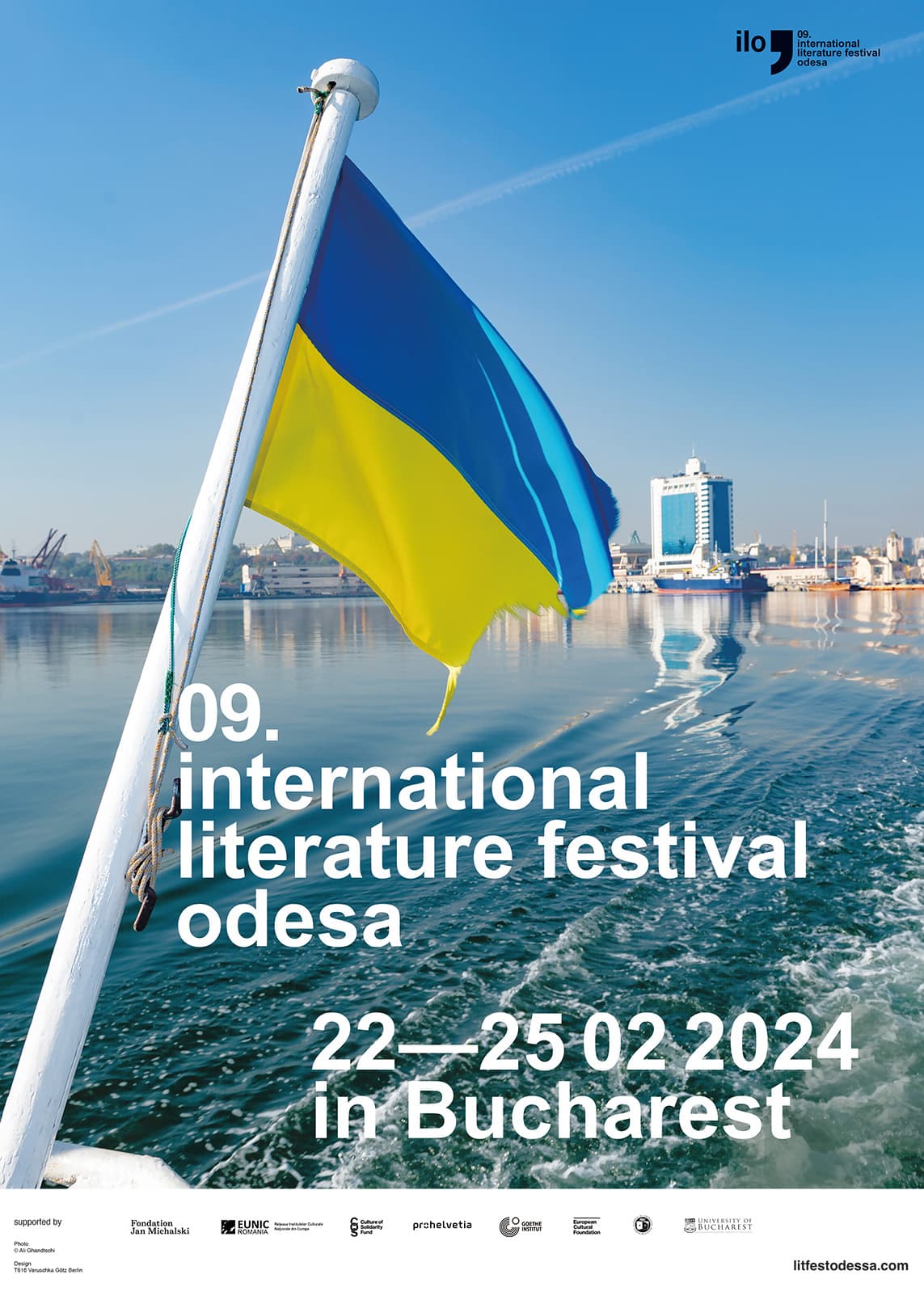
After the start of the war in Ukraine, the organizers of the International Literature Festival Odesa had a choice: either cancel or postpone the event or hold it in a city in the region of the Black Sea. They decided on the latter, and an eighth edition was held in Batumi, Georgia, in 2022. Its ninth run opened in Bucharest on February 22, two days before the second anniversary of Russia's invasion of Ukraine.
The festival, established in 2015, aims to highlight the "international character and cultural effervescence" of the port city in southwestern Ukraine that was the birthplace or home of writers such as Adam Mickiewicz, Alexander Pushkin, Lesya Ukrainka, Anna Akhmatova, Boris Zhitkov, Ivan Franko, Yury Olesha, Hayim Nahman Bialik or Isaac Babel. It is also meant to contribute to consolidating connections to other cultural centers in Europe or elsewhere.
"It started the same way people start literary festivals, to underline the importance of literature. The second mission was to build bridges from one country to another, from Ukraine to Germany, to Western European countries and Eastern European countries," Ulrich Schreiber, who co-founded the festival with Hans Ruprecht, explains. "You do learn through literature, poetry, prose; you learn to think better about yourself and the connection between yourself and others."
The first edition of the Iași International Festival of Literature and Translation (FILIT), in the fall of 2013, was when the idea of the event emerged during a discussion with writer Andrey Kurkov. A program of Germany's Foreign Affairs Ministry later provided financial support for the event.
At this year's edition, the public in Bucharest can attend more than 20 events, ranging from debates on current topics and poetry readings to film screenings and music. The program started with an opening speech delivered by Romanian writer Radu Vancu, outlining "the Europe that needs to be created," one "where we put our words at the service of our fellow human beings and not at the service of ideologies."
On the festival's first day, the public could meet barrister and international law professor Philippe Sands - author of books such as East West Street: On the Origins of Genocide and Crimes against Humanity(2016) and The Ratline: Love, Lies and Justice on the Trail of a Nazi Fugitive (2020) - in a session covering Genocide, Remembrance, Justice.
Ukrainian writers Yuriy Vynnychuk, Iia Kiva, and Vasyl Makhno are among the guests at this year's edition of the festival, which hosts a Worldwide Reading of Ukrainian Literature on February 24. Texts by Ukrainian authors will be read in Bucharest, Copenhagen, Yerevan, Calcutta, Milan, Zaporizhzhia, Berlin and other cities. The reading will include works by writers Volodymyr Vakulenko, Victoria Amelina, and Maksym Kryvtsov, who were killed in the war.
Free newsletters
Romania, in your inbox before your first coffee.
Get the Daily — the morning briefing, free, in English, unsubscribe anytime. Want business, real estate or travel digests too? Pick your newsletters →