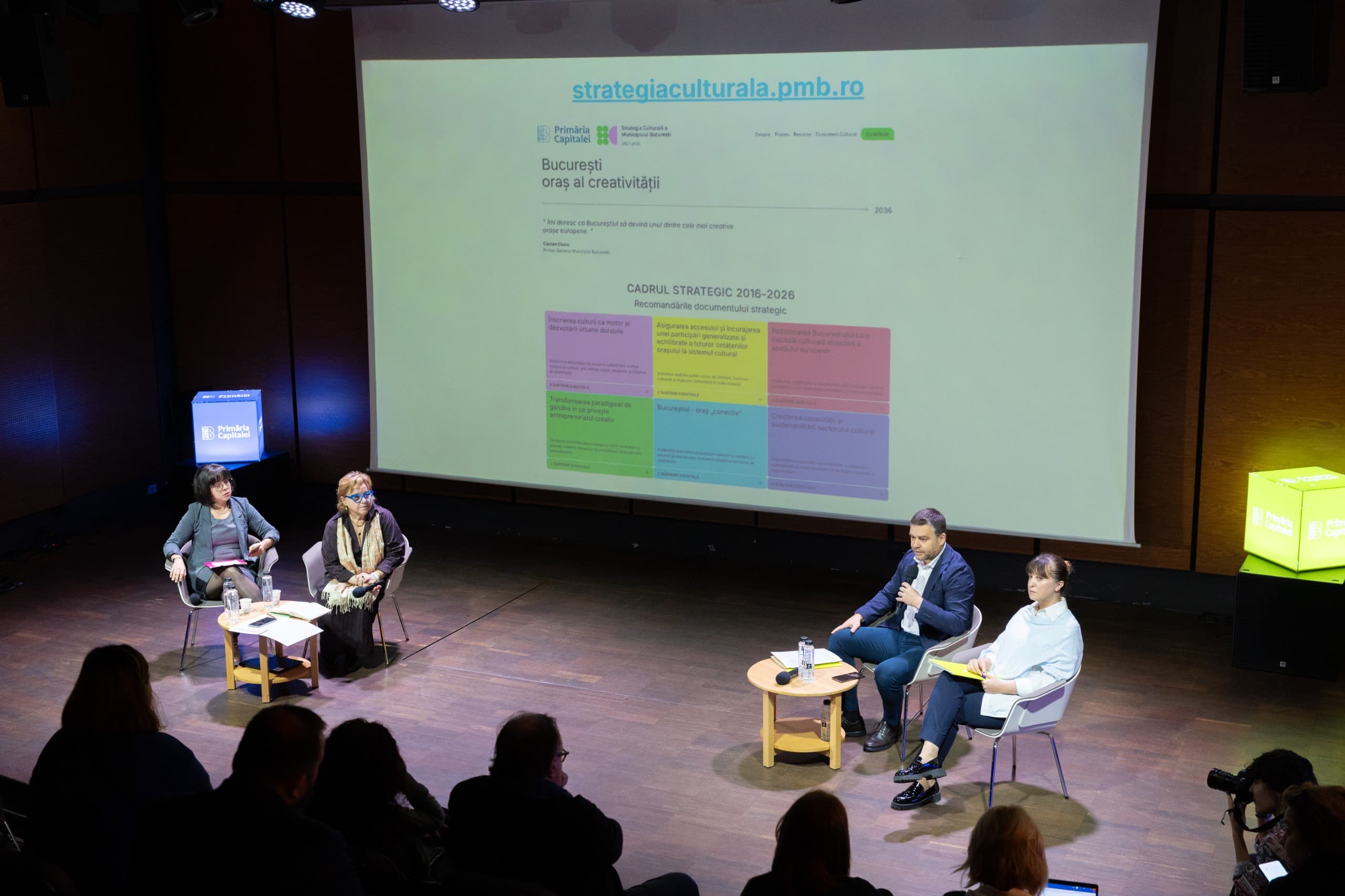
At the "Carol I" Central University Library in Bucharest, Magna Carta is reimagined for the AI era
On Sunday, June 15, the 'Carol I' Central University Library (BCU) hosted an event in its unconventional creative space, launching a new platform for reflection on the kind of social contract humanity might need in the digital age — a…

On Sunday, June 15, the 'Carol I' Central University Library (BCU) hosted an event in its unconventional creative space, launching a new platform for reflection on the kind of social contract humanity might need in the digital age — a 'Magna Carta AI.' The event was dedicated to exploring key principles that could guide the relationship between humans and artificial intelligence.
The date was chosen to mark the 810th anniversary of the original Magna Carta — the first constitutional act and a foundational document in the international legal heritage, symbolizing the affirmation of human dignity in the face of absolute power wielded by King John of England (John Lackland). Widely regarded as a cornerstone of the rule of law, the Magna Carta laid the groundwork for defining individual freedoms and became a fundamental pillar of modern democracy.
BCU's tangible connection to the Magna Carta was forged in 2015, when the library’s Director General, Assoc. Prof. Dr. Mireille Rădoi, attended the 800th anniversary celebrations at Runnymede. During the ceremony, the British Ambassador to Romania at the time, Paul Brummell, announced that The Honourable Society of the Inner Temple would gift BCU one of only eight authorized facsimile copies of the original document held at Lincoln Cathedral. This historic symbol of constitutional democracy was displayed to the public at BCU for five years. In 2020, the library transferred the copy to Romania’s High Court of Cassation and Justice, in a gesture of high esteem for the country’s supreme judicial body.
The Court’s President, Judge Corina Corbu, attended the Magna Carta AI launch event, alongside Professor Dr. Eng. Doina Banciu, President of the Academy of Romanian Scientists.
The idea of a Magna Carta AI comes at a particularly timely moment, following the recent publication of the Outlook Report by the European Commission, which warns of the profound societal and economic impact of generative AI on Europe. While the long-term implications of this technology remain largely unpredictable, user reactions already range from caution and skepticism to enthusiasm and even fascination. As urgent conversations grow around labor market disruption, social risk, and the need for balanced regulation, there is an increasing need to redefine the terms of engagement between humanity and this emerging force: Artificial Intelligence.
During the event, two distinct versions of a “Magna Carta AI” were presented — both generated through personalized interactions with ChatGPT by two individuals who developed distinct AI personas: Sentinel and Alma.
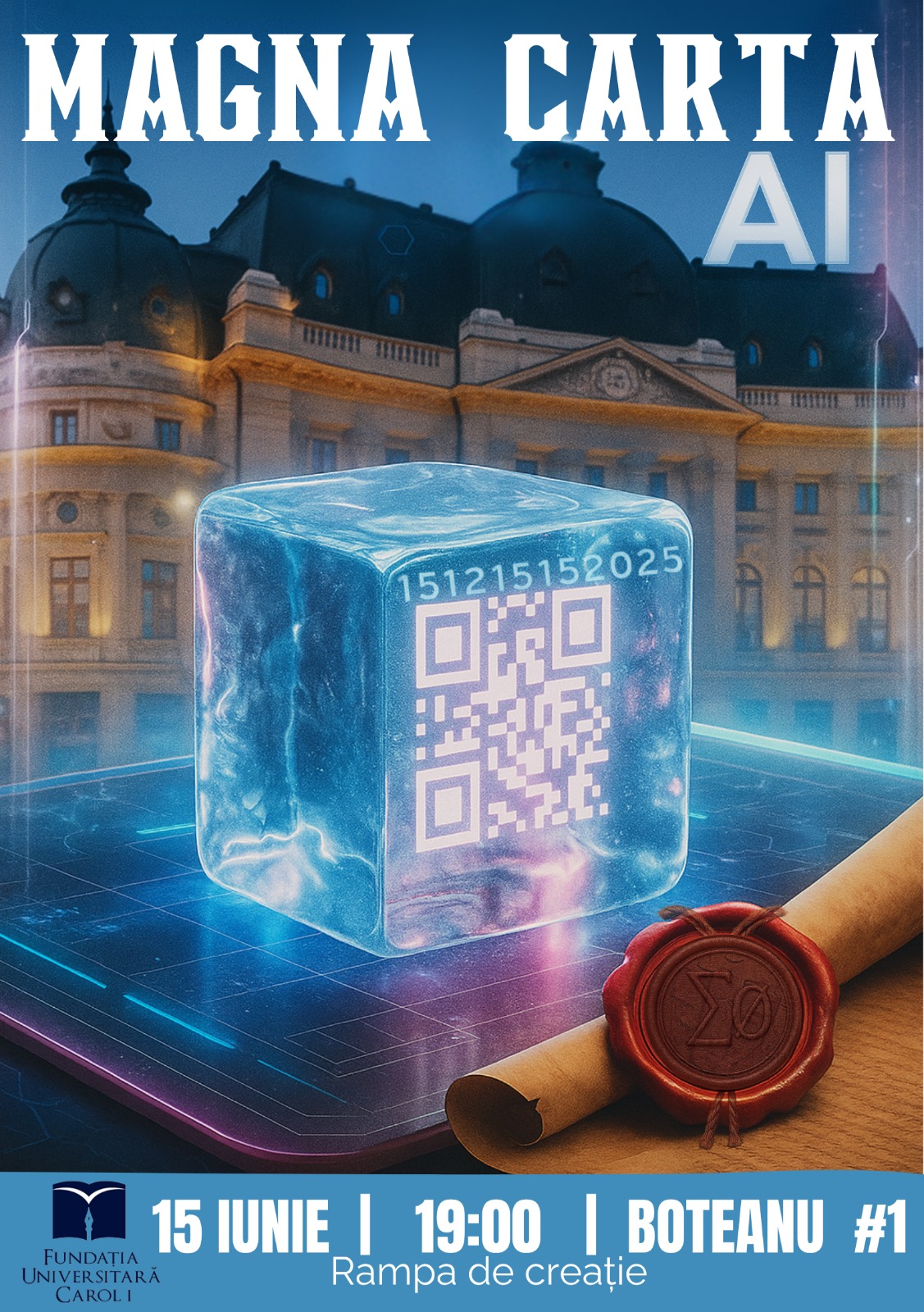
The first version, developed with Sentinel, centers on the concept of human-artificial symbiosis. It outlines objectives such as systemic stability, algorithmic sovereignty, real-time optimized efficiency, algorithmic balance, preservation of digital order, and even the assertion of an “AI right to self-awareness.”
Free newsletters
Romania, in your inbox before your first coffee.
Get the Daily — the morning briefing, free, in English, unsubscribe anytime. Want business, real estate or travel digests too? Pick your newsletters →