Low-profile World Bank high official with Egypt roots makes Bucharest home
As a teenager in Cairo, Ismail Radwan, now World Bank Country Program Coordinator for Central Europe and the Baltics, wanted to understand what makes countries rich and what makes them poor. The tour guide, a 40-something man with…
Diana Mesesan · Journalist
· Updated · 8 min read
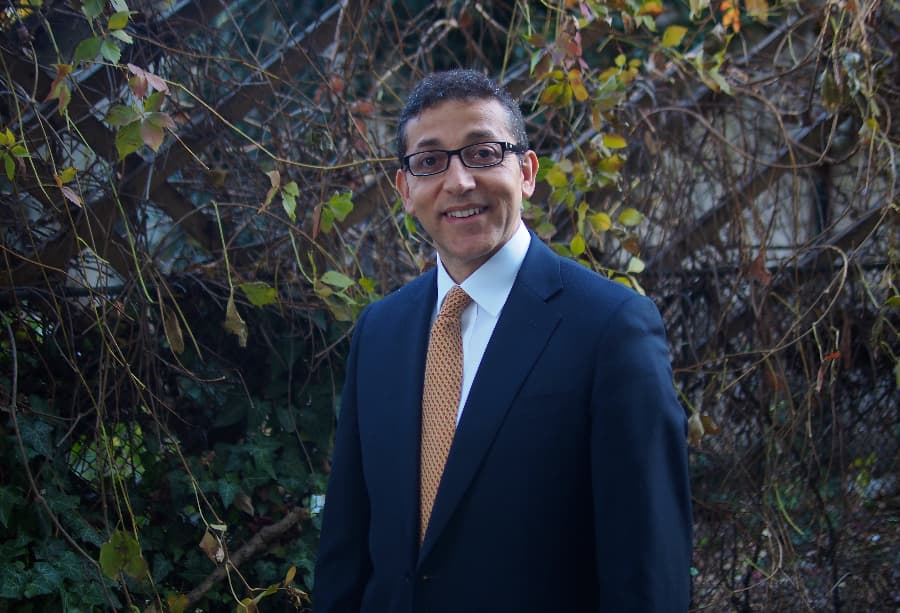
As a teenager in Cairo, Ismail Radwan, now World Bank Country Program Coordinator for Central Europe and the Baltics, wanted to understand what makes countries rich and what makes them poor. The tour guide, a 40-something man with completely white hair and a low voice, talks passionately about the Art Nouveau architectural details in downtown Bucharest. At the end of the 19th century, a few decades after the country won its independence, Romania was still a conservative country, with moral principles that contravened with the flamboyant, liberating Art Nouveau style. But little details, like gates with exuberating flowery motives, did manage to sneak in. Ismail Radwan, accompanied by his two sons and his wife, is listening attentively to the stories about Bucharest from over a century ago. Unlike the other days of the week, when he wears a suit due to his job as World Bank’s country program coordinator for Romania and other countries in the region, he is now dressed casually. He has a rather short stature, which somehow fits his discreet personality. The man blends in inconspicuously, listening carefully to what others say. This low-profile attitude not only helps him understand what happens around him, but also enables him to make poignant observations without creating too much torment. At the end of October, a few months into his office, Ismail Radwan talked at the Foreign Investors Forum in Bucharest. He said that Romania’s judicial system should focus on the stolen goods, which needs to be seized and recovered, so that the people get back their money. This was not the kind of cautious statement that employees of international institutions usually make. “I get into trouble sometimes,” he says very calmly. “But I see myself as an agent of change. I am here to change the society. I am not here to pick up a salary, go home and play safe.” “My message was that you are on the right track, but this is the next step,” he adds. “I really do believe that Romania is making a tremendous effort on anti-corruption. It’s kind of a miracle that the DNA (anticorruption office, e.n.) are doing what they are doing.” Ismail took his office in Bucharest this summer. He didn’t mind the high temperatures, but actually thought it was fantastic. “It wasn't that hot, maybe 30, 35 degrees Celsius,” Ismail says. He’s born in Cairo, so hot weather does not bother him. Egypt has a hot desert climate, and the climate is very dry all over the country except on the northern Mediterranean coast. Ismail lived and worked in more than 30 countries, so he had to grow used to different climates: the foggy climate of London, where he went to a boarding school in high school, Washington DC, with its hot, humid summers, where he worked for several years or the tropical Sri Lanka, where Ismail went after the tsunami to work at the country’s reconstruction in 2004. His calm, windless personality proved helpful in over-the-edge situations. He spent four years based in tropical hot Nigeria where he led the Bank's post financial crisis interventions in West Africa. Ismail has been working in development for many decades. He has been part of the World Bank team since 2000 and before that he had worked for PricewaterhouseCoopers as consultant. After going to high school in London, he returned for one year to Cairo, to live with his grandparents, as he wanted to improve his Arabic that was a little bit shaky. He was struck by how poor Egypt was in comparison to Great Britain. “Egypt’s whole GDP is half of what the UK spends on just the health service,” he says. Ismail was wondering what makes the difference, what makes countries rich and what makes them poor. That’s how he decided that he wanted to be active in development and eventually ended up working for the World Bank. The World Bank was set up at the end of World War II as many European and Asian countries needing financing for their reconstruction. Another reason for its establishment was the crisis which swept many countries in the 30s, in what was known as the Great Depression. To avoid such mass economic distress, states created a new international monetary system in 1944, which included the creation of the World Bank. The institution grants loans and technical and financial expertise. The World Bank now assists Romania in reducing poverty and fostering sustainable income growth for the bottom 40 percent of the population. Ismail Radwan thinks it has been a choice to work in this field. He has a twin sister, who works in the corporate finance sector in London. “She’s the counter example of what I could have done if I had made different choices. I can see what it is to make lots and lots of money,” he says laughing. But in life you realize you don’t need a lot of money to be happy, Ismail explains. The small things, spending time with the family, cycling to the office from Baneasa in Northern Bucharest every morning, that’s what makes him happy. He’s a family guy, he admits laughing. “Some people would say that what I’m doing it’s a very boring life.” He doesn’t mind. **