Eduard Kunz - Just another Russian space conqueror?
Pianist, actually. Living in Bucharest. In a Siberian city called Omsk, at the end of the ‘80s, a mom would tell her son, Eduard Kunz, “sweetie, why don't you go to the bakery, just pop in and buy some dough for pelmeni?” The trip to the…
Diana Mesesan · Journalist
· Updated · 6 min read
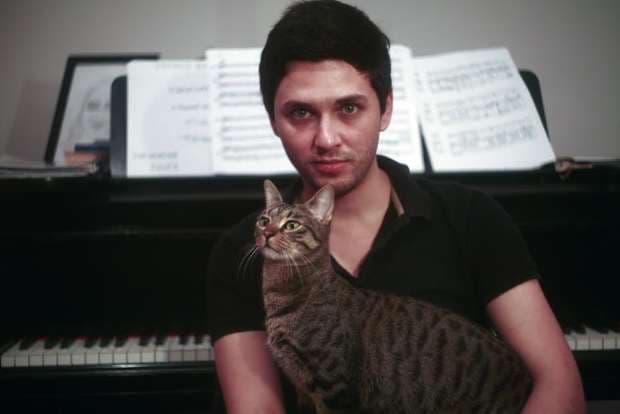
Pianist, actually. Living in Bucharest. In a Siberian city called Omsk, at the end of the ‘80s, a mom would tell her son, Eduard Kunz, “sweetie, why don't you go to the bakery, just pop in and buy some dough for pelmeni?” The trip to the bakery meant a 20 minutes walk to the bus station, a 45 minutes drive to the bakery and back, so the whole 'popping in' would take Eduard 2 hours. But it never seemed long and that was what it was; no complaining and no hard feelings against time. The patience to do things was still there for everybody, but it soon got flushed away down the rush of history. Eduard Kunz somehow managed to remain comfortable with time. It's past 7 PM, on a Wednesday evening, beginning of January, and I'm desperately standing in front of the locked door of a building near the Cismigiu Park, in Bucharest. I should have already started the interview with the 33-old world renown pianist Eduard Kunz, but I forgot the building code. As a young girl is approaching and she seems to be living there, I ask her if she happens to know where the pianist Eduard Kunz lives. "Come in," she answers in a very comforting, confident way. "I'm Diana Kunz, his wife." On a quick Google Search, you will find out that Eduard Kunz was named among ten tomorrow's great pianists by the BBC Music Magazine, took part in several prestigious competitions and won many prizes. I kind of expected to meet a solemn man, straight in his chair, talking with great patience about music and life. But in the main hall, there was this barefoot man who seems very young, not formal at all, talking in Russian to a little girl, his daughter. Persistence "In the Soviet Union there wasn't that much you could acquire, but, surprisingly enough, I am sure that every second family would have a piano as a piece of furniture. I started to play piano at my grandmother's house when I was 5 and a half. She could play piano, a little bit." The interview takes place in the room with the piano and Eduard moves a lot while talking. He remembers a thing, suddenly gets up and just as abruptly he sits down on his chair again. Impatient as he seems, he's the same person who for at least 20 years has rehearsed almost daily for hours and hours. Eduard, the kid, was helped to be persistent by his mom. "My mom was already single, she already decided she would dedicate her life to me and we started to go to competitions. I guess she believed. It's one of those things, you believe and then it happens." And when the kid turned into a teenager, rehearsing was already a habit and there was no danger to desert. "It's like running. The first day you want to kill yourself, but you get used to things." "Of course my mom was helping me to be persistent, but from where I come from, it was this idea to achieve things, and particularly to achieve things through struggling. It had to be difficult. You have to want, my mom was telling me. And believe me, to kids like me, the parents would say exactly the same thing. There was only gymnastics, or only piano, one thing only." Eduard warns me from the beginning. "I'm telling you, such a difficult profession! Don't do it."