A British couple tries to break the cycle of poverty for Romania's forgotten people
March 2014. Jo Jowett, a British woman in her 50s, is driving to Jacodu, a small village in the center of Romania. The car passes by dark brown strips of land with green patches, signs of early spring. She is accompanied by the…
Diana Mesesan · Journalist
· Updated · 9 min read
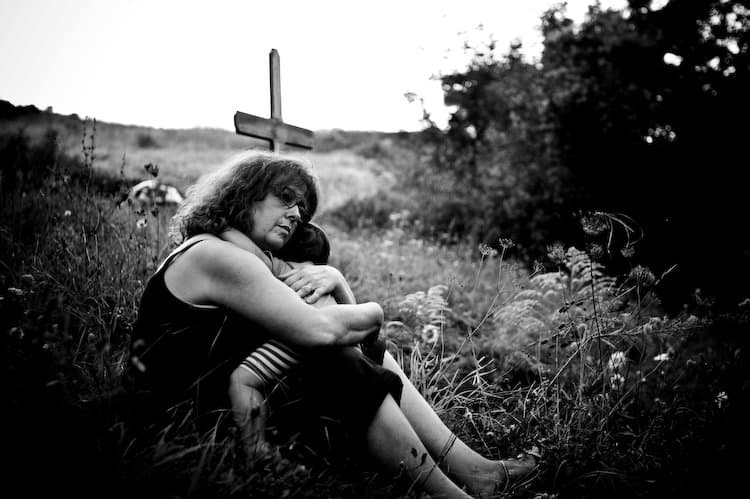
March 2014. Jo Jowett, a British woman in her 50s, is driving to Jacodu, a small village in the center of Romania. The car passes by dark brown strips of land with green patches, signs of early spring. She is accompanied by the photographer and filmmaker R. James Feaver. Jo feels excited, because the project she started in Jacodu four years prior has been producing results. “Before it was just sadness and helplessness,” she tells Feaver, who is filming her. Jo, born Josephine, has never been looking forward to a typical life: getting married, having children, retiring. She was looking for more, and from an early age, a life of service was the most important to her, because of her faith. Then she discovered Romania, a transitioning country rushing away from its past that left behind children living in state institutions and marginalized groups. * In 2002, the Medias Municipal Hospital in central Romania decided to change its policy on the abandoned children living with HIV and return them to their families. The HIV positive children had been living in a special unit within the hospital. By then, Romania’s history with HIV was not in the limelight anymore. The Romanian Revolution in December 1989 led to the collapse of Communism and revealed a well-kept secret. Half of all the HIV or AIDS cases in the entire Europe came from Romania. Some 13,000 children were infected with the HIV between 1988 and 1992 in Romania’s hospitals, according to doctors. Many of them were living in state institutions, abandoned by their parents. But leaving the hospital and returning to their families was no option for some of the kids living in the Medias hospital. Families didn’t want them back. Jo Jowett and her husband Ron felt that they should do something about it. They’ve started the Love Light Romania project. They bought a house in Ighisu Nou, a village near Medias, and opened the Sanctuary, a placement center for children with HIV. After all, the reason they had moved to Romania two years before was Illiaz, a boy living with HIV in the Cernavoda orphanage. Jo and Ron were introduced to each other by a mutual friend in 1995. They were both living in the Mid Wales, a region in the UK with an economy dependent on farming and small businesses. Ron, an introvert man with a passion for wood and practical things, was working as a carpenter. Jo, on the other side, has always been more outgoing and with a a lot of drive. She was a hotel receptionist with a large chain of hotels, and she previously had worked as a secretary administrative assistant in a care home. Jo started fundraising for an organisation that was helping children living in the Cernavoda orphanage, and Ron soon joined her. Initially it was only in their free time. Then they started coming to Romania two times a year in the late ‘90s and gradually got very close to the children living there. The orphanage had a section of children infected with HIV. Illiaz, one of the 24 kids living there, told Jo and Ron that he wanted them to be his family. It was a turning point for Jo and Ron. In May 2000, they packed their things and came to Romania. They wanted to do more for the children with HIV and also give the little boy a home. They bought a house in Ighisu Nou, a Saxon village in the Sibiu county, with a fortified church built in 1515. They first heard about the village in 1998, from a group of Romanian dancers who had a performance in the UK. Some of them were from Ighisu Nou. Jo and Ron offered them accommodation, and later paid them a visit in Romania. They liked the village life, and there were houses for sale. So when they eventually moved to Romania, they thought that the Saxon village was a good choice. Illiaz, however, didn’t make it to his new family. His HIV became AIDS and he was too sick to make to make the journey between Cernavoda and Ighisu Nou. In June 2000, two months after Jo and Ron moved to Romania, he died. They felt heartbroken, as if they had lost their own child. But in 2002, when the HIV unit within the Medias hospital closed, they realised they can help other children. Jo and Ron bought another house in Ighisu Nou and took the surviving Romanian children. The place become a placement center for kids with HIV in the Medias area. They named the center the Sanctuary. It was a place where the abandoned kids with HIV could feel safe.