BCR Romania Manufacturing PMI drops into contraction territory after brief period of recovery in the second quarter
New orders down solidly after three successive months of growth - Cost pressures up and purchasing quantities down - Stocks of purchases depleted at fastest rate in series history
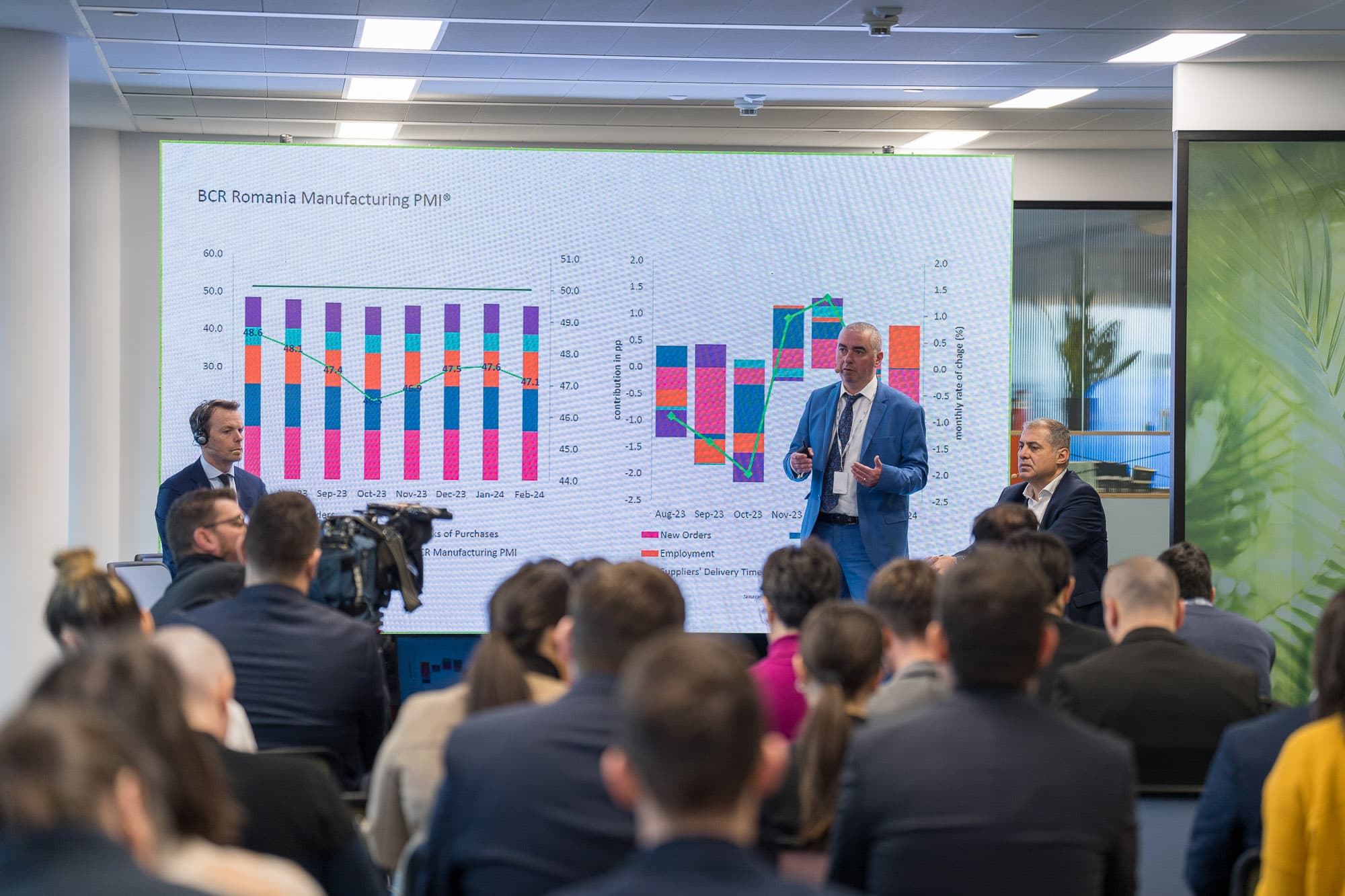
- New orders down solidly after three successive months of growth
- Cost pressures up and purchasing quantities down
- Stocks of purchases depleted at fastest rate in series history
Romania's manufacturing sector endured some challenges entering the second half of the year. A fresh decline in new orders saw output volumes down at an accelerated rate. Meanwhile. firms also took a more conservative approach to input purchasing, stocks and employment.
Despite signs of slack in supply chains, cost pressures accelerated, and delivery times lengthened.
The headline BCR Romania Manufacturing PMI® is a composite single-figure indicator of manufacturing performance derived from indicators for new orders, output, employment, suppliers’ delivery times and stocks of purchases.
A PMI reading above the 50.0 no-change mark signals an improvement in the health of the sector over the month, while a figure below 50.0 points to a deterioration.
The headline figure fell from 50.0 in June to 47.8 in July to signal a solid decline in the health of the sector. Notably, all five components of the PMI imparted negative directional influences, suggesting that the downturn was broad-based.
The uplift in new orders seen in each month of the second quarter did not continue into July, as new work fell solidly. Panellists noted weak client demand conditions due to customer budgetary constraints. Meanwhile, volumes of new work from abroad continued along the trend of decline seen since the start of data collection in July 2023. Manufacturers linked the export sales downturn in part to transportation issues.
It was clear from panel member reports that the subdued demand environment played a crucial role in firms' decision-making, with firms reducing production, purchasing, stocks and employment.
Output volumes decreased for a second successive month in July, with the rate of contraction the fastest for five months and solid overall. As well as waning customer demand, some firms mentioned cost pressures as a barrier to production.
Romanian manufacturers largely relied on current input stocks to support output needs in July, as both the stock levels and purchasing of inputs decreased strongly. The respective rates of decline were the fastest and second-fastest since data collection began.
Nevertheless, delivery times on inputs lengthened again, with staffing issues at suppliers noted as the cause in panel member reports.
Another area in which manufacturers in Romania looked to make cut backs was staffing. July marked the second consecutive monthly drop in headcounts at factories and the quickest for six months.
Free newsletters
Romania, in your inbox before your first coffee.
Get the Daily — the morning briefing, free, in English, unsubscribe anytime. Want business, real estate or travel digests too? Pick your newsletters →