Two languages, more ways to understand the world: The benefits of bilingual education in Kindergarten
For many families in Bucharest, choosing a kindergarten is no longer only about location, facilities or the daily schedule. Language has become an equally important consideration.
For many families in Bucharest, choosing a kindergarten is no longer only about location, facilities or the daily schedule. Language has become an equally important consideration.
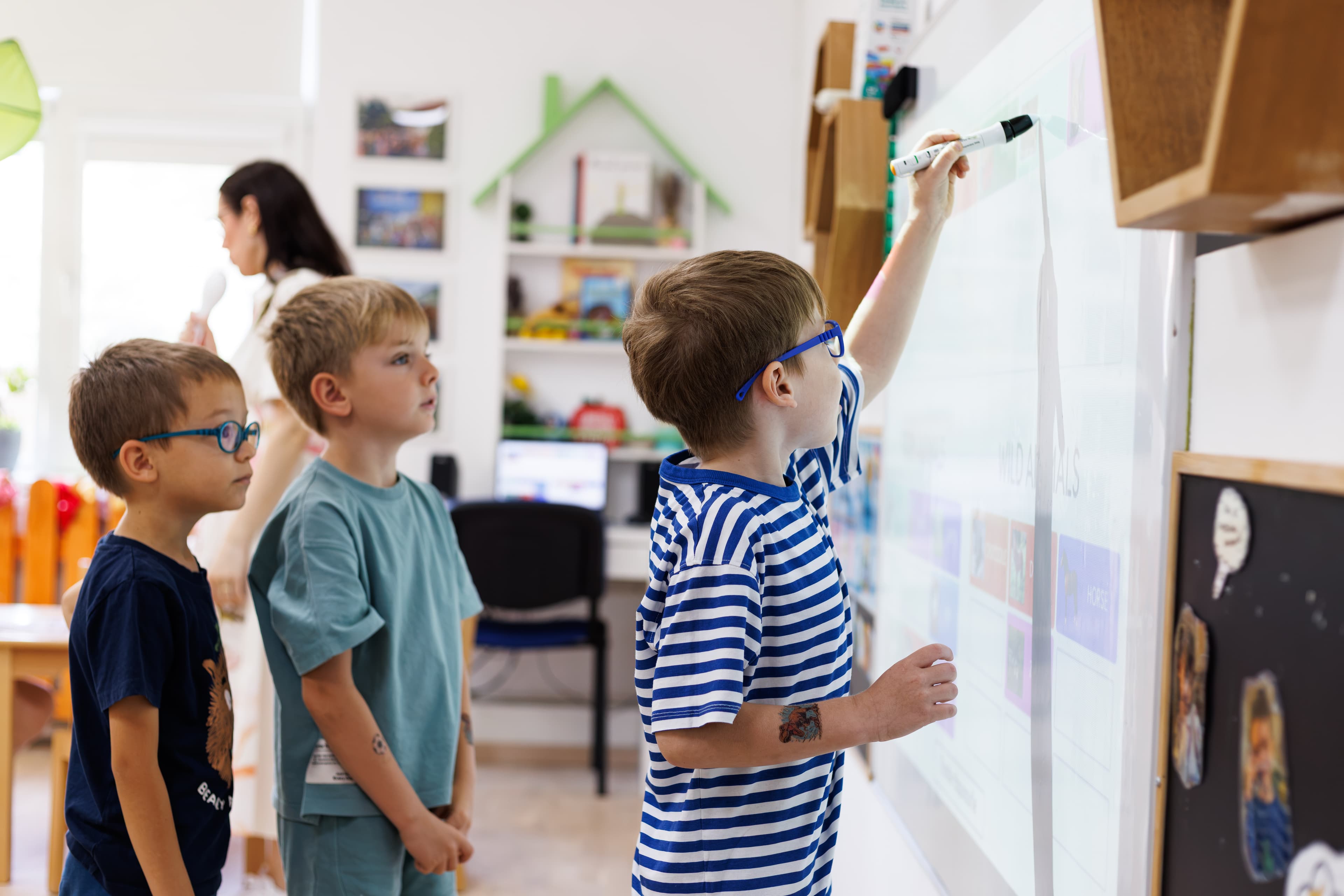
International and mixed-nationality families may be looking for an environment in which their children can continue learning in English while gradually becoming familiar with Romanian. Romanian families, meanwhile, increasingly want their children to develop genuine confidence in English from an early age, not simply by attending several language classes each week, but by using the language naturally throughout the day. This is where bilingual and English-immersion education can make a meaningful difference.
Young children learn languages through life, not translation Preschool children do not learn a new language in the same way adults usually do. They acquire it through relationships, routines, stories, movement, play and repeated meaningful experiences. A child may first understand the English phrase "Let's wash our hands" because it is heard every day before lunch. Later, the child begins to use the same words independently. During play, expressions such as "Can I have this?", "Let's build a house" or "It's my turn" gradually become part of the child's natural communication. This type of learning is different from memorising vocabulary lists or translating isolated words. Language is connected to an action, an emotion, an object or a relationship. As a result, children understand not only what a word means, but also when and why it is used. Exposure to two languages in early childhood does not inherently confuse children. Research shows that young children are able to distinguish between the languages they hear and can learn the sounds and patterns of both. Their vocabulary may sometimes be distributed between the two languages, knowing certain words in one language and others in the second, but their total language knowledge should be considered across both.
Communication before perfection One of the most valuable outcomes of early bilingual education is not flawless pronunciation or an impressive vocabulary at the age of four. It is the confidence to communicate. In a well-designed bilingual environment, children are not constantly corrected or placed under pressure to produce the "right" answer. They are encouraged to participate, express a need, share an idea, ask a question and join a game. At first, a child may respond through gestures, facial expressions or a combination of languages. This is a natural stage of language development. With consistent exposure and sensitive support from teachers, comprehension usually develops before speaking fluency. Over time, children begin to experiment with the new language. They repeat familiar phrases, combine words, initiate conversations and eventually communicate with increasing independence. This confidence is particularly important for children growing up in international communities. Language becomes more than an academic skill, it becomes a means of building friendships, adapting to new environments and feeling that they belong.
Free newsletters
Romania, in your inbox before your first coffee.
Get the Daily — the morning briefing, free, in English, unsubscribe anytime. Want business, real estate or travel digests too? Pick your newsletters →