Germany to change labor legislation following Romanian seasonal workers’ protests against poor working conditions
The protests of Romanian seasonal workers at farms and slaughterhouses in Germany will lead to the change of the labor legislation in the country, according to Emil Hurezeanu, Romania's ambassador in Germany.
RI Newsroom · Journalist
· Updated · 3 min read
The protests of Romanian seasonal workers at farms and slaughterhouses in Germany will lead to the change of the labor legislation in the country, according to Emil Hurezeanu, Romania's ambassador in Germany.
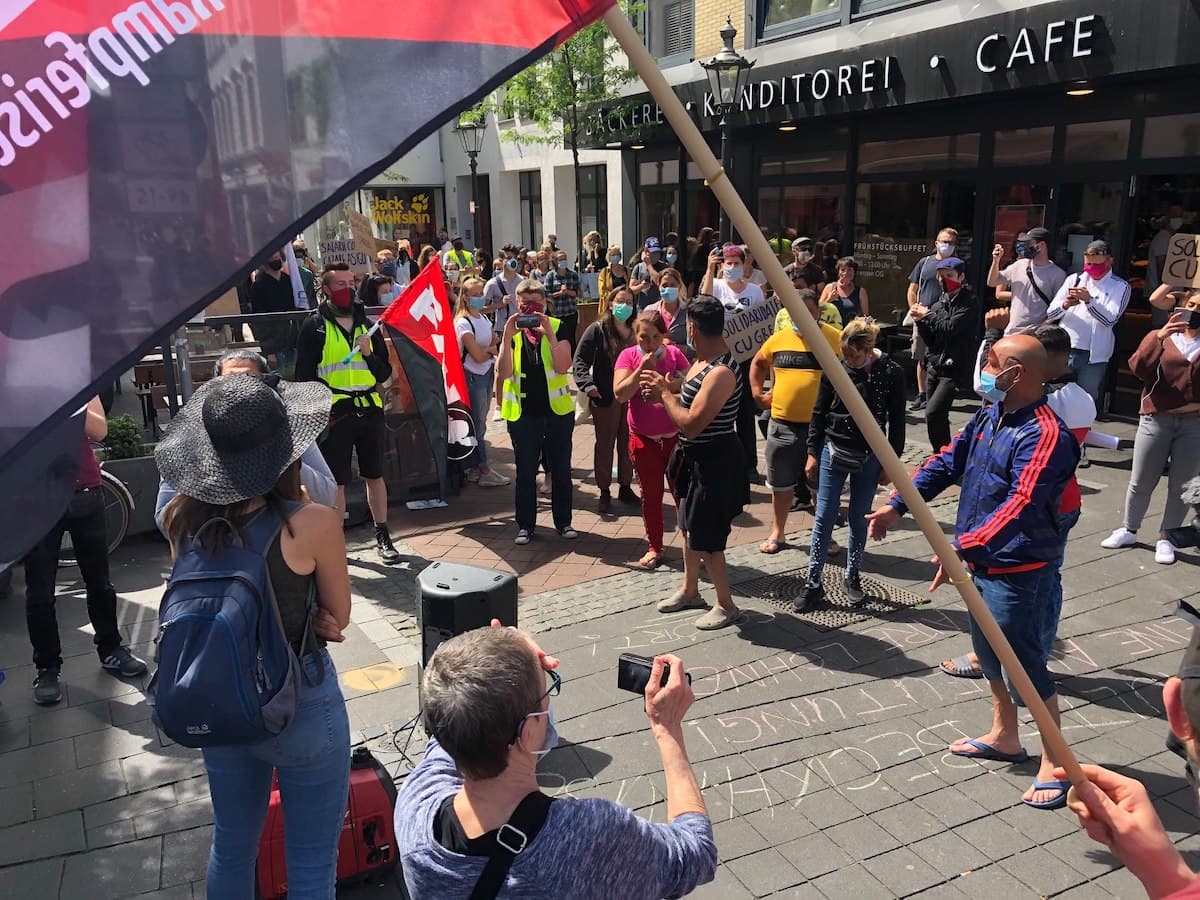
Romanian workers have been protesting in Germany against poor living and working conditions. On Tuesday, May 19, for example, dozens of Romanian seasonal workers participated in a protest in the German city of Bonn, unhappy with the salaries and the conditions in which they work, local G4media.ro reported. They initially marched through the center of Bonn, and then stopped in front of the Romanian Consulate, asking officials to get involved in their problems.
Several members of the German trade union "FAU Bonn" were also present at the protest staged on Tuesday, encouraging the Romanian seasonal workers to defend their rights.
"The coronavirus crisis has put the spotlight on a chronic situation, the inequalities in the European labor market. […] You saw today (e.n. Tuesday) a protest at a strawberry farm near Bonn. People came with a work contract from the country. The farm went into insolvency and was taken over by a judicial executor, which is to pay people's salaries," Emil Hurezeanu told Digi24 news channel.
He also said that the wave of scandals with Romanian seasonal workers has become a political issue, and will lead to the changing of the labor legislation. The German minister of labor is to present a project in today's government meeting.
"The minister demands, for example, that subcontractors be eliminated, because employment agents, other intermediary employers intervened in this chain between the employer and the employee. Sometimes there are four or five subcontractors, and the distance between the main employer and the employees has increased greatly to the detriment of the employee. People talk to subcontractors, not with the direct employers. The German minister of labor wants to present a project to abolish these chains of subcontractors, mainly in the meat industry," Hurezeanu explained.
Meanwhile, the Romanian minister of labor Violeta Alexandru met on Tuesday with her German counterpart Hubertus Heil. The two officials discussed the protection of Romanian seasonal workers hired by farms in Germany. They signed a Joint Declaration of Intent on stepping up cooperation in the field of labor and social policies.
Free newsletters
Romania, in your inbox before your first coffee.
Get the Daily — the morning briefing, free, in English, unsubscribe anytime. Want business, real estate or travel digests too? Pick your newsletters →